National Geographic Traveler talks with urban theorist Richard Florida about the changing roles of cities, and the emerging centers of economic prosperity.


"National Geographic Explorer: Is the 21st century the century of the city?
Richard Florida: No doubt about that. In 2008, the world went urban-with more than half the population now living in urban centers. The world now turns on these great conglomerations of cities we called mega-regions, the Boston−New York−Washington corridor, the areas that stretch from Chicago to Detroit and Cleveland to Pittsburgh, Greater London, Greater Tokyo, the Brussels-Antwerp-Amsterdam corridor, and so on. These 40 mega-regions house less than 20 percent of the population but produce two-thirds of the Earth's economic output and nine in ten of our innovations. Cities are the key to all the grand challenges of the century. Economic prosperity comes from density. It comes from close interactions. It comes from people and firms clustering together to spur new innovation and to leverage each other's talents to create new technologies and new ways of doing business that will drive growth and raise living standards."
Florida also discusses globalization's impact on homogeneity in cities around the world, and how those cities can identify their own unique qualities.
Read the full story: Cities are the Key

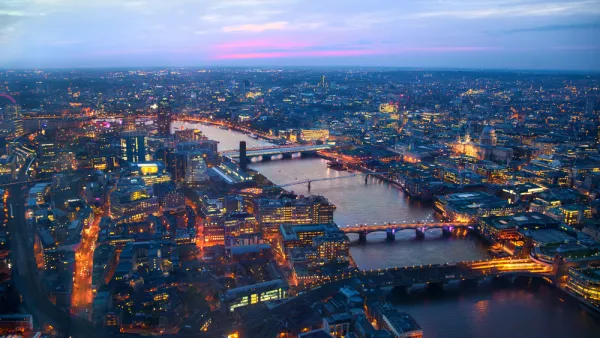
Around the Globe, Urban Diversity Is Alive and Well
It might feel like the world is shrinking as globalization expands, but many cities still have their individual characters and qualities.
Why Are Cities Growing?
With globalization meaning goods can be shipped cheaply anywhere, and the internet means you can work anywhere, why are cities growing like crazy? Prof. Edward L. Glaeser of Harvard says that proximity breeds innovation.
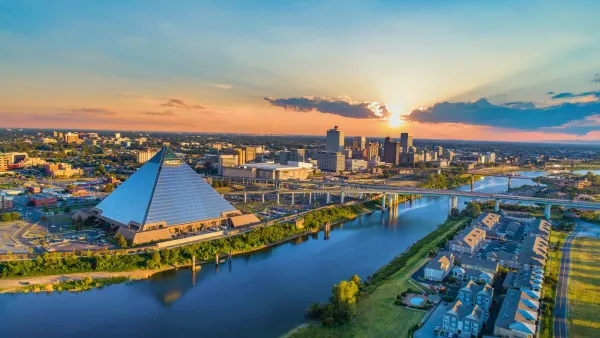
15 US cities and their global namesakes
Hundreds of cities around the United States are named after other places. We tour a few of them.

Planetizen Federal Action Tracker
A weekly monitor of how Trump’s orders and actions are impacting planners and planning in America.

Amtrak, CN end decades-long dispute with eight-year agreement
The new operating agreement establishes an updated framework for the companies to work together, including processes to resolve disputes.

Judges permit Denver to divert 77,000 acre feet from the Colorado River for reservoir expansion
Overuse and climate change have caused the Colorado River’s water levels to plummet.

NYC DOT wants faster, more permanent street upgrades
The city is examining ways to build more concrete infrastructure without getting entangled in 'decades-long' projects.

'Something we’ve never seen before:' rising utility rates could strain city finances nationwide
Data centers, climate change and other factors have caused utility rates in the United States to increase by 38% since 2020.

Trump to overrule local leaders, lease millions of acres of America’s Pacific Island territories’ seafloors to mining companies
International law says that the Indigenous people of America’s territories have a right to prior and informed consent regarding projects that impact their countries.

FREE Course: Walkable City 1: Why Walkability?
After describing his path towards focusing on walkability as the essence of good planning, Jeff Speck marches through his five principal reasons for making more walkable places.
Reinventing Malls: Planning Alchemy—Turning Gray Fields Into Gold
The course focuses on the opportunities and imperatives that shape reinvention of mall sites.

Harvard University Graduate School of Design
KFH Group Inc.
Greater Baltimore Committee
The Architects Foundation
University of Cincinnati Online
The Pocatello Development Authority
The Urban Renewal Agency of the City of Pocatello