Crows are seemingly everywhere, including cities. A new book looks at the relationship between people and crows in urban areas and what it says about modern cities.


The Dirt interviews author Lyanda Lynn Haupt abot her book, "Crow Planet: Essential Wisdom from the Urban Wilderness", which explores the rise in crow populations in urbanized areas.
"Q: We are all now living in Crow Planet, a place characterized by the spread of "crow-ness." What is crow-ness? What does it say about urban ecosystems and the role people play in nature?
A: 'Crow-ness' is the ubiquitous presence of a large, native bird right in the heart of urban places. It speaks deeply to the fact that the way we create our homes and neighborhoods-both in terms of structure and personal habits– has a lot (not everything, but a lot) to do with determining the nonhuman species that can live among us, and how we might flourish together. The title of my book is Crow Planet, which has two interrelated meanings. On the one hand, it refers to a planet (our planet) on which native biodiversity is deeply threatened, and the rich variety of species is being replaced by a few dominant, successful species-species such as crows. At the same time, "Crow Planet" invokes the idea that no matter where we dwell and no matter how urban our homes, we are implicated in wildlife, and we are informed and enlivened by the presence of native, wild creatures-again, creatures such as crows. We navigate our daily lives in light of both these truths."
Read the full story: Interview with Lyanda Lynn Haupt, Author of “Crow Planet: Essential Wisdom from the Urban Wilderness”

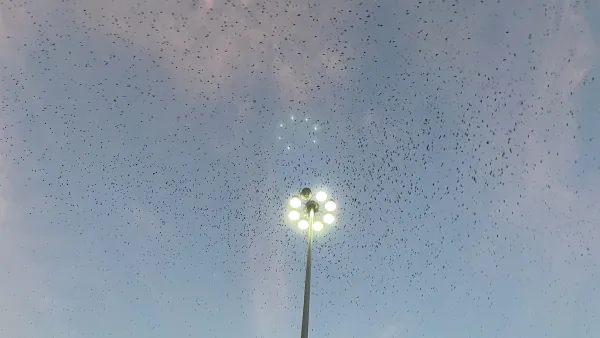
Purple Martins Call Nashville Home. Some Wish They Wouldn't
Each year, the city plays host to hundreds of thousands of birds on their way to and from South America.

Study: How Urban Redlining Impacts Bird Populations
A legacy of historic housing discrimination and disinvestment is having lasting effects on more than just human lives in cities.
For the Birds: Why Designing for Birds is Good for Everyone
A new book spotlights how bird-friendly design makes for healthier and more pleasant cities for all species.

Planetizen Federal Action Tracker
A weekly monitor of how Trump’s orders and actions are impacting planners and planning in America.

‘Going backwards:’ Baltimore mayor, students rally against state's transit funding plan
Maryland's proposed six-year plan provides no funding for Baltimore’s BMORE bus program and reduces its road maintenance funding.

Detroit to transform waterfront with $2.2 billion investment
Developers will convert about 18 acres of unused parking lot space into civic spaces.

LA to transform part of water treatment facility into new park
By rebuilding some of the Los Angeles-Glendale Water Reclamation Plant’s infrastructure, the city will free up 18,000 square feet to create a new green space for the public.

San Antonio approves $1.1 billion transit agenda
The agency has also begun construction of its Via Rapid Green line, which will service passengers from the San Antonio International Airport.

Guerilla urbanists’ DIY benches joined by sanctioned seats in Chicago
The group behind the original homemade benches said they will continue installing them across bench-less bus stops in Chicago.

FREE Course: Walkable City 1: Why Walkability?
After describing his path towards focusing on walkability as the essence of good planning, Jeff Speck marches through his five principal reasons for making more walkable places.
Reinventing Malls: Planning Alchemy—Turning Gray Fields Into Gold
The course focuses on the opportunities and imperatives that shape reinvention of mall sites.

One Hundred Miles
County of Mendocino
planning NEXT
The Architects Foundation
University of Cincinnati Online
Montrose County
Northern Illinois Transit Authority (NITA)
The Pocatello Development Authority