Despite the continued struggles of the U.S. economy, green roofs have proliferated with the market increasing 30% from the previous year.


Up to 9 million square feet of green roofs were laid last year alone, according to a recent survey of corporations involved in green roof design and development.
ASLA spoke with Steven Peck, ASLA, head of Green Roofs for Healthy Cities, about the market growth. Peck agreed that "...green infrastructure projects create lots of local jobs.
'Green roofs are highly labor intensive and you can't export these jobs.' Making the case for increased public investment, he said adding green roofs to 1 percent of U.S. buildings would cost $9 billion and create 190,000 jobs. For 5 percent of buildings, the cost would rise to $48 billion and create almost a million jobs. Finally, if 10 percent of all buildings had these green infrastructure systems, the cost would be $96 billion but almost two million jobs would be created."
More on the market and benefit from green roofs over at The Dirt.
Read the full story: Despite Economy, Green Roofs Bloom

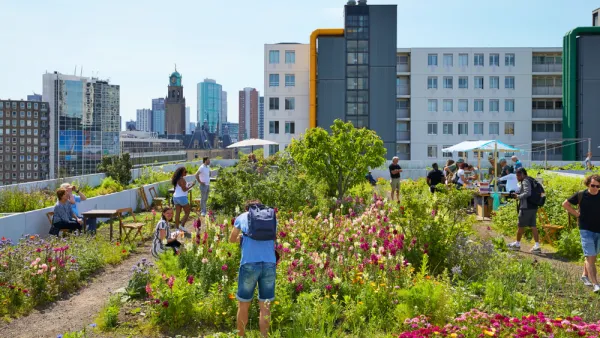
How Rotterdam’s Green Rooftops Fight Urban Heat
An elevated park in Rotterdam shows how green roofs can cool cities and create public parks in tight quarters.
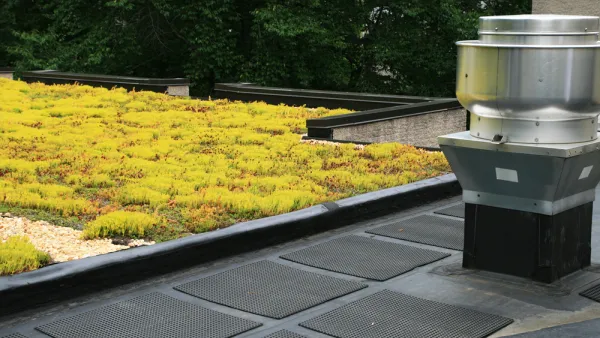
Washington, D.C. Leads the Nation in Green Roofs
The nation's capital has more square feet of green roofs than any other city in the country.
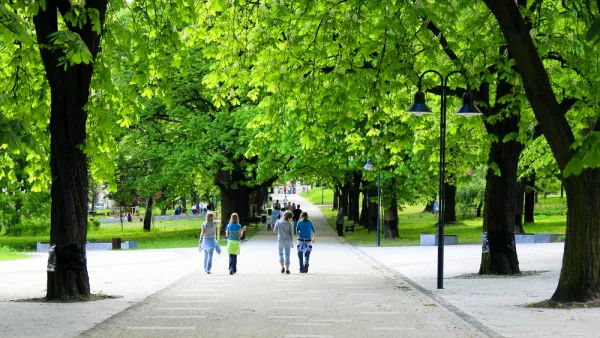
Report Details the Long-Term Financial Benefits of Green Design
This report estimates that U.S. cities could save half a trillion dollars by investing in "smart surface technologies." The study takes into account obvious factors like energy use and less intuitive ones like tourism revenues.

Amtrak, CN end decades-long dispute with eight-year agreement
The new operating agreement establishes an updated framework for the companies to work together, including processes to resolve disputes.

Northwest rail fans eager for Sept. 30 debut of Amtrak’s Airo fleet
Get ready for that new train smell and more seats. But they won’t go faster or run more frequently on the Cascades route in Washington and Oregon.

Judges permit Denver to divert 77,000 acre feet from the Colorado River for reservoir expansion
Overuse and climate change have caused the Colorado River’s water levels to plummet.

NYC to turn city-owned property into thousands of homes
The city has scheduled a public hearing regarding the development for October.

Buses travel at 5mph along this route in NYC. The Bronx's first-ever busway looks to change that
Prior to the busway, buses on the Bx36 route traveled as slowly as 5 miles per hour.

Pittsburg launches 'EZ permits,' aims for one-day turnaround for low-risk permits
The pilot ‘fast lane’ for permits is part of a bundle of modernization efforts for Pittsburg’s permitting process.

FREE Course: Walkable City 1: Why Walkability?
After describing his path towards focusing on walkability as the essence of good planning, Jeff Speck marches through his five principal reasons for making more walkable places.
Reinventing Malls: Planning Alchemy—Turning Gray Fields Into Gold
The course focuses on the opportunities and imperatives that shape reinvention of mall sites.

City of Thousand Oaks
City of Wisconsin Rapids
Harvard University Graduate School of Design
The Architects Foundation
University of Cincinnati Online
The Pocatello Development Authority
The Urban Renewal Agency of the City of Pocatello