A Houston grandmother could be the first person in the country to get "super WiFi", high-speed wireless internet transmitted over newly accessible segments of the broadcast spectrum.


In September of 2010, the FCC allowed part of the spectrum previously used for television transmissions (now made available with TV's move from analog to digital) to be used for super WiFi.
Eric Berger at The Houston Chronicle explains why this is good news for WiFi users:
"The newer chunk of the spectrum allowed WiFi signals at longer wavelengths, which are much better at penetrating natural and man-made barriers."
The Houston grandmother is an early adopter because of the efforts of Technology For All, a Houston nonprofit that provides free wireless Internet access to low-income households in partnership with Rice University.
Read the full story: Houston leads way in launching 'super WiFi'

Cities Need to Evaluate Wireless Standards for Sensors and IoT
Many cities rely on basic WiFi and 2G networks for their sensors and connected devices. As the number of devices increases, and carriers are abandoning 2G, new wireless standards have emerged, offering more range and flexibility.
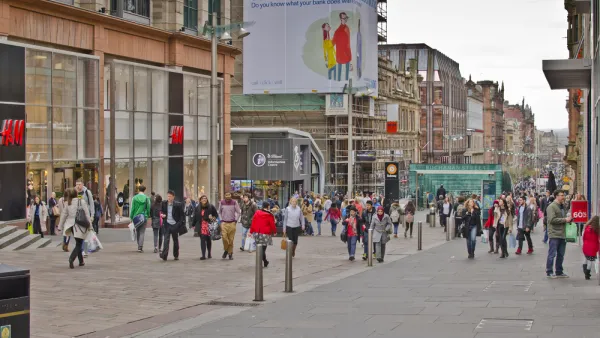
Tomorrow's Digital City Center: The Glasgow Agenda
Take a walk around your downtown and what do you see. Most people are attached to their mobile phones, using them for directions, searching, and texting. See how can cities leverage digital technology to create a more engaging city center.
Second Attempt at Free WiFi in San Francisco Launched on Market Street
After an unsuccessful attempt in 2007, the City is at it again, but doing so in stages. Already in use in limited areas like City Hall and public housing projects, Monday's Market Street roll-out creates a nexus between wifi and surface transit.

Planetizen Federal Action Tracker
A weekly monitor of how Trump’s orders and actions are impacting planners and planning in America.

‘Going backwards:’ Baltimore mayor, students rally against state's transit funding plan
Maryland's proposed six-year plan provides no funding for Baltimore’s BMORE bus program and reduces its road maintenance funding.

Detroit to transform waterfront with $2.2 billion investment
Developers will convert about 18 acres of unused parking lot space into civic spaces.

LA to transform part of water treatment facility into new park
By rebuilding some of the Los Angeles-Glendale Water Reclamation Plant’s infrastructure, the city will free up 18,000 square feet to create a new green space for the public.

San Antonio approves $1.1 billion transit agenda
The agency has also begun construction of its Via Rapid Green line, which will service passengers from the San Antonio International Airport.

Guerilla urbanists’ DIY benches joined by sanctioned seats in Chicago
The group behind the original homemade benches said they will continue installing them across bench-less bus stops in Chicago.

FREE Course: Walkable City 1: Why Walkability?
After describing his path towards focusing on walkability as the essence of good planning, Jeff Speck marches through his five principal reasons for making more walkable places.
Reinventing Malls: Planning Alchemy—Turning Gray Fields Into Gold
The course focuses on the opportunities and imperatives that shape reinvention of mall sites.

One Hundred Miles
County of Mendocino
planning NEXT
The Architects Foundation
University of Cincinnati Online
Montrose County
Northern Illinois Transit Authority (NITA)
The Pocatello Development Authority