As Detroit shrinks, a team of consultants and city officials are faced with the daunting task of reforming a city that is largely full of holes.


Among the difficulties officials are facing, how to consolidate city services and residents,
"How to reconfigure roads, bus lines, police districts? How to encourage people - there is no power of eminent domain to force them - to move out of the worst neighborhoods and into better ones?"
In the meantime, Deputy Director of Planning, Marja M. Winters along with her cohorts have been assessing surrounding neiborhoods and meeting with community groups to hear their concerns.
"And so, a contingent of private consultants and city officials like Ms. Winters have taken part in one of the deepest mile-by-mile analyses of Detroit in memory, tracking population densities, foreclosed homes, disease, parks, roads, water lines, sewer lines, bus routes, publicly owned lands, and on and on.
Among the dismal findings: more than 100,000 parcels, private and public, are vacant; and only 38 percent of Detroiters work in the city."
Thanks to Jason Van Patten
Read the full story: The Odd Challenge for Detroit Planners
Detroit and Michigan on the Upswing
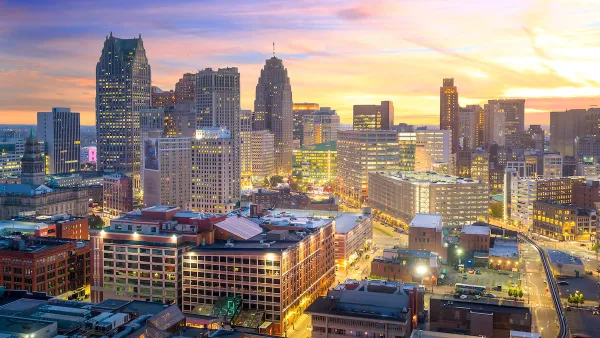
It's been 66 years since the Motor City last grew its population. Census data released last month revealed an increase of nearly 2,000 people last year, nearly half the state's population growth.
A Detroit Neighborhood 'Sentenced to Die'
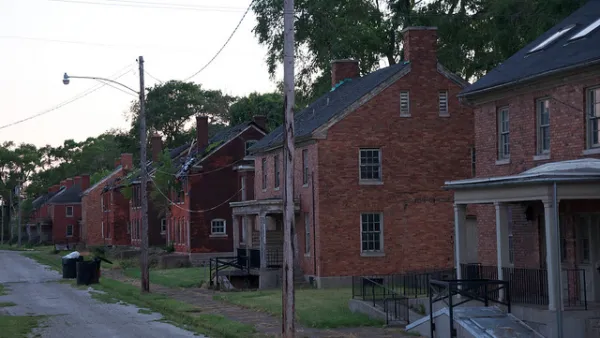
A handful of Delray residents refuse to be displaced by industry, but the plan for a new bridge may mean they don't have a choice.
Accused of 'Ambush-Style Eviction,' Detroit Land Bank Faces Lawsuit
A lawsuit, allowed to proceed by a Wayne County judge, reveals some of the difficulties of blight removal.

Washington state to charge fee to drivers with fuel-efficient cars
Revenue from the fee will go towards supporting the state’s highways.

Illinois considers spending $1 billion in taxpayer money on data center
A quantum computing campus and data center are currently under construction in Chicago.

Trump to blast ‘hydrocarbon highway’ through ‘world’s longest art gallery’
Environmental and historic preservation groups are suing to stop the project.

NYC, state sue feds over mixed-immigration-status housing assistance rule
The state’s lawsuit argues that the rule change violates the Administrative Procedure Act.

Michigan to turn neighborhood into virtual power plant
Residents will soon be able to divert their excess energy to the grid in exchange for compensation.

Data center, mining project swarm to long-awaited Alaska railroad line
The state-owned railroad approved final plans for the spur line this week; the project is expected to cost $311 million, mostly funded by the federal government

FREE Course: Walkable City 1: Why Walkability?
After describing his path towards focusing on walkability as the essence of good planning, Jeff Speck marches through his five principal reasons for making more walkable places.
Reinventing Malls: Planning Alchemy—Turning Gray Fields Into Gold
The course focuses on the opportunities and imperatives that shape reinvention of mall sites.

City of Charlotte
City of Rosemead
Rutgers University, Edward J. Bloustein School of Planning and Public Policy
University of Michigan School for Environment and Sustainability (SEAS)
Hunter College, City University of New York (CUNY)
The Architects Foundation
University District Partnership