An Australian report finds that suburbs in Australia may be on the path to slum status if the country's oil addiction is not resisted.


Planning Institute of Australia released the study back in December 2010 in their "Australian Planner" journal. They believe that the result of higher gasoline prices from peak oil production may turn suburbs resulting from excessive sprawl into future slums.
Warren McLaren from Treehugger states the following:
"One quotes Dr Jago Dodson from the Urban Research Program at Brisbane's Griffith University: 'By reviewing relevant plans and policies at the local, regional, metro, state and national levels we uncovered vertical and horizontal disconnections. Current policy and planning prescriptions are simply not adequate to protect our cities from the effects of petroleum supply constraints.' Although they do note that the state of Queensland does require local councils to consider petroleum supply in all new developments. "
Read the full story: Car-Dependent Suburbs May Be Slums of The Future, Says Urban Planning Report

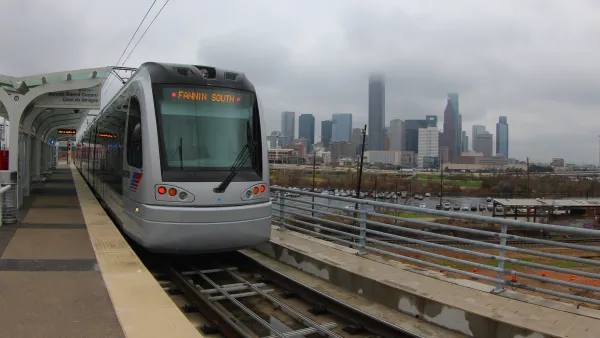
Sun Belt Sprawl Might Not Be Forever
Will sprawling cities stay sprawled? Starting in their downtowns, some Sun Belt behemoths are embracing denser, more walkable forms.
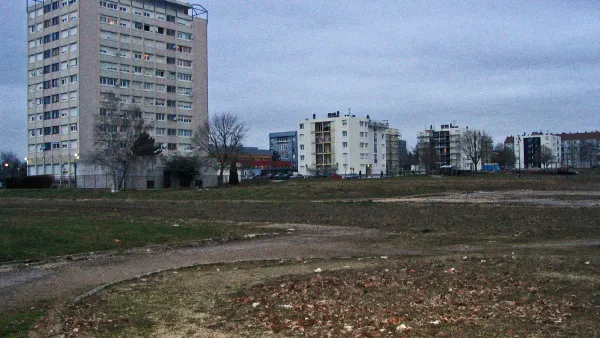
Renzo Piano on the Potential of Suburbs
In an interview, architect Renzo Piano says European suburbs are not desolate. He argues they shouldn't be treated as such in the quest for cohesive cities.
Will the Near Future be a Harsh Climate for Suburbs?
In this excerpt from her new book, "Before the Lights Go Out" author Maggie Koerth-Baker warns of the converging crises of peak oil and climate change on suburban areas.

Planetizen Federal Action Tracker
A weekly monitor of how Trump’s orders and actions are impacting planners and planning in America.

‘Going backwards:’ Baltimore mayor, students rally against state's transit funding plan
Maryland's proposed six-year plan provides no funding for Baltimore’s BMORE bus program and reduces its road maintenance funding.

Detroit to transform waterfront with $2.2 billion investment
Developers will convert about 18 acres of unused parking lot space into civic spaces.

LA to transform part of water treatment facility into new park
By rebuilding some of the Los Angeles-Glendale Water Reclamation Plant’s infrastructure, the city will free up 18,000 square feet to create a new green space for the public.

San Antonio approves $1.1 billion transit agenda
The agency has also begun construction of its Via Rapid Green line, which will service passengers from the San Antonio International Airport.

Guerilla urbanists’ DIY benches joined by sanctioned seats in Chicago
The group behind the original homemade benches said they will continue installing them across bench-less bus stops in Chicago.

FREE Course: Walkable City 1: Why Walkability?
After describing his path towards focusing on walkability as the essence of good planning, Jeff Speck marches through his five principal reasons for making more walkable places.
Reinventing Malls: Planning Alchemy—Turning Gray Fields Into Gold
The course focuses on the opportunities and imperatives that shape reinvention of mall sites.

One Hundred Miles
County of Mendocino
planning NEXT
The Architects Foundation
University of Cincinnati Online
Montrose County
Northern Illinois Transit Authority (NITA)
The Pocatello Development Authority