Seattle has the political momentum behind sustainable urbanism, but it doesn't seem to have a physical neighborhood example of how sustainable urbanism can work, according to this article.


This article from Sustainable Industries wonders whether the city will be able to create a game-changing neighborhood like other nearby cities.
"Portland, Ore., has the Pearl District. Vancouver, B.C., has its entire downtown cluster of residential towers and street-level shops and schools. Such an example in Seattle might be the most powerful way to convince the rest of the city to relax its skepticism toward density and mass transportation, according to proponents.
The idea that Seattle needs a trophy development comes from Marshall Foster, the city's planning director, a veteran of one of those leading architecture and planning shops (Mithun). He understands that for all the enthusiasm in the green urbanism crowd, the city still has a lot of single-family, suburban style neighborhoods. It's a place where "Lesser Seattle" and "Keep the bastards out" took root as catchphrases against big-city growth aspirations. It's a place where a parking rate hike became a 'war on drivers.'"
Read the full story: Can green urbanism make its case through public housing?

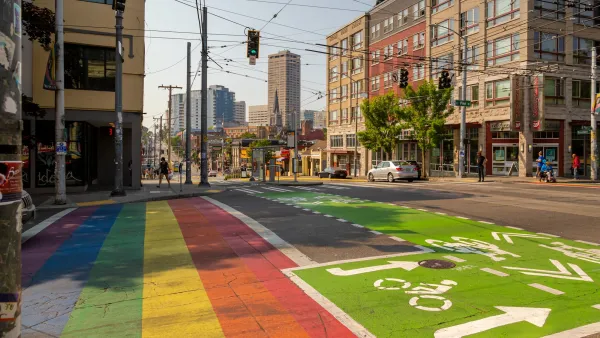
Seattle Creates 4 ‘Low-pollution Neighborhoods’
The pilot program is designed to reduce air pollution and increase access to transit and safe walking and biking infrastructure.
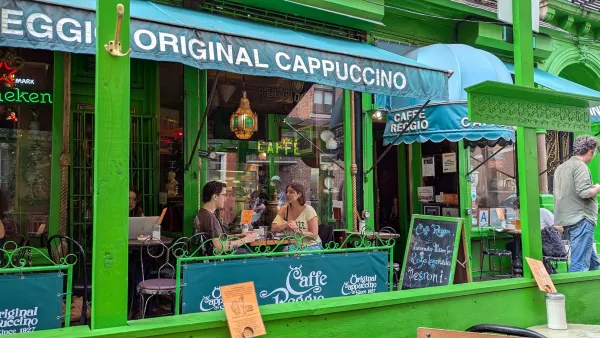
From SoHo to SoDoSoPa
How zoning made great neighborhoods illegal to build, and preordained gentrification.

Now 20% Car-Free, Seattle's Population is Growing. Its Traffic is Not.
Since 2017, the number of cars in the city has stayed roughly the same, even as the population continues to grow.

Planetizen Federal Action Tracker
A weekly monitor of how Trump’s orders and actions are impacting planners and planning in America.

HUD modernizes 50-year-old manufactured housing framework
The Next Generation Manufactured Housing Action Plan establishes new energy-efficiency standards for manufactured homes, and new guidelines for anchoring them.

Data reveals that NYC’s bet on congestion pricing has paid off
After almost two years of the program, reports show positive impacts on traffic and air quality and no disruptions to parking.

How Chicago, New York and Seattle are funding transit projects amid tough times
Notes from the American Public Transportation Association's TransForm conference in Chicago.

Transport for London tackles hate crime spike with free bystander training
Recorded hate crime offences on the London's transport network have increased by 36 per cent.

Denver is solving homelessness. Why aren't the rest of us?
Since 2023, Denver's street homeless population has decreased by 64%, proving that effective tools exist to support those in need of housing.

FREE Course: Walkable City 1: Why Walkability?
After describing his path towards focusing on walkability as the essence of good planning, Jeff Speck marches through his five principal reasons for making more walkable places.
Reinventing Malls: Planning Alchemy—Turning Gray Fields Into Gold
The course focuses on the opportunities and imperatives that shape reinvention of mall sites.

One Hundred Miles
County of Mendocino
planning NEXT
The Architects Foundation
University of Cincinnati Online
Montrose County
Northern Illinois Transit Authority (NITA)
The Pocatello Development Authority