The rural Midwest produces much of our nation's food supply, and yet small towns in the heartland and around America are increasingly and ironically becoming food deserts - places where citizens have little access to fresh, healthy foods.


The term "food desert" might conjure up images of inner-city Detroit or L.A., where the only groceries are Twinkies at the mini mart. But urban areas aren't the only places where access to fresh, healthy food is an issue.
Steph Larsen writes: "The paradox of our unhealthy food system is that many rural towns lack healthy food access, even as the food we eat is grown in rural places. To put it simply, our current food system is failing the very communities that grow our food."
Small towns might only have one grocery store, if they have one at all. The next town - and the next store - might be fifty miles away, with no public transportation.
Larsen points out a number of linked issues that fuel the problem - poverty, race, geography, community support, the economy, land tenure - and a handful of ideas and solutions.
FULL STORY: Welcome to the food deserts of rural America

New Report Proposes Ways to Combat L.A.'s "Food Deserts"
A new report from The Los Angeles Food Policy Task Force calls for the government to take steps to increase accessibility to local, healthy food in urban areas.

Do You Want Fries With That? Exploring the Intricacies of Food Systems Planning
Food systems expert Maggi Adamek talks with The Planning Commission Podcast about the complexities of food policy, from local zoning ordinances to international trade agreements.
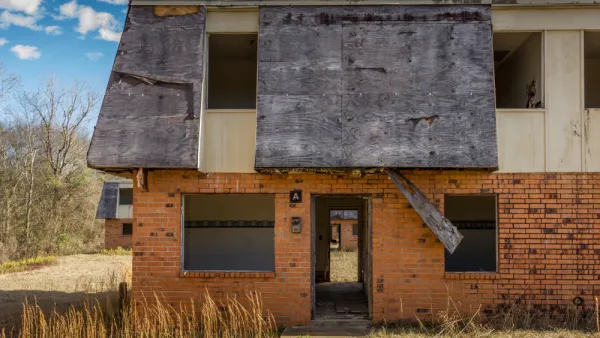
The Legacy of Structural Poverty in Alabama
In rural Alabama, a long history of racial inequality and poverty has left people struggling to survive in uninhabitable housing.

Planetizen Federal Action Tracker
A weekly monitor of how Trump’s orders and actions are impacting planners and planning in America.

The state-sanctioned urbicide of Austin
People don’t kill cities. Freeways do.

US to reduce Colorado River water deliveries to Mexico
A new Colorado Treaty amendment reduces Mexico’s Colorado River water allocation by 250,000 acre feet.

Mamdani overhauls NYC's Vision Zero plan with 100 new policy goals
The overhaul aims to reduce traffic deaths and make streets safer for pedestrians, cyclists and drivers through lower speed limits, new safety infrastructure and more.

Amtrak not solely to blame for New Jersey commuter rail's unreliability, report finds
A new study from the Garden State Initiative found that NJ Transit’s budget grew 20% across a 4 year period, but reliability declined significantly over the same period.

EPA erases limits on planet-warming pollution from power plants
Under Monday’s plan, power plants would still have some limits on how much mercury, arsenic and other contaminants they can emit.

FREE Course: Walkable City 1: Why Walkability?
After describing his path towards focusing on walkability as the essence of good planning, Jeff Speck marches through his five principal reasons for making more walkable places.
Reinventing Malls: Planning Alchemy—Turning Gray Fields Into Gold
The course focuses on the opportunities and imperatives that shape reinvention of mall sites.

Eagle County Government
Harvard University Graduate School of Design
Nashville Planning Department
The Architects Foundation
University of Cincinnati Online
The Pocatello Development Authority
The Urban Renewal Agency of the City of Pocatello
Journal of the American Planning Association