Four billion pounds of old carpet get dumped every year in the United States, and five pounds of oil goes into producing a single pound of nylon. New recycling methods could save all that oil by producing new nylon from old with little energy cost.


The numbers are staggering: according to Modular Carpet Recycling (MCR), a startup out of Delaware, each person consumes about 10 pounds of carpet each year (even with the construction slump).
Michael Kanellos writes that MCR "has come up with a precipitation process to efficiently recycle nylon fibers in old carpet, a material we're swimming in even with the stall in construction.
Four billion pounds of carpet enter waste streams in the U.S. each year, says CEO Ron Simonetti. Five pounds of oil go into a single pound of nylon, so annually the U.S. could curb oil exports by millions of barrels via recycling."
Read the full story: A New Source of Oil: Old Carpet


Colorado Ramps Up Rural Recycling Program
The state is creating a framework for building better access to recycling facilities and services for rural residents and businesses.

Rising Costs Could End Phoenix's Municipal Recycling Program
The city of Phoenix will either have to raise the rate for waste removal int he city or cut programs like recycling.
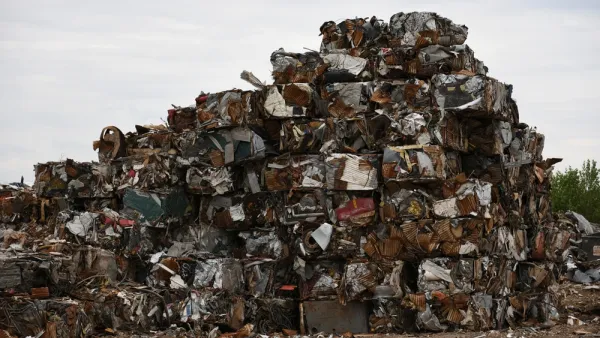
Striving for a Zero-Waste Future
A number of U.S. cities have set ambitious zero-waste goals, but reaching targets has been challenging. Turning waste into a viable commodity is one strategy to get materials out of the waste stream.

Planetizen Federal Action Tracker
A weekly monitor of how Trump’s orders and actions are impacting planners and planning in America.

Amtrak, CN end decades-long dispute with eight-year agreement
The new operating agreement establishes an updated framework for the companies to work together, including processes to resolve disputes.

Judges permit Denver to divert 77,000 acre feet from the Colorado River for reservoir expansion
Overuse and climate change have caused the Colorado River’s water levels to plummet.

Philadelphia to invest $2 billion into upgrading city airports as PHL places last in customer satisfaction
Modernizations to Philadelphia's airports will include baggage system upgrades and a new automated parking garage guidance system.

The LA housing policies making developers turn away from the city
Despite LA’s housing shortage, developers say the city’s "mansion-tax" and pandemic-era policies make it an unappealing place to build housing.

New density bill would require 7 California cities to establish regional transit hubs
The bill would also require major cities in California to permit high-rise residential buildings.

FREE Course: Walkable City 1: Why Walkability?
After describing his path towards focusing on walkability as the essence of good planning, Jeff Speck marches through his five principal reasons for making more walkable places.
Reinventing Malls: Planning Alchemy—Turning Gray Fields Into Gold
The course focuses on the opportunities and imperatives that shape reinvention of mall sites.

City of Wisconsin Rapids
Harvard University Graduate School of Design
KFH Group Inc.
The Architects Foundation
University of Cincinnati Online
The Pocatello Development Authority
The Urban Renewal Agency of the City of Pocatello