An extensive piece in Bloomsburg BusinessWeek uncovers the bad ideas and worse decisions that led to the downfall of Niagara Falls, New York. Step one? Replacing the historic downtown with "a bunch of modernist follies."


Andrew Rice writes:
"There was a massive hangar-like convention center designed by Philip Johnson; Cesar Pelli's glassy indoor arboretum, the Wintergarden, which was finally torn down because it cost a fortune to heat through the Lake Erie winter; a shiny office building known locally as the "Flashcube," formerly the headquarters of a chemical company and now home to a trinket market. Once a hydropowered center of industry, Niagara Falls is now one of America's most infamous victims of urban decay, hollowed out by four decades of job loss, mafia infiltration, political corruption, and failed get-fixed-quick schemes."
Rice says that there are obviously a lot of folks at fault, but there is one man at the center, a Manhattan real estate billionaire who was appointed to be the ""master redeveloper" of 140 acres of downtown real estate."
Read the full story: The Fall of Niagara Falls
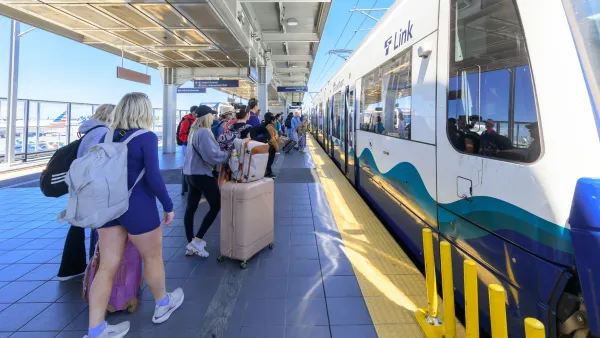
How Chicago, New York and Seattle are funding transit projects amid tough times
Notes from the American Public Transportation Association's TransForm conference in Chicago.
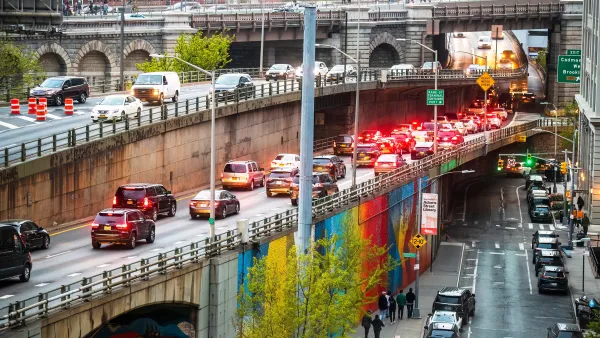
NYC to erect ‘temporary highway’ while rebuilding crumbling BQE
The city estimates it will spend $4 billion on the renovated expressway, which will reopen by 2040.
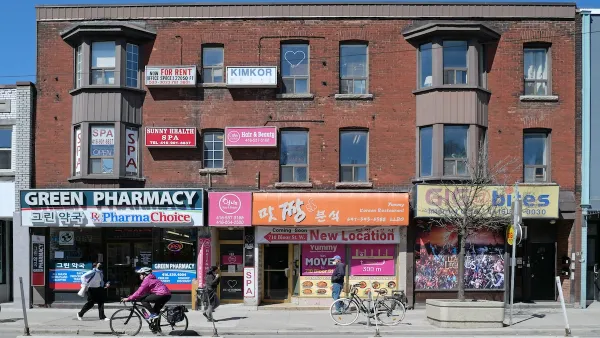
Ontario Judge Saves Toronto Bike Lanes
A court order bars the provincial government from removing bike lanes, saying the decision would make roads more dangerous and fail to reduce congestion.

Planetizen Federal Action Tracker
A weekly monitor of how Trump’s orders and actions are impacting planners and planning in America.

California plans to bury El Niño’s downpour
If the state plays its cards right, it may be able to store a billion acre-feet of El Niño’s water in aquifers.

Desperate measures: Advocates weigh draining Lake Powell to fill Colorado River
Draining the reservoir could reduce evaporation losses by a couple hundred thousand acre-feet.

Chicago voters approve permanent festival grounds, penalty for vacant property owners
Currently, major summer and fall festivals take over public parks for weeks at a time, drawing criticism from nearby residents

NYC votes to cut outdoor dining red tape, speed up permitting
New York City also voted to allow the Department of Transportation to begin work on urgent projects before notifying elected officials.

California appears to reject Prop. 45
The proposition would have expanded the projects that qualify for a streamlined environmental review, effectively paring down the California Environmental Quality Act.

FREE Course: Walkable City 1: Why Walkability?
After describing his path towards focusing on walkability as the essence of good planning, Jeff Speck marches through his five principal reasons for making more walkable places.
Reinventing Malls: Planning Alchemy—Turning Gray Fields Into Gold
The course focuses on the opportunities and imperatives that shape reinvention of mall sites.

City of Rosemead
Rutgers University, Edward J. Bloustein School of Planning and Public Policy
One Hundred Miles
Hunter College, City University of New York (CUNY)
The Architects Foundation
University of Cincinnati Online
City of Cambridge
Montrose County
The Pocatello Development Authority