Mark Guarino investigates the controversial construction of an expansive new development in the historic Lower Mid-City neighborhood of New Orleans.


Officials hope that BioDistrict New Orleans, a 1,500 acre medical and science corridor, will help to diversify the city's economy away from tourism, writes Guarino. A new veterans hospital was in the works before Katrina hit, but after the storm damaged the existing facility, plans were was accelerated and expanded. Additionally, the site will now include a 424-bed medical teaching facility as well as a new medical center and teaching hospital for Lousiana State.
However, 265 historic homes in the area, which is recognized by the National Register of Historic Places, stand in the way of the project, writes Guarino. Some have already been demolished, though at least 80 are being relocated by a non-profit group. With further demolitions on the way, the project is drawing fire from preservationists, writes Guarino:
"Critics say the project is a slap in the face of residents who spent three years after Katrina using federal Road Home funds to fix up their homes...The planned district is described by Sandra Stokes, executive vice chair of the Foundation for Historical Louisiana in Baton Rouge, as 'suburban sprawl in the most culturally significant urban environment in the US.'
'You're not revitalizing your downtown,' she says. 'You're evacuating your downtown and calling it economic development.'"
Read the full story: New Orleans makeover: economic boost or loss of a historical legacy?


Study: New Orleans sea level rise is at 'point of no return'
Research shows that the city could be surrounded by water by the end of this century.

Amtrak’s Mardi Gras train ‘blows away’ ridership expectations
The line brought back rail service between New Orleans and Mobile, Alabama for the first time since Hurricane Katrina.
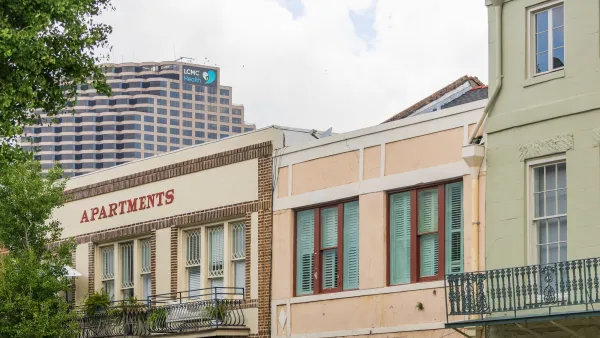
Is New Orleans’ Healthy Homes Ordinance a Hollow Promise?
The Healthy Homes Ordinance is supposed to help fix New Orleans’s deteriorating rental housing stock. But three years in, many “certified habitable” apartments still have leaking roofs, black mold, and dangerous heat. What went wrong?

Planetizen Federal Action Tracker
A weekly monitor of how Trump’s orders and actions are impacting planners and planning in America.

Amtrak, CN end decades-long dispute with eight-year agreement
The new operating agreement establishes an updated framework for the companies to work together, including processes to resolve disputes.

Northwest rail fans eager for Sept. 30 debut of Amtrak’s Airo fleet
Get ready for that new train smell and more seats. But they won’t go faster or run more frequently on the Cascades route in Washington and Oregon.

As El Niño approaches, Newsom vetos bill aimed at protecting California levees from flooding
Gov. Gavin Newsom said the state’s allocated $170 million was enough funding; State experts estimate it will cost $3.3 billion to repair the California Delta's levees.

Boston sues Trump administration over revoked infrastructure grant
The Trump administration withdrew the infrastructure grant because less than 1% of the money would go to electric vehicle charging infrastructure.

NYC to turn city-owned property into thousands of homes
The city has scheduled a public hearing regarding the development for October.

FREE Course: Walkable City 1: Why Walkability?
After describing his path towards focusing on walkability as the essence of good planning, Jeff Speck marches through his five principal reasons for making more walkable places.
Reinventing Malls: Planning Alchemy—Turning Gray Fields Into Gold
The course focuses on the opportunities and imperatives that shape reinvention of mall sites.

City of Thousand Oaks
City of Wisconsin Rapids
Harvard University Graduate School of Design
The Architects Foundation
University of Cincinnati Online
The Pocatello Development Authority
The Urban Renewal Agency of the City of Pocatello