Hong Kong's oldest living resident, the banyan tree, once lined entire streets in the city and provided an iconic presence that many enjoyed and many felt classified as a nuisance. Now, due to urban expansion, only a cluster of twenty trees remain.


The banyan tree has a long, curious history in a city that seems to pride itself on the modern and on the cutting-edge. Native to various areas of Asia including Sri Lanka and India, the trees have a unique way of spreading by settling on the foliage of a host tree and growing downwards from the canopy until they are able to implant their lattice-shaped roots into the soil below. This unconventional method of spreading makes banyans especially hardy and adaptable to urban environments, and a reason why the trees were so ubiquitous in the streets of Hong Kong for centuries. Now, as the urban fabric of Hong Kong expands and sunlight becomes more scarce within rows of tall buildings, many of the iconic trees have been cut down or strangled by the cityscape.
"In March the Hong Kong government established the Tree Management Office to champion tree preservation. The department has promised 'a new holistic policy on greening, landscaping and tree management with a view to achieving the sustainable development of a greener environment for Hong Kong.' "
Read the full story: Hong Kong's Trees a Survivor's Tale

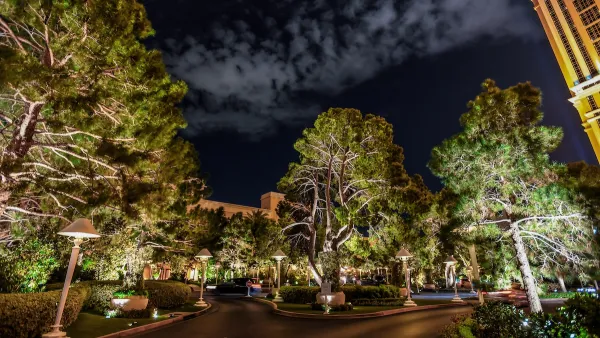
Urban Trees Have Bigger Impact in Hot, Dry Cities
The cooling effect of robust urban tree canopies is more pronounced in hotter, drier cities like Phoenix and Las Vegas.
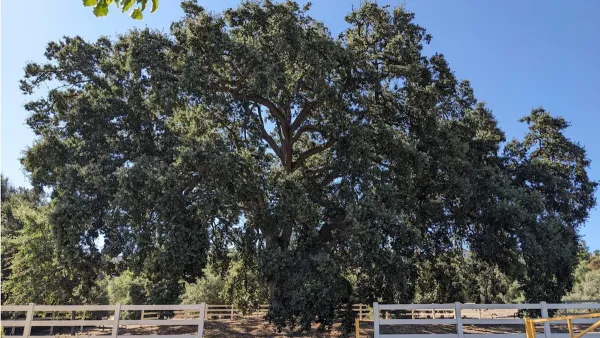
400-Year-Old Oak Tree Designated as Historic Landmark
The tree’s landmark status celebrates its deep-rooted history and symbolizes the community's dedication to preserving local ecological treasures.
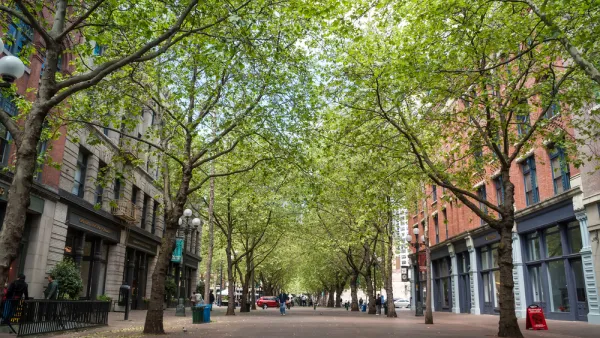
Symposium Highlights the Crucial Role of Trees in Combatting Extreme Heat
Experts emphasize that planting and maintaining trees in urban areas is essential for reducing extreme heat, cooling cities, and preventing heat-related illnesses, especially as heatwaves become more frequent and severe.

Planetizen Federal Action Tracker
A weekly monitor of how Trump’s orders and actions are impacting planners and planning in America.

Amtrak, CN end decades-long dispute with eight-year agreement
The new operating agreement establishes an updated framework for the companies to work together, including processes to resolve disputes.

Northwest rail fans eager for Sept. 30 debut of Amtrak’s Airo fleet
Get ready for that new train smell and more seats. But they won’t go faster or run more frequently on the Cascades route in Washington and Oregon.

NYC to turn city-owned property into thousands of homes
The city has scheduled a public hearing regarding the development for October.

Buses travel at 5mph along this route in NYC. The Bronx's first-ever busway looks to change that
Prior to the busway, buses on the Bx36 route traveled as slowly as 5 miles per hour.

Pittsburg launches 'EZ permits,' aims for one-day turnaround for low-risk permits
The pilot ‘fast lane’ for permits is part of a bundle of modernization efforts for Pittsburg’s permitting process.

FREE Course: Walkable City 1: Why Walkability?
After describing his path towards focusing on walkability as the essence of good planning, Jeff Speck marches through his five principal reasons for making more walkable places.
Reinventing Malls: Planning Alchemy—Turning Gray Fields Into Gold
The course focuses on the opportunities and imperatives that shape reinvention of mall sites.

City of Thousand Oaks
City of Wisconsin Rapids
Harvard University Graduate School of Design
The Architects Foundation
University of Cincinnati Online
The Pocatello Development Authority
The Urban Renewal Agency of the City of Pocatello