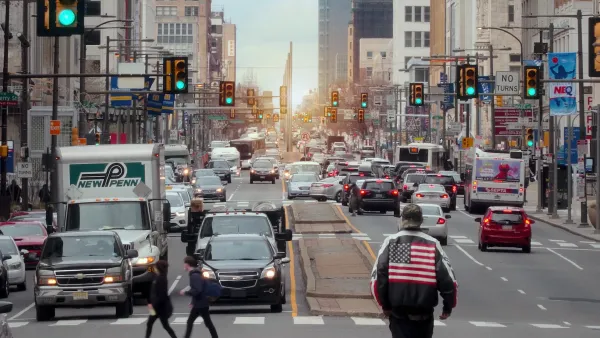
This episode of public radio program 99% Invisible looks at oil, and how the way people move from work to home has been seemingly designed to waste fuel.


Author Lisa Margonelli discusses how much of our transportation system is designed to waste fuel, the subject of her new book, "Oil on The Brain".
"Almost everything in modern life is designed to waste energy. The biggest culprit is how we get to and from work. Our houses are too far from our job, so we have to drive a lot. All those cars on the road cause traffic jams that waste fuel. Then there are the traffic lights, toll booths, and other obstacles that waste the inertia you build up while driving. It's all possible because the whole system evolved on a false premise that petroleum is cheap and plentiful and will be that way forever."
Read the full story: Episode 11- 99% Undesigned (but still evil)

Who pays when a remote Alaska village can no longer stay?
A year after ex-Typhoon Halong, the struggle for two communities to find safer ground has become part of a national debate over who should bear the costs of the climate crisis.

Feds want to stop notifying landowners about drilling under their land
The proposal also asks to reduce the public comment period for the BLM’s leasing decisions from 90 days to 10.
US workers spend nearly an hour a day commuting
High housing costs and return-to-office policies are forcing more American workers to live farther from work, pushing the average daily commute time to nearly an hour.

Planetizen Federal Action Tracker
A weekly monitor of how Trump’s orders and actions are impacting planners and planning in America.

California plans to bury El Niño’s downpour
If the state plays its cards right, it may be able to store a billion acre-feet of El Niño’s water in aquifers.

Desperate measures: Advocates weigh draining Lake Powell to fill Colorado River
Draining the reservoir could reduce evaporation losses by a couple hundred thousand acre-feet.

Mamdani’s pied-à-terre tax survives legal challenge
A panel of judges found that the plaintiffs failed to demonstrate injury as a result of New York City's implementation of the tax.

Eastern Nebraska is running out of electricity
Data centers and electrification are straining eastern Nebraska’s grid, throttling economic development.

Seattle passes record-breaking transit services expansion
Proposition 1 will double the city’s transit tax to add 95,000 more bus trips and preserve 180,000 bus trips annually.

FREE Course: Walkable City 1: Why Walkability?
After describing his path towards focusing on walkability as the essence of good planning, Jeff Speck marches through his five principal reasons for making more walkable places.
Reinventing Malls: Planning Alchemy—Turning Gray Fields Into Gold
The course focuses on the opportunities and imperatives that shape reinvention of mall sites.

City of Rosemead
Rutgers University, Edward J. Bloustein School of Planning and Public Policy
One Hundred Miles
University of Michigan School for Environment and Sustainability (SEAS)
Hunter College, City University of New York (CUNY)
The Architects Foundation
City of Cambridge
Montrose County
The Pocatello Development Authority