Jungles blasted clear during the Vietnam war four decades ago are now at the center of a debate in the country about how forests should be recovered.


The battle is between native and non-native trees, business interests and local villagers.
"Thirty-five years after North Vietnamese tanks entered Ho Chi Minh City - formerly Saigon - and four decades after U.S. forces destroyed or damaged large swaths of Vietnamese forest with bombs and defoliants, this landscape is a window into Vietnam's struggle to regenerate its once-abundant forests. With much of the country's woodlands and jungle lost or damaged over the past half-century by war, the spread of agriculture, and logging, Vietnam's forestry experts are split over what the nation's new forests should look like.
On the one side are those who would replace the lost forests with acacia and eucalyptus plantations - alien, monocultural forms of regeneration that supply abundant wood products but support little biodiversity. On the other side are scientists and conservationists who would like to regenerate forests of Hopea odorata and other native species, which are slow-growing but support a far wider variety of indigenous plants, animals, birds, and insects."
Read the full story: In War-Scarred Landscape, Vietnam Replants Its Forests
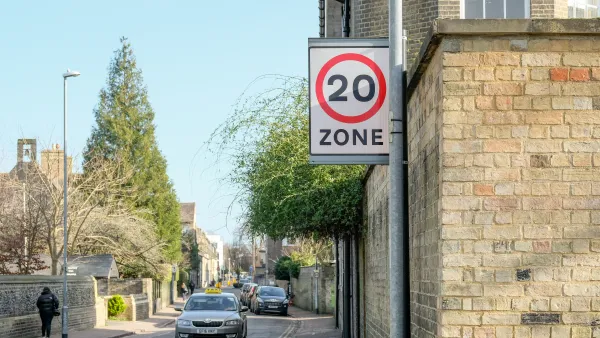
Agencies urge cutting speed limits to save gas amid war in Iran
International bodies suggest 20 is plenty to mitigate consumer pain while oil prices soar.
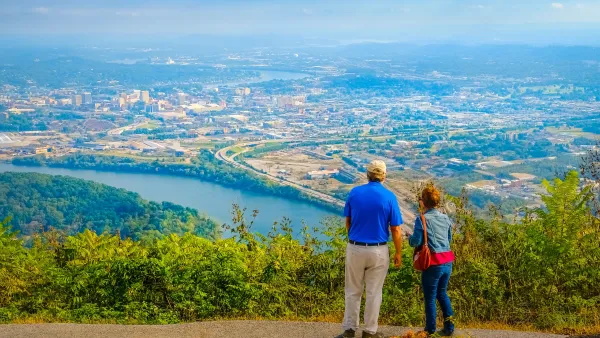
Chattanooga Earns North America’s First ‘National Park City’ Designation
The award recognizes cities that prioritize biodiversity and resident access to parks and green spaces.
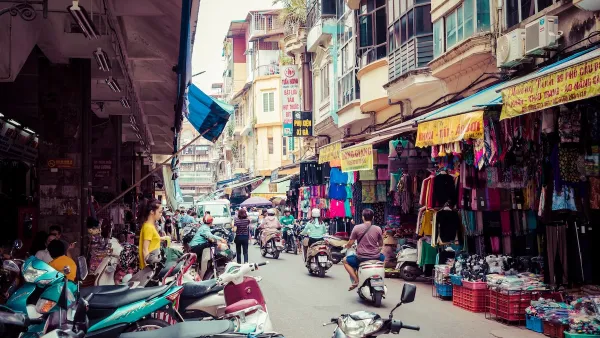
Hanoi to Ban Gas-Powered Two-Wheelers, Later Cars
City officials hope that electrifying motorcycles, a ‘lifeblood’ of Vietnamese transportation, will have a positive impact on air quality and noise in the city’s downtown.

Planetizen Federal Action Tracker
A weekly monitor of how Trump’s orders and actions are impacting planners and planning in America.

California plans to bury El Niño’s downpour
If the state plays its cards right, it may be able to store a billion acre-feet of El Niño’s water in aquifers.

Desperate measures: Advocates weigh draining Lake Powell to fill Colorado River
Draining the reservoir could reduce evaporation losses by a couple hundred thousand acre-feet.

Mamdani’s pied-à-terre tax survives legal challenge
A panel of judges found that the plaintiffs failed to demonstrate injury as a result of New York City's implementation of the tax.

Eastern Nebraska is running out of electricity
Data centers and electrification are straining eastern Nebraska’s grid, throttling economic development.

Seattle passes record-breaking transit services expansion
Proposition 1 will double the city’s transit tax to add 95,000 more bus trips and preserve 180,000 bus trips annually.

FREE Course: Walkable City 1: Why Walkability?
After describing his path towards focusing on walkability as the essence of good planning, Jeff Speck marches through his five principal reasons for making more walkable places.
Reinventing Malls: Planning Alchemy—Turning Gray Fields Into Gold
The course focuses on the opportunities and imperatives that shape reinvention of mall sites.

City of Rosemead
Rutgers University, Edward J. Bloustein School of Planning and Public Policy
One Hundred Miles
University of Michigan School for Environment and Sustainability (SEAS)
Hunter College, City University of New York (CUNY)
The Architects Foundation
City of Cambridge
Montrose County
The Pocatello Development Authority