Two interaction design students in New York are starting a 10-week after school program that is trying to teach high school kids design skills that they can use in their communities.


Urban Omnibus talks with co-founders Carmen Dukes and Katie Koch about their project and its goals.
"Urban Omnibus: Why did you decide to work with high school students?
Katie: If you ask any designer where she first learned about design she will likely be able to recall a specific moment that opened her eyes to this world. In high school I was very much into math and science classes and engaged with art in my free time, for fun. I didn't know about design as a way to use my logical left brain and my creative right brain together to create artifacts and experiences that make people's lives clearer, easier, and more fulfilling. High school students are often investigating broad sets of interests, figuring out what their personal passions are while beginning to understand and establish their place in the bigger picture beyond school. They are at a crossroads in many ways and I imagine many would be delighted by the discovery of design just as I was.
Carmen: A knowledge of design methods is a transferable skill set. Giving students a toolkit that they can use to explore and solve problems that matter to them will be powerful no matter where their future careers lead them."
Read the full story: Project: Interaction
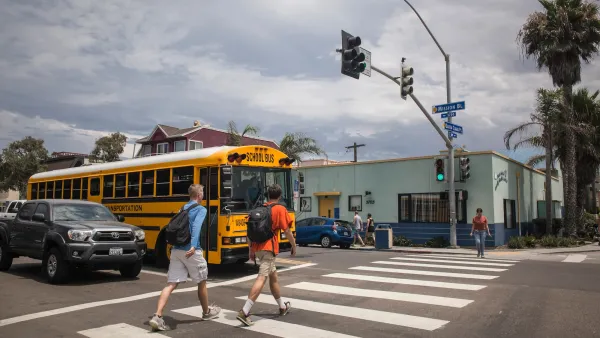
Why Kids Can't and Won't Walk to School in Laguna Beach
Getting kids to walk to school has been a nationwide campaign for years. But some places say it's just not safe. Some urban forms -- like that of Laguna Beach, California -- prove it.
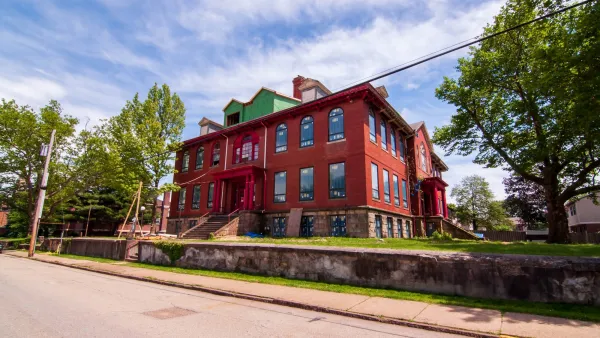
School-to-housing Conversions are the Fastest-growing Sector of Adaptive Reuse
In 2024, former schools were redeveloped into almost 2,000 apartments.
San Diego School District Backtracks on Teacher Housing Proposal
After receiving more than a dozen proposals from developers, the district’s board failed to reach a decision or issue further guidance to potential builders.

Planetizen Federal Action Tracker
A weekly monitor of how Trump’s orders and actions are impacting planners and planning in America.

Washington state to charge fee to drivers with fuel-efficient cars
Revenue from the fee will go towards supporting the state’s highways.

Illinois considers spending $1 billion in taxpayer money on data center
A quantum computing campus and data center are currently under construction in Chicago.

Corpus Christi drilled wells at 'lightning speed,' leaving neighbors fearing for their water supply
Underground water became a critical fix through the worst of Corpus Christi’s drought. But experts warn against depending on wells for too long.

Nearly billion-dollar budget deficit looms over MTA
Metropolitan Transit Authority officials say the cost of healthcare, wages, electricity and fuel is outpacing revenue from tolls, taxes and fares.

Senate passes bill overhauling permitting
The bill still needs to pass the House.

FREE Course: Walkable City 1: Why Walkability?
After describing his path towards focusing on walkability as the essence of good planning, Jeff Speck marches through his five principal reasons for making more walkable places.
Reinventing Malls: Planning Alchemy—Turning Gray Fields Into Gold
The course focuses on the opportunities and imperatives that shape reinvention of mall sites.

City of Charlotte
City of Rosemead
Rutgers University, Edward J. Bloustein School of Planning and Public Policy
University of Michigan School for Environment and Sustainability (SEAS)
Hunter College, City University of New York (CUNY)
The Architects Foundation
University District Partnership