New report details park spending, facilities, use, and trends


The 85 largest U.S. cities have more than 1.4 million acres of city parks, according to new data released by The Trust for Public Land. The city park systems profiled in the report serve 58 million urban residents, offering 11,160 playgrounds, 9,167 ball diamonds, 1,349 swimming pools, 514 dog parks, and 400 public golf courses, among other facilities.
The report, 2010 City Park Facts, includes statistics on urban park acreage, spending, staffing, and facilities. The Trust for Public Land (TPL), a national conservation organization, releases the data annually through its Center for City Park Excellence.
"In this time of economic adversity, we need great city parks to keep the hearts of our communities beating," said Peter Harnik, director of the Center. "These are the publicly available places city dwellers can go to enjoy the outdoors, stay in shape, and recharge their souls."
Thanks to Coleen Gentles
Read the full story: U.S. City Park Facts Released, Park Visitation Enormous

Evidence-based planning in a time of information overload
The field of academic publishing has become complex and crowded. What does it mean for urban planners?

Trump Administration Takes Aim at Transportation Research
Researchers warn of a “chilling environment” as studies examining road safety and other topics are killed off and layoffs hit federal agencies.
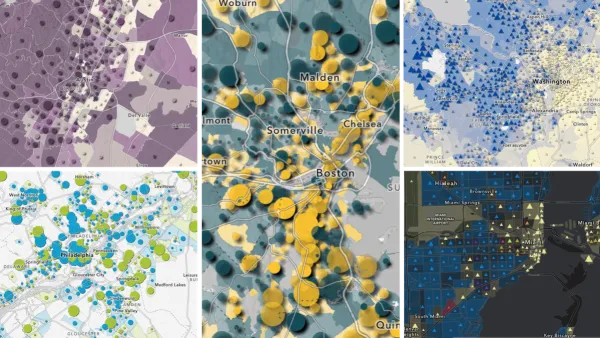
Explore US Demographics With the New ACS Atlas Collection
Esri's new ACS Atlas Collection offers interactive applications that visualize the latest U.S. demographic and socio-economic data, enabling users to explore over 175 curated web maps across various thematic areas.

Planetizen Federal Action Tracker
A weekly monitor of how Trump’s orders and actions are impacting planners and planning in America.

California plans to bury El Niño’s downpour
If the state plays its cards right, it may be able to store a billion acre-feet of El Niño’s water in aquifers.

Desperate measures: Advocates weigh draining Lake Powell to fill Colorado River
Draining the reservoir could reduce evaporation losses by a couple hundred thousand acre-feet.

Housing is the top priority of Seattle’s sole new councilmember
Jenks campaigned on building 1,000 new units of affordable housing.

New tax cuts may slash $1.5 billion in funding for Miami transit, public parks
Amendment 3 will save Miami-Dade homeowners $2,700 in 2028.

Arizona, Wisconsin, Pennsylvania hope to finally advance climate goals post-midterms
The three states have spent years under Republican or divided control.

FREE Course: Walkable City 1: Why Walkability?
After describing his path towards focusing on walkability as the essence of good planning, Jeff Speck marches through his five principal reasons for making more walkable places.
Reinventing Malls: Planning Alchemy—Turning Gray Fields Into Gold
The course focuses on the opportunities and imperatives that shape reinvention of mall sites.

City of Rosemead
Rutgers University, Edward J. Bloustein School of Planning and Public Policy
One Hundred Miles
University of Michigan School for Environment and Sustainability (SEAS)
Hunter College, City University of New York (CUNY)
The Architects Foundation
City of Cambridge
Montrose County
The Pocatello Development Authority