Bill Fulton visits his family in Rockville, Maryland, and discovers that a young family looking for suburban space can find it within walking distance of the library, the Metro stop, and mixed-use development.


Fulton writes:
"Four years ago, childless and carless, my nephew and his wife lived the urban life in the fashionable Washington, D.C., neighborhood of Cleveland Park. Child No. 1 pushed them four miles out, to the expensive inner Maryland suburb of Bethesda, where they bought a cozy two-bedroom condominium that had been converted from an apartment. Then, a couple of months ago, Child No. 2 pushed them another 12 miles farther out – beyond the Beltway – to Rockville, where they bought a four-bedroom, 2,200-square-foot house.
Now they are living the suburban life – which means, inevitably, a large yard, two or three cars, and an autobound life for all concerned, including their infant. Right?
Well, not exactly. Yes, they have headed for the suburbs. But their life isn't really very autobound at all. Suburbia to them means an end-unit townhome, one car, a daily bus trip to day care, a 10- to 15-minute walk to the library and shopping at Rockville Town Square, and D.C. Metro commutes (13 minutes for him, 30 for her) to work and back.
To them, living in the suburbs is about living, not about driving."
Thanks to Bill Fulton
Read the full story: The New Suburban Dream

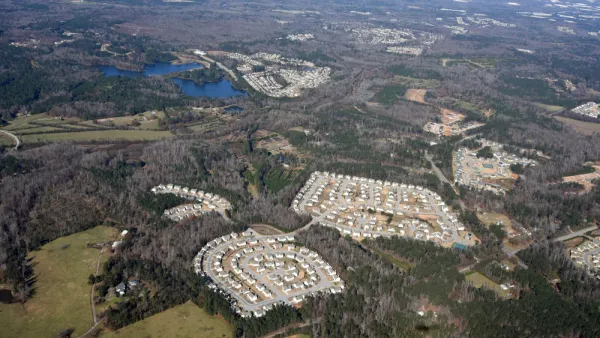
CNU Report Outlines Incremental Steps for More Walkable Suburbs
Transforming suburban sprawl is a massive undertaking, but these small steps can help communities understand their needs and assets and develop clear, actionable goals for the future.
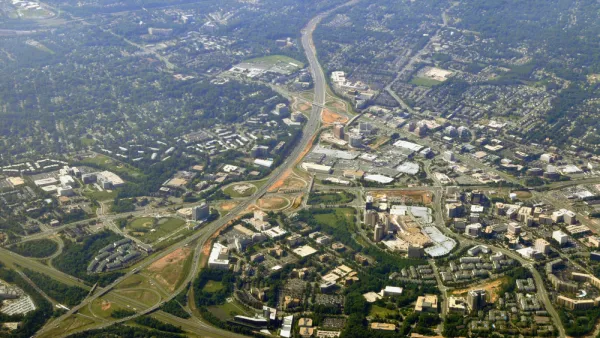
The Great Retrofit: Transforming Tysons With Walkable Residential Development
A 2010 comprehensive plan set a goal to add 100,000 residential units with walkable access to public transit to this unincorporated corner of Fairfax County in Northern Virginia.
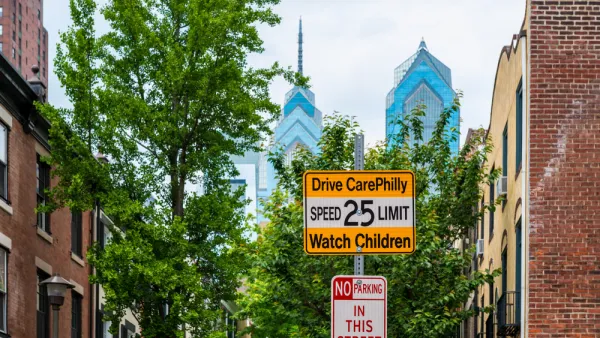
A Parking Success Story in Philadelphia
It's much easier to talk the parking talk than to walk the parking walk. Philadelphia, however, is showing how to actually replace overabundant parking with walkable housing developments.

Planetizen Federal Action Tracker
A weekly monitor of how Trump’s orders and actions are impacting planners and planning in America.

Northwest rail fans eager for Sept. 30 debut of Amtrak’s Airo fleet
Get ready for that new train smell and more seats. But they won’t go faster or run more frequently on the Cascades route in Washington and Oregon.

Trump is considering data centers on 6 states' public land — some state officials say they had no idea
If the administration approves the proposed projects, data center and data center-related developments will cover 17,600 acres of public land.

After decades of planning, Sacramento gains new light rail station
Trains will arrive every 15 minutes during peak hours and every 30 minutes during non-peak hours.

Massive tunnel-boring machine breaks ground on Gateway Project
The Trump administration revoked funding for the project in October 2025, and then restored it earlier this year.

Airo trainsets begin service on Amtrak Cascades route
The trains feature panoramic windows, complementary wifi and over 300 seats per train set.

FREE Course: Walkable City 1: Why Walkability?
After describing his path towards focusing on walkability as the essence of good planning, Jeff Speck marches through his five principal reasons for making more walkable places.
Reinventing Malls: Planning Alchemy—Turning Gray Fields Into Gold
The course focuses on the opportunities and imperatives that shape reinvention of mall sites.

City of Thousand Oaks
City of Wisconsin Rapids
Harvard University Graduate School of Design
The Architects Foundation
University of Cincinnati Online
Northern Illinois Transit Authority (NITA)
The Pocatello Development Authority
The Urban Renewal Agency of the City of Pocatello