Salon interviews author J.C. Hallman about his new book "In Utopia," which explores modern-day utopian projects and how they differ from those of the past.


In his new book "In Utopia" author J.C. Hallman observes that, while utopias may have failed in the past, and the ideology of their various proponents debunked, the utopian impulse is difficult to resist because "it keeps you moving forward." In this interview with Salon, Hallman shares more of this thoughts:
"Fascinated by the decline in utopian thinking over the past century, and inspired by his own suburban upbringing, Hallman wanted to look at far-fetched ideas that are pushing the boundaries of our social imagination -- and, to varying extents, succeeding. Among other places, he visits The World, a cruise ship co-op with a permanent population made up of millionaires; Twin Oaks, a commune in the Virginia woods that supports itself by making hammocks; and the soon-to-be-built Front Sight, a town centered around universal gun ownership that bills itself as 'the safest community in America.'"
When asked why most utopian communities fail, Hallman notes,
"The vision doesn't always live up to its promise. Sometimes utopias don't fully account for the frailty of human psychology, and a lot of utopias are actively attempting to change human psychology to adjust for that very problem. I think that utopias fail for the same reason that a lot of plans can potentially fail, simply because you don't always get it right the first time."
Read the full story: "In Utopia": Modern-day adventures in utopian living


The "vicious cycle of real estate mania" — and how we might find our way home
Book review: In "The Lost and the Found: A True Story of Homelessness, Found Family, and Second Chances," Kevin Fagan humanizes the housing crisis like never before.
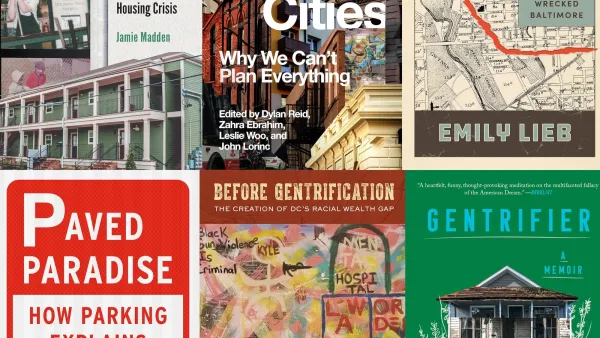
10 great urban planning summer reads
Wherever you're going (or staying) this summer, here are some suggestions for books to bring along.
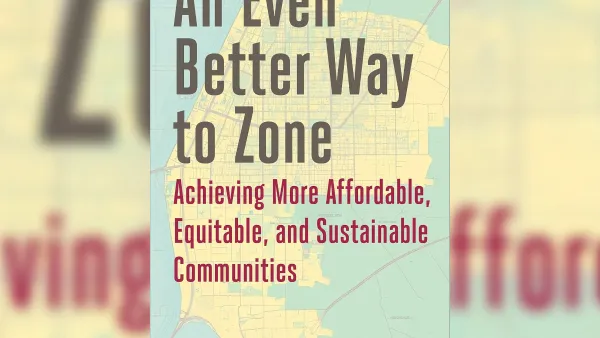
Review: "An Even Better Way to Zone"
Don Elliot’s sophisticated and much-anticipated follow up to "A Better Way to Zone" tackles equity, affordability and provides a better blueprint from theory to application.

Planetizen Federal Action Tracker
A weekly monitor of how Trump’s orders and actions are impacting planners and planning in America.

Northwest rail fans eager for Sept. 30 debut of Amtrak’s Airo fleet
Get ready for that new train smell and more seats. But they won’t go faster or run more frequently on the Cascades route in Washington and Oregon.

Trump is considering data centers on 6 states' public land — some state officials say they had no idea
If the administration approves the proposed projects, data center and data center-related developments will cover 17,600 acres of public land.

After decades of planning, Sacramento gains new light rail station
Trains will arrive every 15 minutes during peak hours and every 30 minutes during non-peak hours.

Massive tunnel-boring machine breaks ground on Gateway Project
The Trump administration revoked funding for the project in October 2025, and then restored it earlier this year.

Airo trainsets begin service on Amtrak Cascades route
The trains feature panoramic windows, complementary wifi and over 300 seats per train set.

FREE Course: Walkable City 1: Why Walkability?
After describing his path towards focusing on walkability as the essence of good planning, Jeff Speck marches through his five principal reasons for making more walkable places.
Reinventing Malls: Planning Alchemy—Turning Gray Fields Into Gold
The course focuses on the opportunities and imperatives that shape reinvention of mall sites.

City of Thousand Oaks
City of Wisconsin Rapids
Harvard University Graduate School of Design
The Architects Foundation
University of Cincinnati Online
Northern Illinois Transit Authority (NITA)
The Pocatello Development Authority
The Urban Renewal Agency of the City of Pocatello