Despite a growing population and limited amounts of rainfall, the city of El Paso, Texas, has been able to effectively manage its water supplies -- and reduce use.


Grist takes a look a the city's water issues of the years, and what officials have done to get the city's water needs in alignment with its supplies.
"Today, El Paso is a city that's hyper conscious of water. The use of low-water plants and crushed rocks in landscaping -- a practice known as xeriscaping -- is the norm. Neighbors rat out neighbors if they see water runoff in the streets. And water news gets front-page treatment in the local press. But that wasn't always the case.
Twenty years ago, El Pasoans were blissfully wasting water. Lavish lawns were everywhere and the Hueco Bolson, the aquifer that provided 90 percent of El Paso's water, was being depleted by a foot and a half per year. Then, in 1991, the El Paso Water Utilities board put together a long-term plan. The highest priority was a conservation program which included a mix of strategies -- some compulsory, some incentive-based, and some voluntary."
Read the full story: Arid El Paso makes every drop count

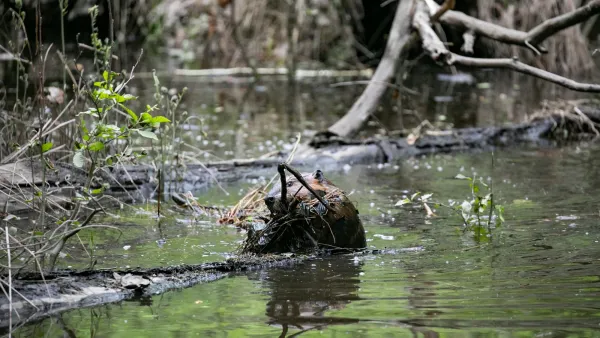
Two years after California reintroduced beavers, they are transforming the landscape into a 'climate-resilient powerhouse'
A beaver restoration program is proving that ancient solutions can help solve modern problems.
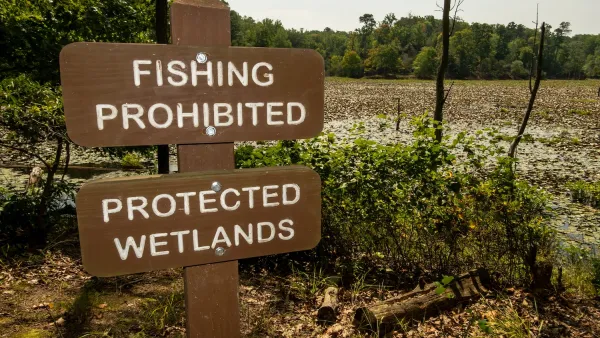
Proposed EPA Rule Change Would Exclude Millions of Acres of Wetlands and Waterways From Federal Protection
A proposed change to the Waters of the United States Rule would narrow the definition of protected waterways.
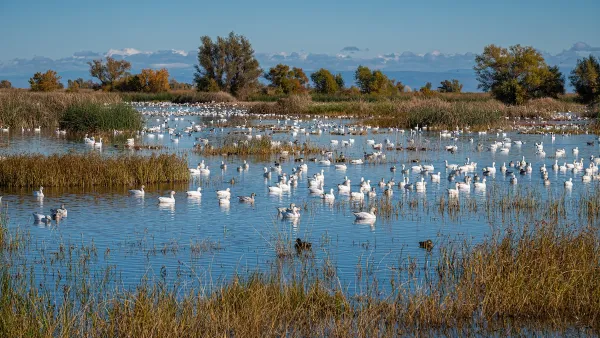
California Lawmakers Move to Protect Waterways
Anticipating that the Trump EPA will reinstate a 2017 policy that excluded seasonal wetlands and waterways from environmental protections.

Planetizen Federal Action Tracker
A weekly monitor of how Trump’s orders and actions are impacting planners and planning in America.

Amtrak, CN end decades-long dispute with eight-year agreement
The new operating agreement establishes an updated framework for the companies to work together, including processes to resolve disputes.
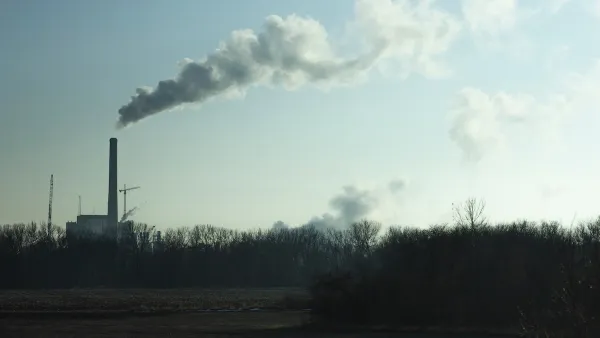
Nation's most wind-powered state turns to coal as data centers increase energy demand
For the first time in decades, Iowa has increased its generation of coal power.

Alabama scores up to $2.5 billion federal loan for largest infrastructure project in state’s history
The Mobile River Bridge and Bayway Project aims to ease congestion at Alabama’s worst bottleneck.

Trump is considering data centers on 6 states' public land — some state officials say they had no idea
If the administration approves the proposed projects, data center and data center-related developments will cover 17,600 acres of public land.

Despite court ruling, Trump is keeping nearly all wind projects in the US on hold
At least 110 wind energy projects have not heard from the government since a federal judge ruled that the Trump administration's freeze on wind turbine clearances was likely illegal.

FREE Course: Walkable City 1: Why Walkability?
After describing his path towards focusing on walkability as the essence of good planning, Jeff Speck marches through his five principal reasons for making more walkable places.
Reinventing Malls: Planning Alchemy—Turning Gray Fields Into Gold
The course focuses on the opportunities and imperatives that shape reinvention of mall sites.

KFH Group Inc.
Greater Baltimore Committee
Eagle County Government
The Architects Foundation
University of Cincinnati Online
The Pocatello Development Authority
The Urban Renewal Agency of the City of Pocatello