Forest land and open space have been steadily gobbled up by development in the Pacific Northwest. A new initiative in Washington seeks to relocate some of developers' planned greenfield housing into cities.


Neal Peirce offers this look at some of the plans and regulations officials in Washington are pushing forward to protect open spaces.
"Over the past 30 years, more than 2 million acres of Cascade-range forest and farm land has given way to sprawling development. In 1990 the state of Washington did pass a growth management act that restrained some helter-skelter expansion. But development has fragmented open spaces, including wildlife habitat and corridors. With rapid expansion of the urban footprint, added paving has intensified flooding and erosion. There's concern that climate change will bring warmer winters with less snow pack, leading to summertime drought, water shortages and increased forest fire danger.
Responding to the dangers, a 'Cascade Agenda' was launched in 2005 - a 100-year conservation and preservation plan for 1.3 million acres of the Puget Sound region's most prized waters, mountains and communities. Some 225,000 private acres have already been conserved under the plan, which is rooted in an imaginative transfer of development rights."
Read the full story: Regional Growth Futures: Getting It Right
New Jersey's Forests Disappearing
A new study shows that the amount of urban development in New Jersey now outnumbers the state's forest acreage.
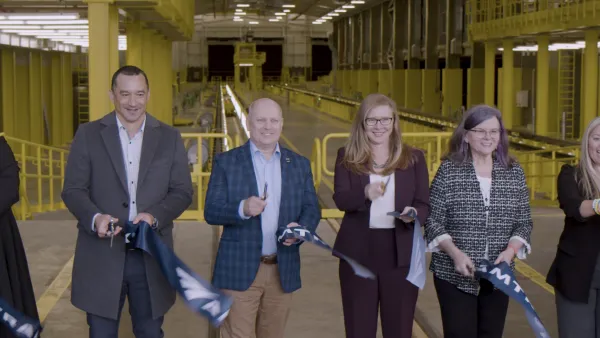
Amtrak cuts ribbon on Seattle Airo maintenance facility
The $250 million, nearly 100,000-square-foot building can house an entire Cascades Airo trainset.
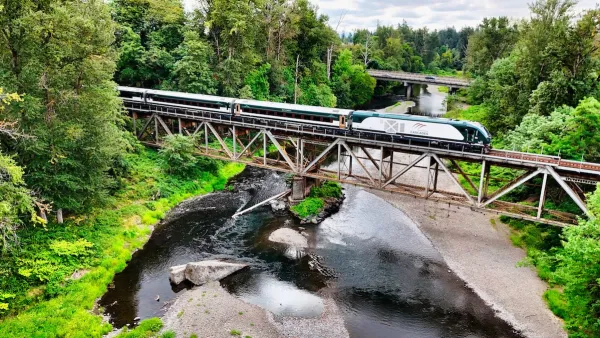
Airo trainsets begin service on Amtrak Cascades route
The trains feature panoramic windows, complementary wifi and over 300 seats per train set.

Planetizen Federal Action Tracker
A weekly monitor of how Trump’s orders and actions are impacting planners and planning in America.

California plans to bury El Niño’s downpour
If the state plays its cards right, it may be able to store a billion acre-feet of El Niño’s water in aquifers.

Desperate measures: Advocates weigh draining Lake Powell to fill Colorado River
Draining the reservoir could reduce evaporation losses by a couple hundred thousand acre-feet.

Housing is the top priority of Seattle’s sole new councilmember
Jenks campaigned on building 1,000 new units of affordable housing.

New tax cuts may slash $1.5 billion in funding for Miami transit, public parks
Amendment 3 will save Miami-Dade homeowners $2,700 in 2028.

Arizona, Wisconsin, Pennsylvania hope to finally advance climate goals post-midterms
The three states have spent years under Republican or divided control.

FREE Course: Walkable City 1: Why Walkability?
After describing his path towards focusing on walkability as the essence of good planning, Jeff Speck marches through his five principal reasons for making more walkable places.
Reinventing Malls: Planning Alchemy—Turning Gray Fields Into Gold
The course focuses on the opportunities and imperatives that shape reinvention of mall sites.

City of Rosemead
Rutgers University, Edward J. Bloustein School of Planning and Public Policy
One Hundred Miles
University of Michigan School for Environment and Sustainability (SEAS)
Hunter College, City University of New York (CUNY)
The Architects Foundation
City of Cambridge
Montrose County
The Pocatello Development Authority