Rome, a city steeped in history, is struggling to retain and protect its historical identity as the city modernizes and expands.


This article from The New York Times explores how the city is changing, and how new design ideas are both easing the transition and challenging the city's sensibilities.
"Change is never easy here. When a museum designed by Richard Meier, a glass and marble building to house the Ara Pacis, opened a few years ago, Romans howled. But then, it resembles a clunky, fascist mausoleum. Maxxi, whose style presents a whole other set of problems, has fared much better in terms of public approval, attracting some 74,000 visitors in its first month and accelerating talk by leaders like Mr. Alemanno about Rome in the 21st century.
But it's one thing for politicians to support a new headline-grabbing museum. The art crowd rolls into town, bestows its blessing, then rolls out. It's another to take on grittier challenges like immigration, transportation and sprawl."
Read the full story: As Rome Modernizes, Its Past Quietly Crumbles

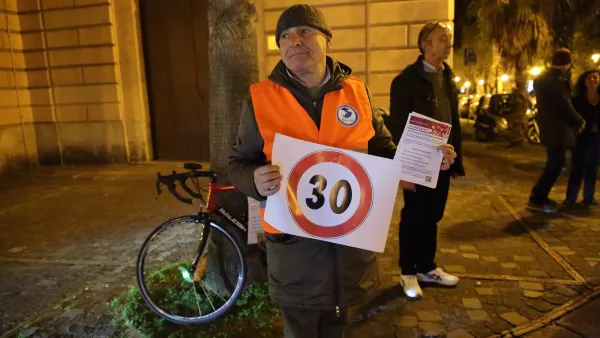
Rome is Latest European Capital to Drop Speed Limit to 30KPH
Traffic fatalities in Bologna, the first major Italian city to lower their speed limit, dropped by 50 percent in the first year.
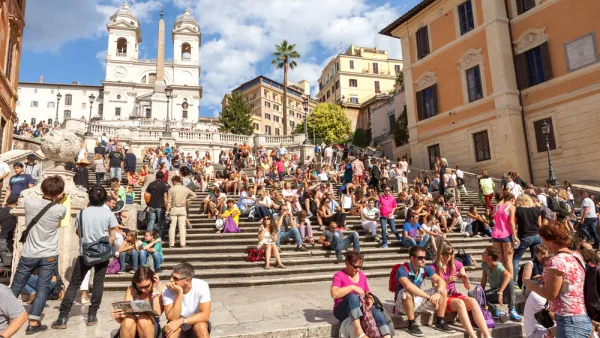
Denied: No Sitting on Rome's Spanish Steps
Rome's Spanish Steps are no longer a place for sitting.
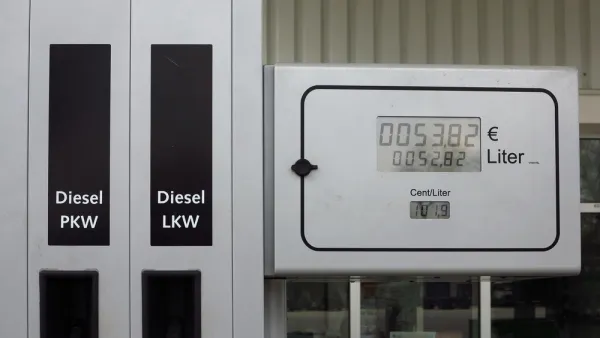
German Cities to Breathe Easier After Court Ruling on Diesel Car Bans
Unlike banning sales of new internal combustion vehicles at a future date, the German court ruling applies to the operation of older, diesel-powered cars in the country's most polluted cities. It's up to the cities, though, to enact the bans.

Planetizen Federal Action Tracker
A weekly monitor of how Trump’s orders and actions are impacting planners and planning in America.

The state-sanctioned urbicide of Austin
People don’t kill cities. Freeways do.

US to reduce Colorado River water deliveries to Mexico
A new Colorado Treaty amendment reduces Mexico’s Colorado River water allocation by 250,000 acre feet.

Nation's most wind-powered state turns to coal as data centers increase energy demand
For the first time in decades, Iowa has increased its generation of coal power.

NYC cools commuters with city's first rain garden above a bus stop
New York City officials say the plants in the rain garden can absorb 16 gallons of rainwater during heavy storms.

Brightline West’s future may rely on $6 billion federal loan
The company has until Nov. 2 to make a $400 million equity investment into its proposed high-speed rail line.

FREE Course: Walkable City 1: Why Walkability?
After describing his path towards focusing on walkability as the essence of good planning, Jeff Speck marches through his five principal reasons for making more walkable places.
Reinventing Malls: Planning Alchemy—Turning Gray Fields Into Gold
The course focuses on the opportunities and imperatives that shape reinvention of mall sites.

Greater Baltimore Committee
Eagle County Government
Harvard University Graduate School of Design
The Architects Foundation
University of Cincinnati Online
The Pocatello Development Authority
The Urban Renewal Agency of the City of Pocatello
Journal of the American Planning Association