The parking “epidemic” in Hoboken is so bad that no parking garage conceivable by man can contain our demand. So this week, Hoboken ventures where no city has gone before; we are rolling out the nation’s first city-wide on-street car-sharing program as a public-private partnership between Hoboken and Connect by Hertz.



The parking "epidemic" in Hoboken is so bad that no parking garage conceivable by man can contain our demand. So this week, Hoboken ventures where no city has gone before; we are rolling out the nation's first city-wide on-street car-sharing program as a public-private partnership between Hoboken and Connect by Hertz.
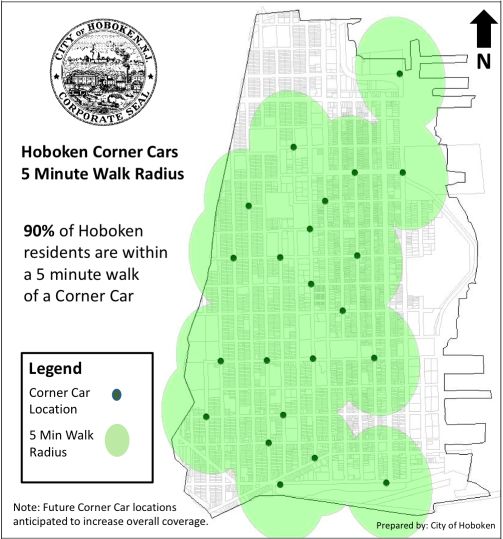
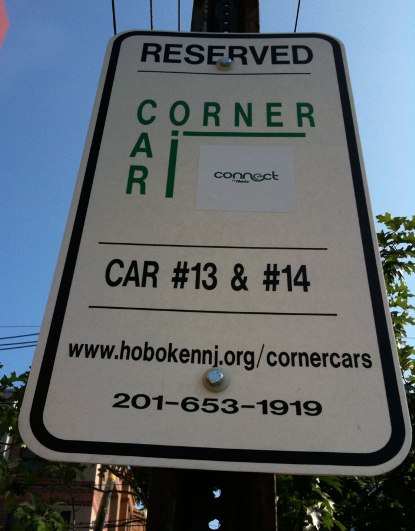
The program, called Hoboken Corner Cars, seeks to sprinkle car-sharing vehicles on-street throughout the entire city – complete with exclusive, reserved parking spaces - so that these vehicles are much more accessible and convenient than any personally owned car. Existing car-sharing statistics in Hoboken justify this special treatment; for every one of these vehicles placed in the community, over 17 households will choose to give up their cars, taking cars off the street and culling the glut of "recreational" ownership for residents who commute daily via transit. An additional 20 or more households say they postpone or stop considering buying a car because car-sharing vehicles are available. The cherry on the sundae is a potential savings per household of $3,000 to $5,000 over vehicle ownership.
Hoboken hopes to not only convince current residents that owning a car is much more hassle than it's worth, but to also "sell" the car-sharing alternative concept to the constant flow of suburban-flight newcomers who have no idea that it is possible to live their lives sans auto.
On environmental considerations, the program requires the fleet mix to maintain an average of 35MPG, and since car-sharing utilization is measured as multiple households per car, each car-sharing vehicle enjoys a significantly smaller carbon footprint compared to the traditional American profile of multiple cars per household. In terms of sustainable urban infrastructure, the City Council President successfully appealed to both his Council colleagues and the public by likening the initial phase of the program - where approximately 750 cars are expected to be removed from Hoboken streets – to building an invisible 750 space parking garage for free.
Hoboken hopes to serve as a model for other cities to take the leap of faith of taking away a small number of parking spaces from residents in order to free up hundreds or thousands more. For dense, urban environments with intense on-street parking problems, car-sharing is truly a modern demand-based solution that makes parking garages seem so last century!

Hoboken's Innovative Car-Share Program Provides National Model, While Locals Grumble
Lauded by transit advocates, and garnering attention from cities across America, an experimental car-sharing program in Hoboken has proven effective in dissuading private car use. If only the city's residents were as happy with its success.
Hoboken Challenges Residents to "Surrender" Their Permits (Read: Cars)
Over the past year, we've been guiding the City of Hoboken, NJ towards providing sufficient alternative modes of transportation such that owning a car for a large number of residents becomes more than unattractive, it's simply not necessary. The goal is not to tell residents that they can't own a car, but to make life without a car so easy that every single family in Hoboken can freely choose whether owning a car is what they want to spend their money on. For those who decide that a daily commute by car is most practical, my job is to make it possible to find a parking space and travel in and out of town without too much friction. However, for the overwhelming majority of Hobokenites who commute daily on foot, bicycle, or via transit, life without a car should be as
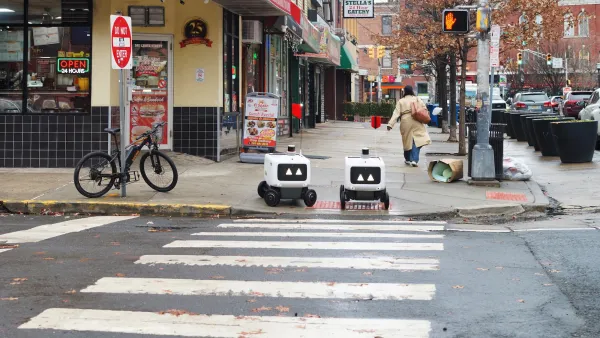
A robot army is assessing accessibility and mobility on Hoboken's streets
The city is deploying robotic scanners to identify gaps in the city's sidewalks, curb cuts and other mobility infrastructure.

Planetizen Federal Action Tracker
A weekly monitor of how Trump’s orders and actions are impacting planners and planning in America.

‘Going backwards:’ Baltimore mayor, students rally against state's transit funding plan
Maryland's proposed six-year plan provides no funding for Baltimore’s BMORE bus program and reduces its road maintenance funding.

Detroit to transform waterfront with $2.2 billion investment
Developers will convert about 18 acres of unused parking lot space into civic spaces.

Battered from federal attacks, Louisiana's offshore wind industry refuses to give up
State Representative Joe Orgeron expressed hope that the state could revitalize its wind industry once President Trump leaves office.

Data center developers are using lawsuits, cash offers to ‘overwhelm’ rural America
Newsrooms in five states worked together to uncover the tactics big tech developers use to buy land from reluctant communities.

U.S.-Iran war may have ‘devastating’ impact on cost to warm homes
Vermont and Maine residents may see a 76% increase in the cost of warming their homes this winter.

FREE Course: Walkable City 1: Why Walkability?
After describing his path towards focusing on walkability as the essence of good planning, Jeff Speck marches through his five principal reasons for making more walkable places.
Reinventing Malls: Planning Alchemy—Turning Gray Fields Into Gold
The course focuses on the opportunities and imperatives that shape reinvention of mall sites.

One Hundred Miles
County of Mendocino
planning NEXT
The Architects Foundation
University of Cincinnati Online
Montrose County
Northern Illinois Transit Authority (NITA)
The Pocatello Development Authority

