The jury is out on skyscrapers- are they responsible density, or terrible energy hogs? As Indian cities like Mumbai and Delhi grow, architect Aditi Nargundkar Pathak says the time to consider skyscrapers is now.


Pathak looks at the plusses and minuses of adding skyscrapers to Mumbai's skyline:
"There are some obvious answers to this question like smaller building foot print, high density, augmented use of the urban resources and a possibility of use of height for producing alternative energy like wind, solar etc (though the idea is at an experimental stage). The arguments against tall structures are that they are known to be energy hoggers.High energy requirement for mechanical ventilation and conveyance required by tall structures seem difficult to meet when Indian cities are prone to power outages."
Thanks to Sathya Priya
Read the full story: The Urban Vision

The myth of the 'first skyscraper:' How a clever PR campaign duped the world
The lie that laid claim to the skyscraper’s origins is well documented. Why do we still believe it?

India’s Women-only ‘Pink Parks:’ Safe Refuge or Segregated Enclaves?
Women-only public spaces can provide safety and community, but critics argue they fail to address deeper structural problems.
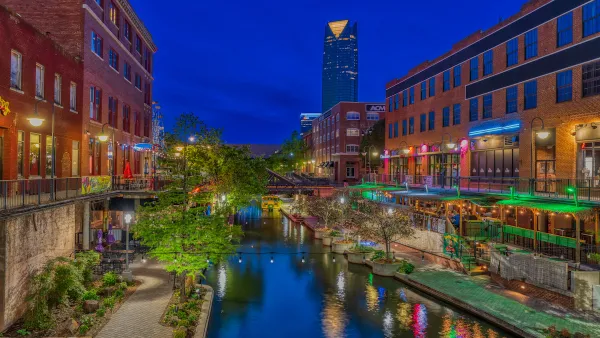
Tallest Building in US Proposed for OKC
The building would stand 1,907 feet high, twice as tall as any other building in the Oklahoma City skyline.

Planetizen Federal Action Tracker
A weekly monitor of how Trump’s orders and actions are impacting planners and planning in America.

California plans to bury El Niño’s downpour
If the state plays its cards right, it may be able to store a billion acre-feet of El Niño’s water in aquifers.

Desperate measures: Advocates weigh draining Lake Powell to fill Colorado River
Draining the reservoir could reduce evaporation losses by a couple hundred thousand acre-feet.

Los Angeles just elected an urban planner as its mayor
Transportation analysts are optimistic that Raman will be more aggressive in addressing transit issues than Bass.

Mamdani’s pied-à-terre tax survives legal challenge
A panel of judges found that the plaintiffs failed to demonstrate injury as a result of New York City's implementation of the tax.

Eastern Nebraska is running out of electricity
Data centers and electrification are straining eastern Nebraska’s grid, throttling economic development.

FREE Course: Walkable City 1: Why Walkability?
After describing his path towards focusing on walkability as the essence of good planning, Jeff Speck marches through his five principal reasons for making more walkable places.
Reinventing Malls: Planning Alchemy—Turning Gray Fields Into Gold
The course focuses on the opportunities and imperatives that shape reinvention of mall sites.

City of Rosemead
Rutgers University, Edward J. Bloustein School of Planning and Public Policy
One Hundred Miles
University of Michigan School for Environment and Sustainability (SEAS)
Hunter College, City University of New York (CUNY)
The Architects Foundation
City of Cambridge
Montrose County
The Pocatello Development Authority