Nature writer David Oates embeds himself in green, urban Portland and finds much to like about the green city movement but also much room for improvement.


The main issue Oates confronts is how unaffordable this sort of green development is for the average American.
"It's a good vision, but, so far, the Green Urbanism I've seen glides on a silent lubrication of money. A lot of it. And on an enabling American silence about class. Both these silent premises have been deeply challenged in the economic catastrophes that followed my residency in South Waterfront.
None of the waiters or bank clerks employed in this neighborhood-or poodle-clippers, baristas, or construction guys working the next tower over-can live here. They do not walk to work. A two-bedroom in the John Ross cost $700,000 or more at the time of my stay in South Waterfront. For comparison the median two-bedroom house (on the West Coast) was $309,000, and the average worker couldn't afford that either. Prices in both categories have dropped in the economic free fall, but the problem remains. Several new towers have since risen in South Waterfront, some offering apartments instead of condos. Still nothing for ordinary working folks, though. That two-bedroom? Bring your cash: up to $5,000 a month."
Read the full story: Eco City Dreaming

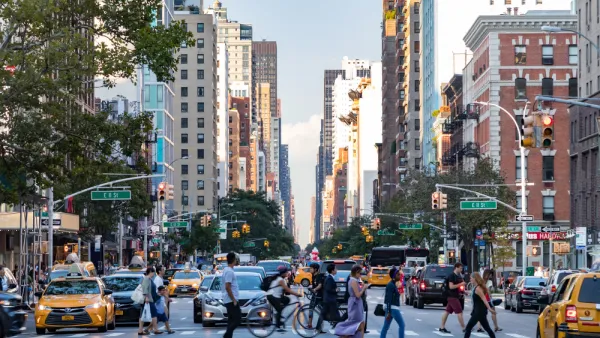
Foot Traffic Ahead: Report Reveals the Resilience of Walkable Places
Reports of the city’s death have been greatly exaggerated, according to new research from Smart Growth America.
The Housing Supply Debate: Evaluating the Evidence
Let's rely on science, not ideology and propaganda, when planning solutions to urban unaffordability. Look for credible evidence in the peer-reviewed publications referenced here.
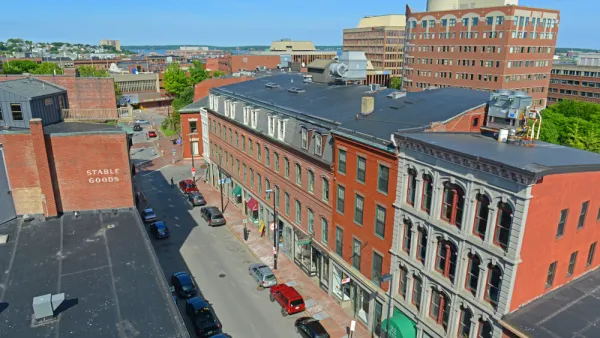
On Rent Control and a Green New Deal, Portland, Maine Voters Go Where Others Don't Dare
Rent control was dealt another high-profile setback in California, and the Green New Deal is a hot button issue stuck in limbo in Congress. Both efforts got the go-ahead from voters in Portland, Maine in November.

Planetizen Federal Action Tracker
A weekly monitor of how Trump’s orders and actions are impacting planners and planning in America.

Amtrak, CN end decades-long dispute with eight-year agreement
The new operating agreement establishes an updated framework for the companies to work together, including processes to resolve disputes.

Judges permit Denver to divert 77,000 acre feet from the Colorado River for reservoir expansion
Overuse and climate change have caused the Colorado River’s water levels to plummet.

Alabama scores up to $2.5 billion federal loan for largest infrastructure project in state’s history
The Mobile River Bridge and Bayway Project aims to ease congestion at Alabama’s worst bottleneck.

Trump is considering data centers on 6 states' public land — some state officials say they had no idea
If the administration approves the proposed projects, data center and data center-related developments will cover 17,600 acres of public land.

Despite court ruling, Trump is keeping nearly all wind projects in the US on hold
At least 110 wind energy projects have not heard from the government since a federal judge ruled that the Trump administration's freeze on wind turbine clearances was likely illegal.

FREE Course: Walkable City 1: Why Walkability?
After describing his path towards focusing on walkability as the essence of good planning, Jeff Speck marches through his five principal reasons for making more walkable places.
Reinventing Malls: Planning Alchemy—Turning Gray Fields Into Gold
The course focuses on the opportunities and imperatives that shape reinvention of mall sites.

KFH Group Inc.
Greater Baltimore Committee
Eagle County Government
The Architects Foundation
University of Cincinnati Online
The Pocatello Development Authority
The Urban Renewal Agency of the City of Pocatello