Kenneth Small of UC Irvine shows that higher prices do reduce driving, as do recessions when workers lose their jobs, which is one of the main factors in the recent drop in VMT.


"People were surprised by the very rapid rise in gas prices, and they changed their driving behavior," said Kenneth A. Small, a transportation economist at the University of California, Irvine. "But my suspicion is that it is temporary. As soon as unemployment gets back to pre-recession levels, we will see Americans doing a lot more driving again."
Small may have been surprised that it didn't take long for Americans to resume their driving habits, recession or not. As reported by U.S. DOT in April, 2010's Transportation Trends in Focus, "Upward Trend in Vehicle-Miles Resumed During 2009":
"After a 2-year interruption to a long-term upward trend, the number of vehicle-miles traveled (VMT) on the Nation's highways appears to have resumed a pattern of upward growth in 2009. While VMT rises and falls seasonally, the years 2007 and 2008 showed significant monthly declines in VMT after the effects of seasonal fluctuations were extracted from the data."
Thanks to Eric Gilbertson
Read the full story: METRICS: Driving Shifts Into Reverse
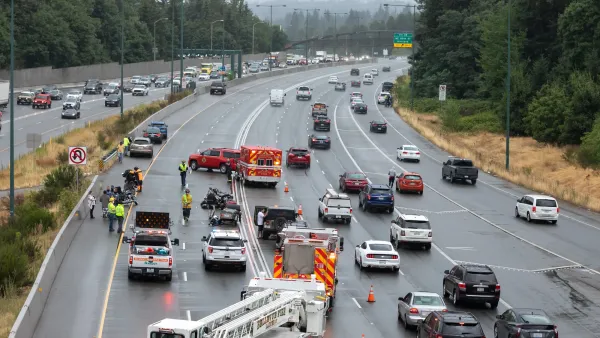
Commentary: Counting Road Deaths by VMT Minimizes the Harm and Normalizes Traffic Violence
When measured per capita, traffic fatalities in the United States far outstrip those in peer countries.
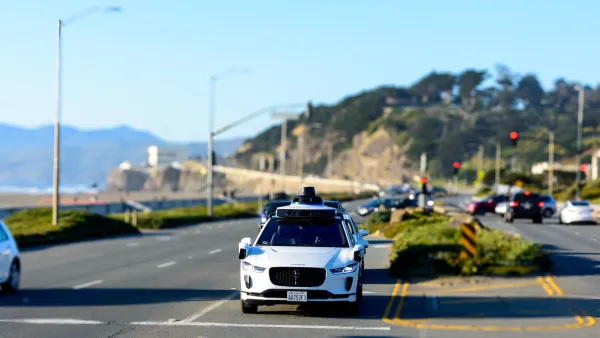
Study: Self-driving Cars Could Raise VMT by 6%, Increasing Congestion
The study contradicts early predictions that AVs would reduce driving miles.
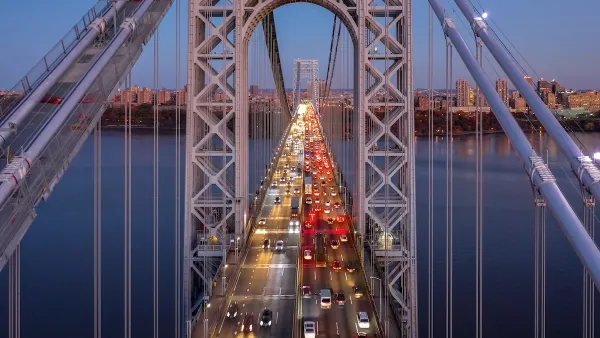
Vehicle Miles Travelled, Level of Service, and a Soon-to-be-Insolvent Transportation Trust Fund
Level of Service and the gas tax have served our transportation needs for a long time. Now, it’s time for a change.

Desperate measures: Advocates weigh draining Lake Powell to fill Colorado River
Draining the reservoir could reduce evaporation losses by a couple hundred thousand acre-feet.

Eastern Nebraska is running out of electricity
Data centers and electrification are straining eastern Nebraska’s grid, throttling economic development.

Move over, LA: St. Louis gears up for Olympics, invests millions in downtown redevelopment
The Missouri city will host the 2028 Olympic soccer group stage and knockout matches.

Mass. votes against statewide minimum lot size for single-family homes
Over 2 million residents voted on Question 7; it was decided by just over 30,000 votes.

Maryland’s $15 billion bridge project gains key approval
The Maryland Transit Authority said the project will create over 60,000 jobs and add $23 billion to the local economy.

‘No clear next steps’ for Chicago's permanent festival grounds
Eleventh Ward Ald. Nicole Lee has suggested Soldier Field as a possible location for the permanent event space.

FREE Course: Walkable City 1: Why Walkability?
After describing his path towards focusing on walkability as the essence of good planning, Jeff Speck marches through his five principal reasons for making more walkable places.
Reinventing Malls: Planning Alchemy—Turning Gray Fields Into Gold
The course focuses on the opportunities and imperatives that shape reinvention of mall sites.

City of Rosemead
Rutgers University, Edward J. Bloustein School of Planning and Public Policy
One Hundred Miles
University of Michigan School for Environment and Sustainability (SEAS)
Hunter College, City University of New York (CUNY)
The Architects Foundation
City of Cambridge
Montrose County
The Pocatello Development Authority