Japan is struggling to lure tourists, which is causing officials there to rethink how they market their cities and what sorts of attractions they should be offering.


It's also causing them to wonder about what attractions they shouldn't be offering. A proposed aquarium in Kyoto has sparked controversy over what the city needs to be doing to convince tourists to visit.
"Whether or not Kyoto gets the 118,000-square-foot aquarium, experts say that Japan clearly needs to re-examine its approach to tourism, a $944 billion industry worldwide - bigger than autos, bigger than steel.
Despite choice destinations like ancient Kyoto and modern, bustling Tokyo, as well as beach and ski resorts, Japan attracted just 8.4 million foreign visitors in 2008 - a small fraction of France's 79 million, the United States' 58 million or China's 53 million, according to the World Tourism Organization. In 2009, the number of foreign visitors to Japan dropped an additional 18.7 percent, to 6.79 million, amid the global recession, according to Japan's government."
Read the full story: As Kyoto Attractions, Wave Pools vs. Temples

Friday Fun: A Mario Kart Tour of Japan
Foreign tourists are taking to the streets of Japan dressed as Mario, Luigi, and more of their friends from the Nintendo universe.
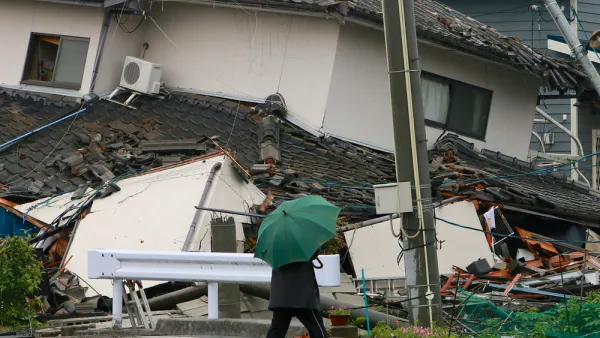
Idea Worth Copying: Japan's Theme-Park-Style Disaster Preparation Centers
Visitors to Japan’s theme-park-style disaster preparation centers can experience simulated quakes, typhoons, and fires. Perhaps a similar idea would be helpful in part of the United States?
Tips for Planners to Design Memorable Tourism Experiences
Tourists' expectations when they travel are becoming increasingly sophisticated, seeking stimulating and meaningful experiences. The new book Gamification in Tourism shares how cities are designing memorable experiences.

Planetizen Federal Action Tracker
A weekly monitor of how Trump’s orders and actions are impacting planners and planning in America.

California plans to bury El Niño’s downpour
If the state plays its cards right, it may be able to store a billion acre-feet of El Niño’s water in aquifers.

Desperate measures: Advocates weigh draining Lake Powell to fill Colorado River
Draining the reservoir could reduce evaporation losses by a couple hundred thousand acre-feet.

In Texas, data centers are swallowing promised parkland
Residents who moved to Taylor, Texas for a rural community now have to contend with three data centers in their backyard.

How a Chicago-sized wind farm beat the odds and powered on
The project spanned five presidential administrations and a standoff with a U.S. military base.

MTA gives itself 30 days to transform pit into basketball court
The site has been under construction since 2022; the city originally estimated it would finish the court in 2024.

FREE Course: Walkable City 1: Why Walkability?
After describing his path towards focusing on walkability as the essence of good planning, Jeff Speck marches through his five principal reasons for making more walkable places.
Reinventing Malls: Planning Alchemy—Turning Gray Fields Into Gold
The course focuses on the opportunities and imperatives that shape reinvention of mall sites.

City of Rosemead
Rutgers University, Edward J. Bloustein School of Planning and Public Policy
One Hundred Miles
Hunter College, City University of New York (CUNY)
The Architects Foundation
University of Cincinnati Online
City of Cambridge
Montrose County
The Pocatello Development Authority