With huge financial problems facing government at all levels in the U.S., some worry that infrastructure will fall by the wayside as budgetary priorities are laid out.


Donald F. Kettl, dean of the School of Public Policy at the University of Maryland, writes that financial, policy and political problems are standing in the way of much-needed improvements to America's infrastructure.
"The problem isn't just devilish. It's stuck in a devil's triangle of cross-pressures conspiring to make a solution incredibly tough. On one side of the triangle is the deep and ongoing state budget crisis. Job recovery from the Great Recession is slow, and so too is the revival in state revenues. Medicaid continues to drain state budgets, and the hemorrhage is increasing as aging baby boomers begin drifting into government-funded nursing homes. Rising public debt, especially from the feds, threatens to crowd out other spending. The Center for Best Practices at the National Governors Association pointed to the risk of a "lost decade" for state government, with an ongoing budget crunch hanging state policy. It's time, the center warned, to redesign "state government for the new normal." Will this new normal have room for infrastructure repair before more bridges crumple, roads crumble and mass transit stumbles?"
FULL STORY: The Looming Infrastructure Crisis

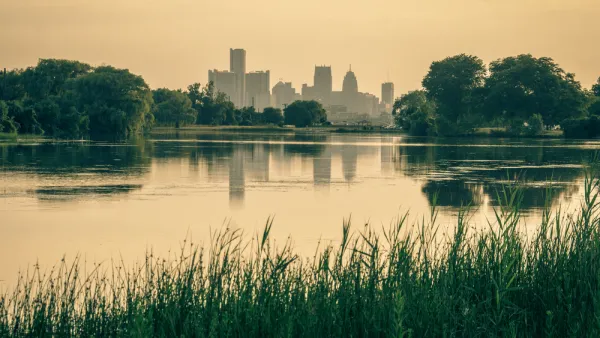
Michigan’s Draft Five-Year Transportation Plan Includes $10.9 Billion for Highway Projects
Michigan legislators are also considering $3.7 billion for the state’s Public Transportation Program over the next five years.
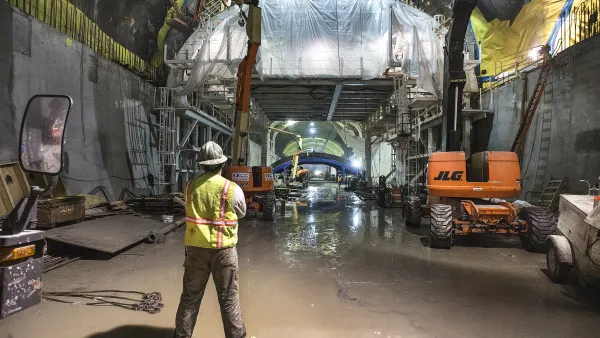
Why Big Infrastructure Projects Go Over Budget
Most major infrastructure projects fail to meet projected timelines or budgets. Some experts say this is a structural flaw built into "systematically deceptive" estimate practices.
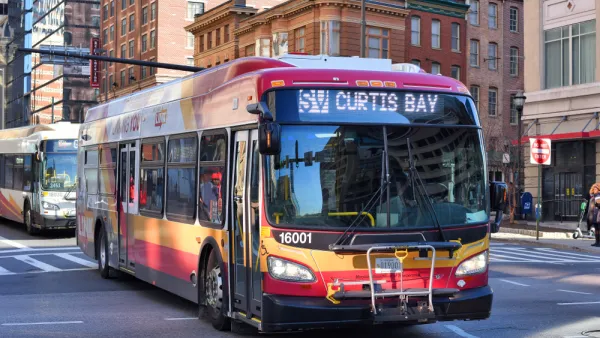
Baltimore Bus Service Cuts Restored
Maryland Gov. Larry Hogan rescinded a plan that would have cut bus service in the city of Baltimore to the bone.

The state-sanctioned urbicide of Austin
People don’t kill cities. Freeways do.

US to reduce Colorado River water deliveries to Mexico
A new Colorado Treaty amendment reduces Mexico’s Colorado River water allocation by 250,000 acre feet.

New Jersey’s second-largest city bans standalone data centers
Jersey City will continue to allow co-location facilities, such as those meant for research institutions that store their own data.

Amtrak not solely to blame for New Jersey commuter rail's unreliability, report finds
A new study from the Garden State Initiative found that NJ Transit’s budget grew 20% across a 4 year period, but reliability declined significantly over the same period.

EPA erases limits on planet-warming pollution from power plants
Under Monday’s plan, power plants would still have some limits on how much mercury, arsenic and other contaminants they can emit.

Phoenix announces new on-demand transit service, more frequent RAPID buses
Both new services will launch in October, and are part of Phoenix's Project Effective Access Solutions for Easing Congestion.

FREE Course: Walkable City 1: Why Walkability?
After describing his path towards focusing on walkability as the essence of good planning, Jeff Speck marches through his five principal reasons for making more walkable places.
Reinventing Malls: Planning Alchemy—Turning Gray Fields Into Gold
The course focuses on the opportunities and imperatives that shape reinvention of mall sites.

Eagle County Government
Harvard University Graduate School of Design
Nashville Planning Department
The Architects Foundation
University of Cincinnati Online
The Pocatello Development Authority
The Urban Renewal Agency of the City of Pocatello
Journal of the American Planning Association