Bought at the height of the real estate market and intended for conversion into high-priced luxury apartment buildings, empty plots of land are littered throughout Los Angeles, undeveloped and quietly back on the market at greatly reduced prices.


"These units were intended for buyers so wealthy that their main challenge wasn't coming up with millions of dollars to spend but rather to find a dwelling that suited their refined tastes, developers said. It turned out that the target market of international jet-setters, movie stars and corporate barons wasn't as deep as many had hoped.
So the fact that many of these parcels come with hard-won government approvals for platinum-level developments doesn't necessarily add to their value, said Norris of Norris Realty Advisors.
He estimates that such commercial properties are worth about 40% to 60% of what they were at their peak in late 2007 and early 2008. But with today's tight credit market and tougher lending standards, few deals are being done."
Now, the high-rise condo market has dried up in L.A. and the planned residential towers no longer seem like such a good idea. Many real estate experts are left wondering what will happen with these empty plots and whether they will be able to materialize into any built projects within the next few years.
Read the full story: After the bust, prime parcels at cut-rate prices

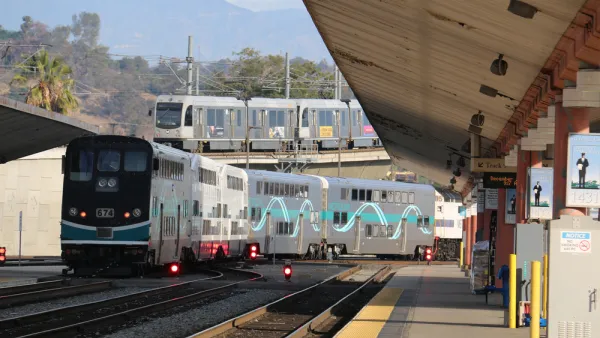
In L.A., With a Reputation Sprawl, Homes Near Transit Selling at a Premium
Homebuyers are looking for locations with quality transit access in Los Angeles, and they're willing to pay more for the option having transit nearby.
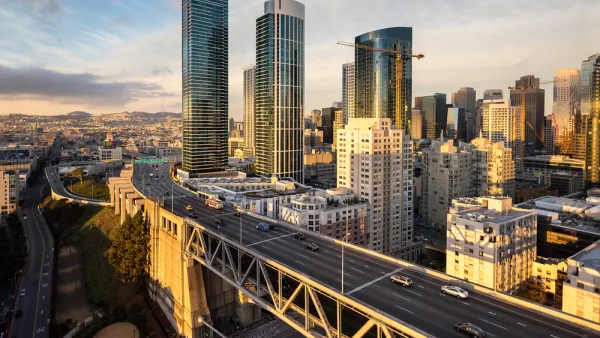
San Francisco Home Construction Expected to Slump This Year
Due to various market and industry factors, developers are not planning to start many new construction projects in 2019.
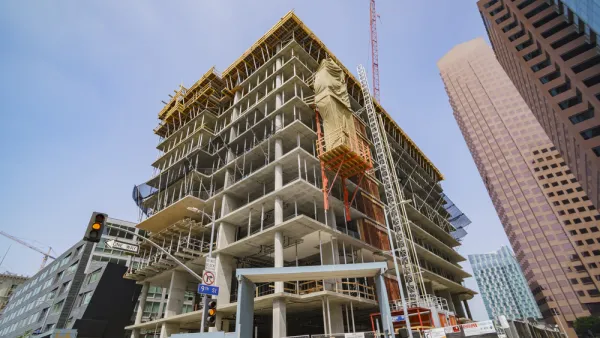
Downtown L.A. Sees Vacancies Rise and Homeless Populations Grow
There's plenty of housing available in Downtown L.A. for the wealthy but, while those apartments sit empty, many looking for housing find costs too high to pay.

Planetizen Federal Action Tracker
A weekly monitor of how Trump’s orders and actions are impacting planners and planning in America.

California plans to bury El Niño’s downpour
If the state plays its cards right, it may be able to store a billion acre-feet of El Niño’s water in aquifers.

Chicago breaks ground on $3 billion megadevelopment
The new neighborhood, titled Foundry Park, will one day host 3,700 residences.

California High-Speed Rail Authority CEO resigns after $600,000 scandal
Under Ian Choudri, the authority used taxpayer dollars to fund first class flights and trips to nightclubs.

Want to study the Missouri River? Soon, you may need unanimous approval from 10 states
Legislation would require 10 governors’ permission to study or build projects moving water outside the basin.

Desperate measures: Advocates weigh draining Lake Powell to fill Colorado River
Draining the reservoir could reduce evaporation losses by a couple hundred thousand acre-feet.

FREE Course: Walkable City 1: Why Walkability?
After describing his path towards focusing on walkability as the essence of good planning, Jeff Speck marches through his five principal reasons for making more walkable places.
Reinventing Malls: Planning Alchemy—Turning Gray Fields Into Gold
The course focuses on the opportunities and imperatives that shape reinvention of mall sites.

City of Rosemead
Rutgers University, Edward J. Bloustein School of Planning and Public Policy
One Hundred Miles
Hunter College, City University of New York (CUNY)
The Architects Foundation
University of Cincinnati Online
City of Cambridge
Montrose County
The Pocatello Development Authority