Small farms are increasingly being integrated into new housing development proposals. One new project in Washington is betting on the growing popularity of local food to draw in homebuyers.


One company is looking to build mid-rise and high-density housing on roughly 1,000 acres outside Seattle. The developer is hoping that including a farm in the project could help local agriculture stay alive amidst urban growth.
"The project would not only transform Kitsap's forested northern tier and provide a safety valve for Seattle's developmentally stressed Eastside suburbs, but Rose predicts it could trigger $600 million in private investment in the county over the next two decades. Predictably, the plan has generated high excitement in Kitsap's business community and even elicited tepid enthusiasm from the county's environmentalists.
Almost unnoticed in the local to-do about the planned development is a piece of Rose's vision that centers on a 27-acre farmsite just south of Port Gamble. The long-dormant farm sits near the middle of Olympic's development plan and is, in Rose's words, 'a fabulous amenity.'"
Read the full story: On the urban fringes: small farms arising
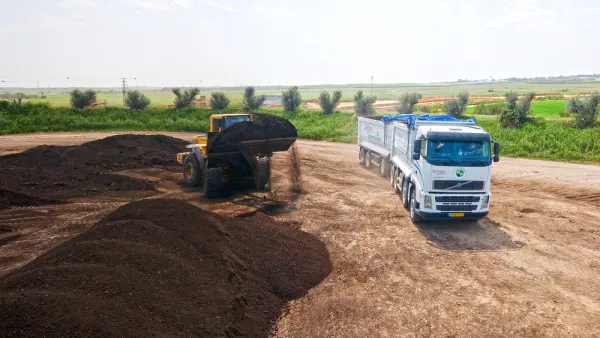
Human Waste as a Climate Solution
Using treated waste as an agricultural fertilizer is controversial, but the practice has several climate-related benefits.
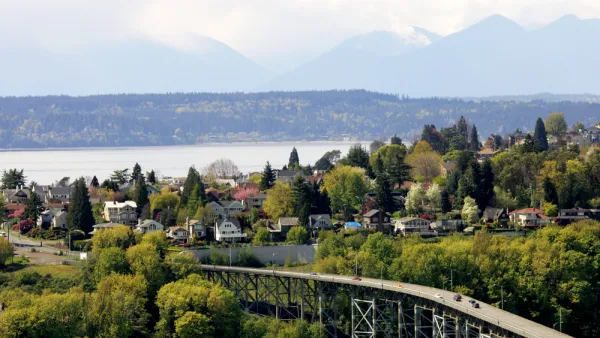
Housing Construction Slows to a Crawl in Seattle's Suburbs
Seattle's suburbs are no longer leading the region in housing construction, even as Seattle's urban core is building more housing than ever.

Two Transit Agencies Using Their Clout to Spur Affordable Housing
More transit agencies are recognizing that it's not enough to build transit infrastructure if the people who really need it don't live close enough to use it.

Planetizen Federal Action Tracker
A weekly monitor of how Trump’s orders and actions are impacting planners and planning in America.

California plans to bury El Niño’s downpour
If the state plays its cards right, it may be able to store a billion acre-feet of El Niño’s water in aquifers.

Desperate measures: Advocates weigh draining Lake Powell to fill Colorado River
Draining the reservoir could reduce evaporation losses by a couple hundred thousand acre-feet.

Housing is the top priority of Seattle’s sole new councilmember
Jenks campaigned on building 1,000 new units of affordable housing.

New tax cuts may slash $1.5 billion in funding for Miami transit, public parks
Amendment 3 will save Miami-Dade homeowners $2,700 in 2028.

Arizona, Wisconsin, Pennsylvania hope to finally advance climate goals post-midterms
The three states have spent years under Republican or divided control.

FREE Course: Walkable City 1: Why Walkability?
After describing his path towards focusing on walkability as the essence of good planning, Jeff Speck marches through his five principal reasons for making more walkable places.
Reinventing Malls: Planning Alchemy—Turning Gray Fields Into Gold
The course focuses on the opportunities and imperatives that shape reinvention of mall sites.

City of Rosemead
Rutgers University, Edward J. Bloustein School of Planning and Public Policy
One Hundred Miles
University of Michigan School for Environment and Sustainability (SEAS)
Hunter College, City University of New York (CUNY)
The Architects Foundation
City of Cambridge
Montrose County
The Pocatello Development Authority