As part of its extensive coverage of water issues in the U.S., The New York Times looks at the aging water systems that plague American cities and what it would cost to fix them.


"Today, a significant water line bursts on average every two minutes somewhere in the country, according to a New York Times analysis of Environmental Protection Agency data.
In Washington alone there is a pipe break every day, on average, and this weekend's intense rains overwhelmed the city's system, causing untreated sewage to flow into the Potomac and Anacostia Rivers.
State and federal studies indicate that thousands of water and sewer systems may be too old to function properly."
The EPA estimated in 2009 that it would take more than $300 billion to revamp the nation's aging water infrastructure.
FULL STORY: Saving U.S. Water and Sewer Systems Would Be Costly

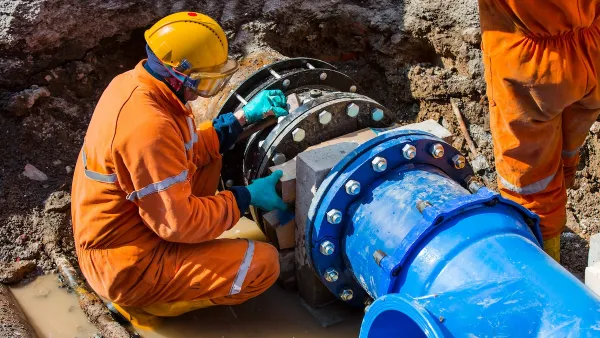
Texas Water Board to Distribute $1 Billion for Infrastructure Improvements
The state must invest $80 billion by 2070 to upgrade its outdated water infrastructure.
Conservation Efforts Straining Water Infrastructure
Water conservation efforts that limited when Los Angeles County residents could water their lawns may have caused a spate of water main bursts last summer and fall.
Aging Water Pipes In Need Of Repair And Renewal
Old wooden pipes and failing water mains highlight the infrastructural water challenges facing many communities.

The state-sanctioned urbicide of Austin
People don’t kill cities. Freeways do.

US to reduce Colorado River water deliveries to Mexico
A new Colorado Treaty amendment reduces Mexico’s Colorado River water allocation by 250,000 acre feet.

New Jersey’s second-largest city bans standalone data centers
Jersey City will continue to allow co-location facilities, such as those meant for research institutions that store their own data.

Amtrak not solely to blame for New Jersey commuter rail's unreliability, report finds
A new study from the Garden State Initiative found that NJ Transit’s budget grew 20% across a 4 year period, but reliability declined significantly over the same period.

EPA erases limits on planet-warming pollution from power plants
Under Monday’s plan, power plants would still have some limits on how much mercury, arsenic and other contaminants they can emit.

Phoenix announces new on-demand transit service, more frequent RAPID buses
Both new services will launch in October, and are part of Phoenix's Project Effective Access Solutions for Easing Congestion.

FREE Course: Walkable City 1: Why Walkability?
After describing his path towards focusing on walkability as the essence of good planning, Jeff Speck marches through his five principal reasons for making more walkable places.
Reinventing Malls: Planning Alchemy—Turning Gray Fields Into Gold
The course focuses on the opportunities and imperatives that shape reinvention of mall sites.

Eagle County Government
Harvard University Graduate School of Design
Nashville Planning Department
The Architects Foundation
University of Cincinnati Online
The Pocatello Development Authority
The Urban Renewal Agency of the City of Pocatello
Journal of the American Planning Association