In response to a recent piece criticizing architecture critic Nicolai Ouroussoff, Places Journal Editor Nancy Levinson extends the criticism to the entire field, questioning whether its global scope is realistic.


Levinson argues that the realm of architecture is global, and expecting any critic to have a global knowledge is simply asking too much.
"I'd like to spotlight an issue that's gotten less attention and which seems to me to underlie the contemporary critical dilemma. This is the rise of the global critic, the critic with the world beat, beaming copy from Beijing, Dubai, Rome, Basel, or wherever the newest icon or latest star is being born. In a sense this might seem a natural progression in the portfolio of the critic - a nimble adaptation to a discipline that's gone planetary. Yet the accelerating globalization of architecture culture has created for architecture criticism an unintentional conundrum, which is that it's practically impossible to produce good criticism on a global scale."
Read the full story: Critical Beats
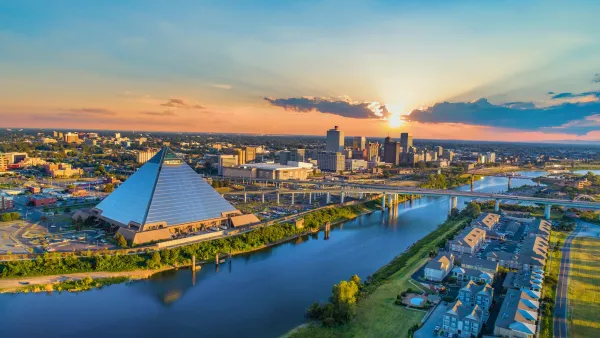
15 US cities and their global namesakes
Hundreds of cities around the United States are named after other places. We tour a few of them.
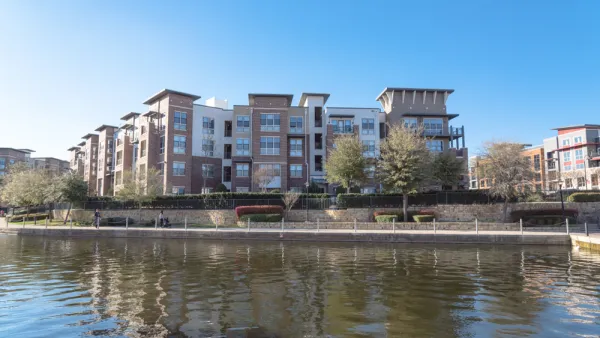
Is the Urban-Suburban Divide Destined to Disappear?
In a new book, Hans Westlund and Tigran Haas argue that the global knowledge economy is radically reshaping urban development. Eventually, they say, it'll render meaningless our present notions of "urban," "suburban," and "rural."
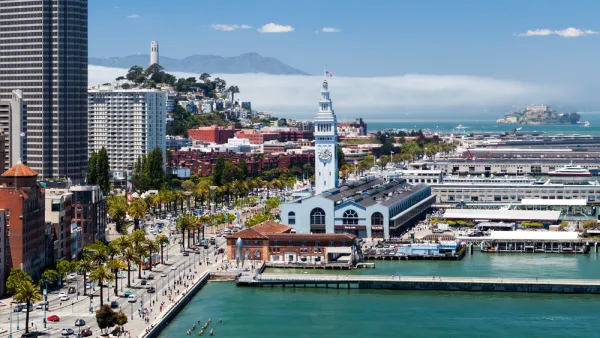
Report Ranks the World's Leading Cities: Now and in the Future
New York is the most important city in the world, but San Francisco is best positioned for the future, according to AT Kearney's "Global Cities" report.

Planetizen Federal Action Tracker
A weekly monitor of how Trump’s orders and actions are impacting planners and planning in America.

California plans to bury El Niño’s downpour
If the state plays its cards right, it may be able to store a billion acre-feet of El Niño’s water in aquifers.

Desperate measures: Advocates weigh draining Lake Powell to fill Colorado River
Draining the reservoir could reduce evaporation losses by a couple hundred thousand acre-feet.

Mamdani’s pied-à-terre tax survives legal challenge
A panel of judges found that the plaintiffs failed to demonstrate injury as a result of New York City's implementation of the tax.

Eastern Nebraska is running out of electricity
Data centers and electrification are straining eastern Nebraska’s grid, throttling economic development.

Seattle passes record-breaking transit services expansion
Proposition 1 will double the city’s transit tax to add 95,000 more bus trips and preserve 180,000 bus trips annually.

FREE Course: Walkable City 1: Why Walkability?
After describing his path towards focusing on walkability as the essence of good planning, Jeff Speck marches through his five principal reasons for making more walkable places.
Reinventing Malls: Planning Alchemy—Turning Gray Fields Into Gold
The course focuses on the opportunities and imperatives that shape reinvention of mall sites.

City of Rosemead
Rutgers University, Edward J. Bloustein School of Planning and Public Policy
One Hundred Miles
University of Michigan School for Environment and Sustainability (SEAS)
Hunter College, City University of New York (CUNY)
The Architects Foundation
City of Cambridge
Montrose County
The Pocatello Development Authority