According to the latest census data projections, Canada will become a remarkably diverse nation in the coming decades, with increasing ethnic and racial mixing being concentrated in the nations' cities.


According to Statistics Canada, a "massive" transformation will be taking place in the near future as visible minorities will represent a larger proportion of the population. In some cities, notably Toronto, they will become the majority. As the Globe and Mail reports,
"By 2031, one in three Canadians will belong to a visible minority. One in four will be foreign-born, the highest proportion since the end of the last wave of mass immigration that began around 1910, Statscan said in a release Tuesday.
Growth will be largely concentrated in cities, although there will be significant regional differences, according to the report. More than 60 per cent of Toronto's population will belong to a visible minority in 20 years. About 96 per cent of visible minorities will live in Canada's cities."
There are concerns that these concentrations will intensify an already pronounced urban-rural divide in Canada.
Read the full story: The changing face of Canada: booming minority populations by 2031
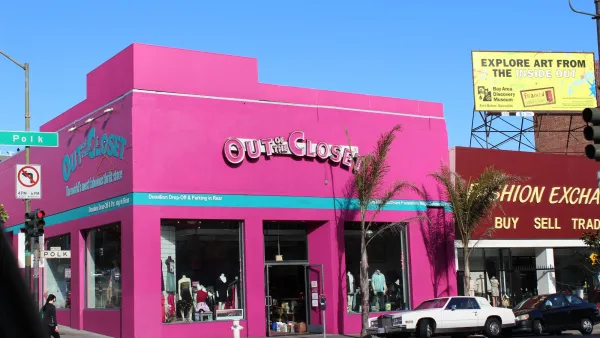
Thrift stores, public libraries and genderless bathrooms: How public amenities become trans infrastructure
Amenities like ample public transit, affordable retail and non-gendered bathroom spaces can make cities more safe and welcoming for transgender residents — and everyone else.

Forest Service Rescinds Tree Planting Grants
The $75 million program fell victim to the federal government’s purge of ‘DEI’-related projects.

Parks and Gardens as Spaces to Celebrate Lunar New Year
Parks and gardens serve as communal spaces that bring people together. As such, there are good reasons for them to host events and activities that celebrate Lunar New Year, an important festival deeply rooted in Asian cultures.

Planetizen Federal Action Tracker
A weekly monitor of how Trump’s orders and actions are impacting planners and planning in America.

California plans to bury El Niño’s downpour
If the state plays its cards right, it may be able to store a billion acre-feet of El Niño’s water in aquifers.

Desperate measures: Advocates weigh draining Lake Powell to fill Colorado River
Draining the reservoir could reduce evaporation losses by a couple hundred thousand acre-feet.

In Texas, data centers are swallowing promised parkland
Residents who moved to Taylor, Texas for a rural community now have to contend with three data centers in their backyard.

How a Chicago-sized wind farm beat the odds and powered on
The project spanned five presidential administrations and a standoff with a U.S. military base.

MTA gives itself 30 days to transform pit into basketball court
The site has been under construction since 2022; the city originally estimated it would finish the court in 2024.

FREE Course: Walkable City 1: Why Walkability?
After describing his path towards focusing on walkability as the essence of good planning, Jeff Speck marches through his five principal reasons for making more walkable places.
Reinventing Malls: Planning Alchemy—Turning Gray Fields Into Gold
The course focuses on the opportunities and imperatives that shape reinvention of mall sites.

City of Rosemead
Rutgers University, Edward J. Bloustein School of Planning and Public Policy
One Hundred Miles
Hunter College, City University of New York (CUNY)
The Architects Foundation
University of Cincinnati Online
City of Cambridge
Montrose County
The Pocatello Development Authority