TIME Magazine gives an overview of possibility of high-speed rail in the country, and sees Florida as the perfect place to start.


Bryan Walsh writes, "Demographically, Florida is an ideal state in which to launch the rail projects. Together, the metro areas of Tampa and Orlando are a major economic unit, home to more than 3.4 million people and close enough on the map to make high-speed rail competitive with air and auto travel. The region is also a tourist hub, which makes it likely that a Tampa-Orlando rail line will be well-used by Americans from around the country. That makes it a smart advertisement for other high-speed-rail projects back in their home regions."
Read the full story: Can High-Speed Rail Succeed in America?

California High-Speed Rail Authority picks trainset manufacturer
The California High-Speed Rail Authority aims to start servicing passengers by 2033.
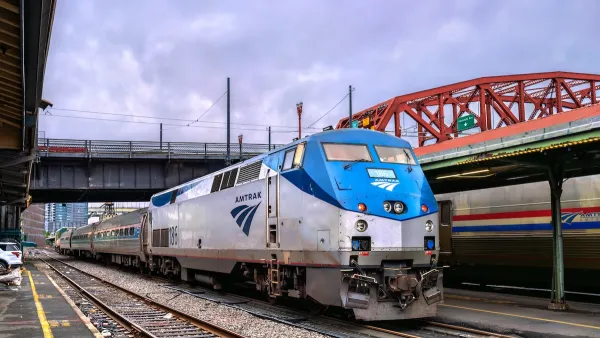
Transit leaders progress high-speed rail from Portland to Vancouver, B.C.
Washington state officials may reveal feasible routes for the high-speed rail in late 2027.

California high-speed rail accomplishes only one legislative goal in 2026
The majority of the agency's failed pitches were never developed into written proposals.

Planetizen Federal Action Tracker
A weekly monitor of how Trump’s orders and actions are impacting planners and planning in America.

California plans to bury El Niño’s downpour
If the state plays its cards right, it may be able to store a billion acre-feet of El Niño’s water in aquifers.

Desperate measures: Advocates weigh draining Lake Powell to fill Colorado River
Draining the reservoir could reduce evaporation losses by a couple hundred thousand acre-feet.

Los Angeles just elected an urban planner as its mayor
Transportation analysts are optimistic that Raman will be more aggressive in addressing transit issues than Bass.

Mamdani’s pied-à-terre tax survives legal challenge
A panel of judges found that the plaintiffs failed to demonstrate injury as a result of New York City's implementation of the tax.

Eastern Nebraska is running out of electricity
Data centers and electrification are straining eastern Nebraska’s grid, throttling economic development.

FREE Course: Walkable City 1: Why Walkability?
After describing his path towards focusing on walkability as the essence of good planning, Jeff Speck marches through his five principal reasons for making more walkable places.
Reinventing Malls: Planning Alchemy—Turning Gray Fields Into Gold
The course focuses on the opportunities and imperatives that shape reinvention of mall sites.

City of Rosemead
Rutgers University, Edward J. Bloustein School of Planning and Public Policy
One Hundred Miles
University of Michigan School for Environment and Sustainability (SEAS)
Hunter College, City University of New York (CUNY)
The Architects Foundation
City of Cambridge
Montrose County
The Pocatello Development Authority