While the U.S. has its infamous Single Room Occupancy hotels, Tokyo has its "capsule" hotels - making SROs appear downright spacious by comparison. This article and accompanying slide show looks at life for one resident of Capsule Hotel Shinjuku 510.


Losing one's job or income in one of Japan's wost recessions dramatically reducing one's housing opportunities. For those that can afford it, there are 'capsule' hotels. For others, there are emergency shelters or sleeping at 24-hour Internet cafes and saunas. The capsule hotel depicted in the article has 300 doorless 'bunks' - of which 100 are rented by the month.
"Hotel Shinjuku 510's capsules, no larger than 6 1/2 feet long by 5 feet wide, and not tall enough to stand up in, have become an affordable option for some people with nowhere else to go as Japan endures its worst recession since World War II.
The rent is surprisingly high for such a small space: 59,000 yen a month, or about $640, for an upper bunk. But with no upfront deposit or extra utility charges, and basic amenities like fresh linens and free use of a communal bath and sauna, the cost is far less than renting an apartment in Tokyo," according to the resident whose life is detailed in the article.
View the 11 Slides of 40-year-old Atsushi Nakanishi, 40, who Nakanishi has lived at the Capsule Hotel Shinjuku 510 in Tokyo for six months.
Read the full story: For Some in Japan, Home Is a Tiny Plastic Bunk
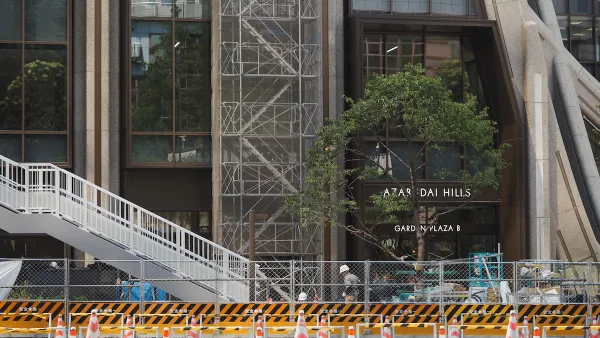
A New Tallest Skyscraper for Japan
The Toranomon-Azabudai reaches 330 meters into the sky, far lower than international standards but taller by 30 meters than the previous tallest building in Japan.
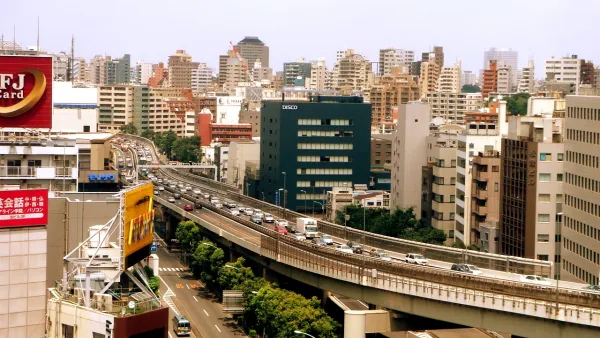
Tokyo Expressway to Become a Linear Park
A major expressway in Ginza will be converted to a park similar to New York City's High Line.
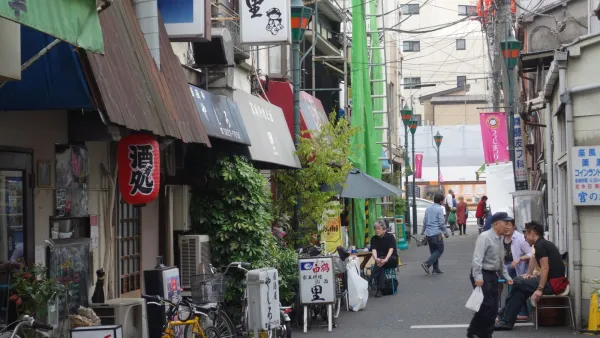
A Different Kind of Density: Lessons From Asian Megacities
As the pandemic has made clear, a healthy, prosperous future will depend on the development of the kinds of density that encourage strong social infrastructure.

Planetizen Federal Action Tracker
A weekly monitor of how Trump’s orders and actions are impacting planners and planning in America.

California plans to bury El Niño’s downpour
If the state plays its cards right, it may be able to store a billion acre-feet of El Niño’s water in aquifers.

Desperate measures: Advocates weigh draining Lake Powell to fill Colorado River
Draining the reservoir could reduce evaporation losses by a couple hundred thousand acre-feet.

US buildings threatened, destroyed by fires set to triple by 2060
Researchers found a high fire risk for socioeconomically vulnerable neighborhoods in the American West.

LA residents may be allowed to paint their own crosswalks
Councilwoman Katy Yaroslavsky put out a motion instructing the Los Angeles Department of Public Transportation to study the feasibility of allowing volunteers to paint crosswalks.

Dallas moves to overhaul its zoning code
The city's zoning reform will allow more multi-family and mixed-use developments.

FREE Course: Walkable City 1: Why Walkability?
After describing his path towards focusing on walkability as the essence of good planning, Jeff Speck marches through his five principal reasons for making more walkable places.
Reinventing Malls: Planning Alchemy—Turning Gray Fields Into Gold
The course focuses on the opportunities and imperatives that shape reinvention of mall sites.

City of Rosemead
Rutgers University, Edward J. Bloustein School of Planning and Public Policy
One Hundred Miles
Hunter College, City University of New York (CUNY)
The Architects Foundation
University of Cincinnati Online
City of Cambridge
Montrose County
The Pocatello Development Authority