Barry Johnson of The Oregonian looks back at Portland's urban renewal program, what was lost in the demolition of neighborhoods and what was gained.


Johnson talks about the 1950s concept of civic improvement: "That idea led the city to scrape clean two "decaying" neighborhoods, South Portland and the neighborhood along North Williams Ave., and replace them with the city's first two major urban renewal projects, Memorial Coliseum and the South Auditorium District. We would now consider those moves mistakes -- even though they produced two remarkable civic projects, the Coliseum and the Halprin plazas -- because they displaced thousands of people and because they failed to create the lively urban areas that cities depend on for their lifeblood."
The urban renewal movement of the 50s led to the citizen revolts of the 70s that transformed the regional government.
Read the full story: The histories of a city: Portland and the Halprin plazas
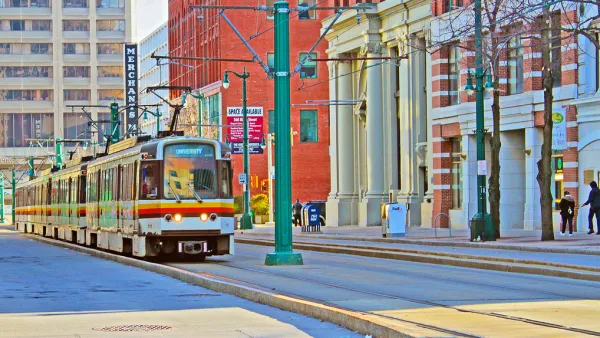
Editorial: Streetcar Funding Better Spent Elsewhere
The Economist introduces the concept of the streetcar in America—its history and its recent revival—before laying the arguments in support of, and against, the role of streetcars in urban revival.
EcoDistricts to Rise in Portland
Portland has five "eco-district" pilot projects in the works. The first two are expected to begin implementation over the next year, and organizers are hoping they lead to more sustainability efforts throughout the city.
Portland to transform vacant landfill into energy-generating sanctuary
The project will boast hundreds of solar panels, and create jobs in Portland’s renewable energy industry

Planetizen Federal Action Tracker
A weekly monitor of how Trump’s orders and actions are impacting planners and planning in America.

California plans to bury El Niño’s downpour
If the state plays its cards right, it may be able to store a billion acre-feet of El Niño’s water in aquifers.

Desperate measures: Advocates weigh draining Lake Powell to fill Colorado River
Draining the reservoir could reduce evaporation losses by a couple hundred thousand acre-feet.

Los Angeles just elected an urban planner as its mayor
Transportation analysts are optimistic that Raman will be more aggressive in addressing transit issues than Bass.

Mamdani’s pied-à-terre tax survives legal challenge
A panel of judges found that the plaintiffs failed to demonstrate injury as a result of New York City's implementation of the tax.

Eastern Nebraska is running out of electricity
Data centers and electrification are straining eastern Nebraska’s grid, throttling economic development.

FREE Course: Walkable City 1: Why Walkability?
After describing his path towards focusing on walkability as the essence of good planning, Jeff Speck marches through his five principal reasons for making more walkable places.
Reinventing Malls: Planning Alchemy—Turning Gray Fields Into Gold
The course focuses on the opportunities and imperatives that shape reinvention of mall sites.

City of Rosemead
Rutgers University, Edward J. Bloustein School of Planning and Public Policy
One Hundred Miles
University of Michigan School for Environment and Sustainability (SEAS)
Hunter College, City University of New York (CUNY)
The Architects Foundation
City of Cambridge
Montrose County
The Pocatello Development Authority