The growing concentrations of the super-wealthy in America contrast sharply with the erosion of the middle class. It is time for a new set of rules to protect ordinary Americans, writes Elizabeth Warren.


Playing by the "rules" no longer works, argues Warren. Getting a college degree and working hard now means living paycheck-to-paycheck and facing the risk of foreclosure:
"Today, one in five Americans is unemployed, underemployed or just plain out of work. One in nine families can't make the minimum payment on their credit cards. One in eight mortgages is in default or foreclosure. One in eight Americans is on food stamps. More than 120,000 families are filing for bankruptcy every month. The economic crisis has wiped more than $5 trillion from pensions and savings, has left family balance sheets upside down, and threatens to put ten million homeowners out on the street."
The answer, Warren suggests, may lie in the Obama Administration's proposal for a new Consumer Financial Protection Agency (CFPA).
Read the full story: America Without a Middle Class

How the Middle Class Is Faring on Housing
While the middle class does not face the same kind of nationwide affordability crisis as low-income populations, geography and demographics are placing new stress on middle-income households.
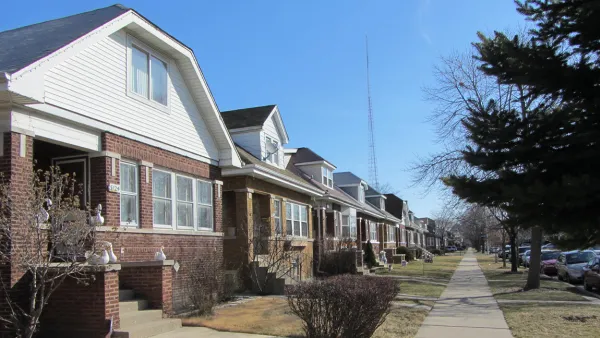
Mapped: Chicago's Shrinking Middle Class
In 1970, half of the city's census tracts were middle-income. Now, only 16 percent of them remain so. Polarization between the well-off and the poor essentially splits the city in two.
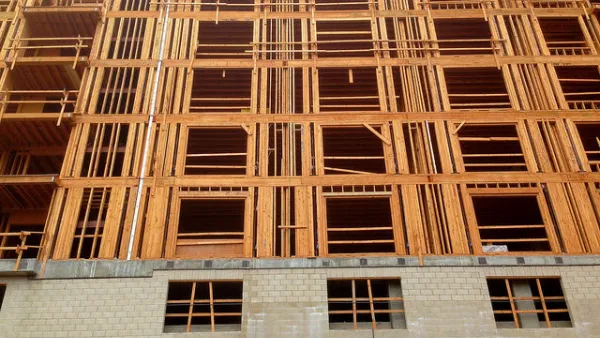
Op-Ed: Affordability Depends on Market-Rate Housing
California State Senator Scott Wiener argues that advocating for subsidized affordable housing isn't enough. Anyone concerned with ending the state's housing crisis needs to get behind market-rate development.

Planetizen Federal Action Tracker
A weekly monitor of how Trump’s orders and actions are impacting planners and planning in America.

California plans to bury El Niño’s downpour
If the state plays its cards right, it may be able to store a billion acre-feet of El Niño’s water in aquifers.

Desperate measures: Advocates weigh draining Lake Powell to fill Colorado River
Draining the reservoir could reduce evaporation losses by a couple hundred thousand acre-feet.

In Texas, data centers are swallowing promised parkland
Residents who moved to Taylor, Texas for a rural community now have to contend with three data centers in their backyard.

How a Chicago-sized wind farm beat the odds and powered on
The project spanned five presidential administrations and a standoff with a U.S. military base.

MTA gives itself 30 days to transform pit into basketball court
The site has been under construction since 2022; the city originally estimated it would finish the court in 2024.

FREE Course: Walkable City 1: Why Walkability?
After describing his path towards focusing on walkability as the essence of good planning, Jeff Speck marches through his five principal reasons for making more walkable places.
Reinventing Malls: Planning Alchemy—Turning Gray Fields Into Gold
The course focuses on the opportunities and imperatives that shape reinvention of mall sites.

City of Rosemead
Rutgers University, Edward J. Bloustein School of Planning and Public Policy
One Hundred Miles
Hunter College, City University of New York (CUNY)
The Architects Foundation
University of Cincinnati Online
City of Cambridge
Montrose County
The Pocatello Development Authority