As traffic congestion has worsened, so has the philosophical divide between LA and Orange counties in terms of how to address it.


"'L.A. is more transit-oriented; Orange County is more freeway-oriented,' said Peter Buffa, chairman of the Orange County Transportation Authority. But as congestion mounts, that attitude will probably change, he believes."
"Buffa said many of the major differences in the transportation approaches are because of the counties' differing populations. Rail customers in Orange County usually have cars and take the train to avoid congestion or to save money on gas. In Los Angeles County, however, there are more people without cars who must rely on the bus or rails.
L.A. County has 'more people, but also denser areas where trying to sell a rail line that goes down the middle of the street is a little easier than in some kind of wide open, very suburban, south Orange County city. . . . It's a political fight,' Buffa said."
Read the full story: Counties diverge on plan to widen the 405 Freeway

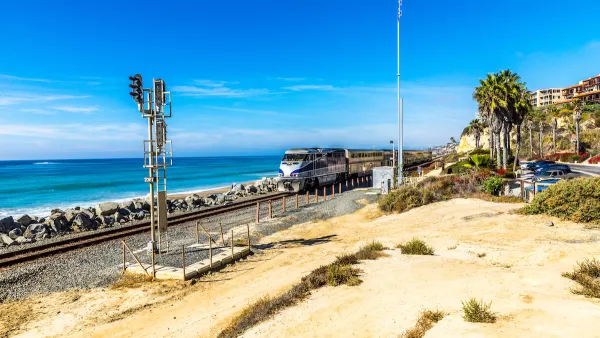
Storms Sever California Rail Line—Again
The coast-hugging rail corridor linking Los Angeles and San Diego faces an uncertain future as mudslides once again force part of the line to close.
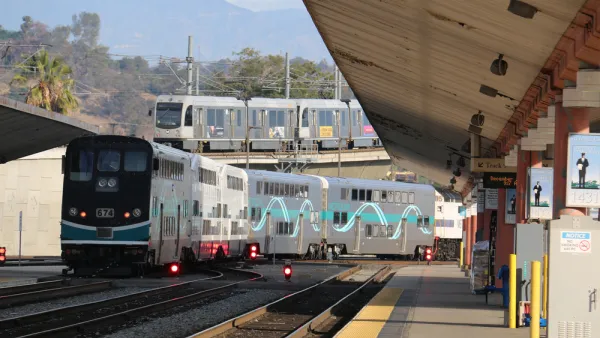
Southern California's Metrolink Defies Declining Ridership Trends
Primarily serving commuters in the Greater Los Angeles metro area, Metrolink just attained the highest annual ridership in its 27-year existence. Officials chalk up the increase to a significant investment in marketing.
Rail Redundancy Shouldn't Be Self-Destructive
Los Angeles Metro's new Gold Line light rail extension is attracting riders from the regional Metrolink commuter rail line that serves San Bernardino. The editorial board of the Daily Bulletin suggests that's not necessarily a problem.

Planetizen Federal Action Tracker
A weekly monitor of how Trump’s orders and actions are impacting planners and planning in America.

Amtrak, CN end decades-long dispute with eight-year agreement
The new operating agreement establishes an updated framework for the companies to work together, including processes to resolve disputes.

Northwest rail fans eager for Sept. 30 debut of Amtrak’s Airo fleet
Get ready for that new train smell and more seats. But they won’t go faster or run more frequently on the Cascades route in Washington and Oregon.

Trump administration unlawfully slashed $7 billion in clean energy grants, judge rules
The Environmental Protection Agency ended the Solar For All program, which provided the grants, after President Donald Trump’s inauguration.

Record-breaking wildlife overpass in Colorado brings 91% reduction in animal collisions
Prior to the overpass, vehicles were hitting one deer per day on Colorado’s Interstate 25.

California lawmakers approve just 5% of much-needed LA28 transportation funding
State legislators appear just as unwilling as Trump to pay for Olympics-related transportation projects.

FREE Course: Walkable City 1: Why Walkability?
After describing his path towards focusing on walkability as the essence of good planning, Jeff Speck marches through his five principal reasons for making more walkable places.
Reinventing Malls: Planning Alchemy—Turning Gray Fields Into Gold
The course focuses on the opportunities and imperatives that shape reinvention of mall sites.

City of Thousand Oaks
City of Wisconsin Rapids
Harvard University Graduate School of Design
The Architects Foundation
University of Cincinnati Online
The Pocatello Development Authority
The Urban Renewal Agency of the City of Pocatello