Fred Kent of the Project for Public Spaces was recently entangled in a dispute with architect Frank Gehry over the impact of iconic architecture in cities. Though Gehry's work has its moments, Kent says city emphasis on icons is a mistake.


"[T]he recent trend toward "iconic" architecture and design-which has gained a big following in the media and among high-profile clients, winning numerous prizes-minimizes the importance of citizen input and dismisses the goals of creating great public places. Instead it promotes a design-centric philosophy where all that matters is the artistic statement conceived by an internationally recognized celebrity. Frank Gehry, an architect of considerable talent and imagination, drew world attention to the iconic design movement with his famous Guggenheim Musuem in Bilbao, Spain. In the process, he inaugurated an era in which designers call all the shots in creating our cityscapes, leaving us with showy buildings and landscape forms meant to be admired from a distance rather than contributing to the vitality of everyday life in a local community."
Kent argues that cities need to place more importance on creating spaces that will actually be used, rather than expensive and underused spotlight buildings.
Read the full story: Moving Beyond the "Smackdown" Towards an Architecture of Place
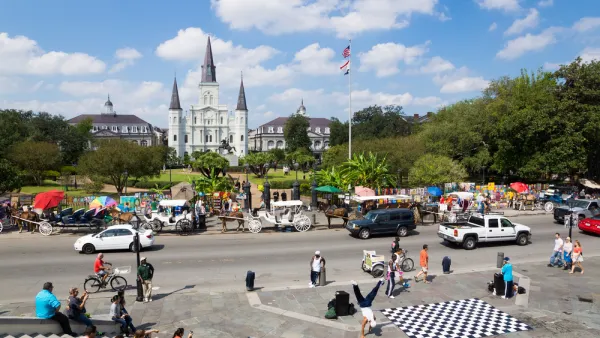
Bringing Back America’s Town Squares
Digital connection is no substitute for the vitality and community created by open, pleasant public squares and plazas.

Portland Extends Pandemic Public Space Programs
PBOT will continue two highly successful COVID-era programs that allowed businesses and community groups to repurpose public spaces for pedestrian-oriented uses and engage with customers in safe, accessible outdoor settings.
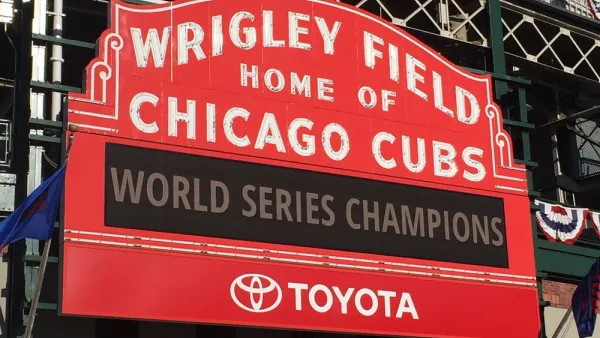
New Public Space Outside Wrigley Field Just Another Win for Chicago
Chicago Cubs fans looking to bask in the glory of the team's first World Series victory since 1908 will find a new public plaza and lawn next to the stadium. The plaza will be open to the public on non-baseball days too.

Planetizen Federal Action Tracker
A weekly monitor of how Trump’s orders and actions are impacting planners and planning in America.

California plans to bury El Niño’s downpour
If the state plays its cards right, it may be able to store a billion acre-feet of El Niño’s water in aquifers.

Desperate measures: Advocates weigh draining Lake Powell to fill Colorado River
Draining the reservoir could reduce evaporation losses by a couple hundred thousand acre-feet.

Los Angeles just elected an urban planner as its mayor
Transportation analysts are optimistic that Raman will be more aggressive in addressing transit issues than Bass.

Mamdani’s pied-à-terre tax survives legal challenge
A panel of judges found that the plaintiffs failed to demonstrate injury as a result of New York City's implementation of the tax.

Eastern Nebraska is running out of electricity
Data centers and electrification are straining eastern Nebraska’s grid, throttling economic development.

FREE Course: Walkable City 1: Why Walkability?
After describing his path towards focusing on walkability as the essence of good planning, Jeff Speck marches through his five principal reasons for making more walkable places.
Reinventing Malls: Planning Alchemy—Turning Gray Fields Into Gold
The course focuses on the opportunities and imperatives that shape reinvention of mall sites.

City of Rosemead
Rutgers University, Edward J. Bloustein School of Planning and Public Policy
One Hundred Miles
University of Michigan School for Environment and Sustainability (SEAS)
Hunter College, City University of New York (CUNY)
The Architects Foundation
City of Cambridge
Montrose County
The Pocatello Development Authority