Arlington, Texas, is home to the Dallas Cowboys' football stadium. But as the largest American city with no public bus or rail lines, getting to the stadium is no easy task.


"[E]ven Indianapolis, Buffalo and Phoenix – three cities far more famous for football than for transit options – run regular bus lines right past their stadiums and offer easily available shuttles to the games. Such options don't exist in Arlington and Green Bay.
Come Sunday, fans here will be confronted with a dizzying array of options once they arrive at Cowboys Stadium – beginning with whether to pay big bucks for a seat or spend just $29 for an all-day tailgate with the Party Pass.
But getting there won't be easy. To reach Arlington, America's largest city without a single bus line or passenger rail line, they can drive through some of the most heavily congested and construction-snarled roads in the region, or they can take a cab."
Parking is plentiful at and near the stadium, but expensive. Despite an aggressive light rail development plan in Dallas, nearby Arlington remains without its own transit system.
But as host for the 2011 Super Bowl, the city is starting to think more about transit. Mayor Robert Cluck has announced plans to place passenger rail cars on freight tracks to enable rail access to the stadium on Super Bowl Sunday.
Read the full story: Unlike most NFL sites, there aren't many ways to catch a ride to Cowboys Stadium

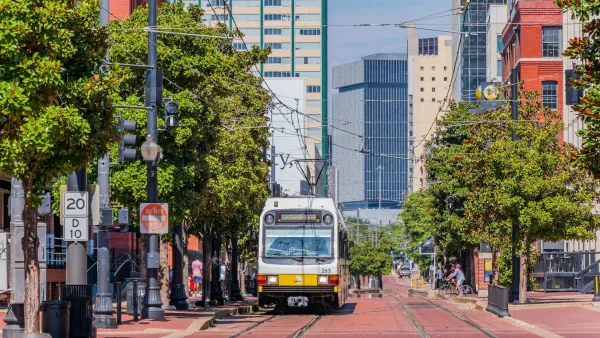
Development Near Dallas Light Rail has ‘Directly Created’ Over 5,000 Jobs, Generated $18 Billion Over 25 Years
Transit-oriented development has spurred billions in economic activity along DART light rail.
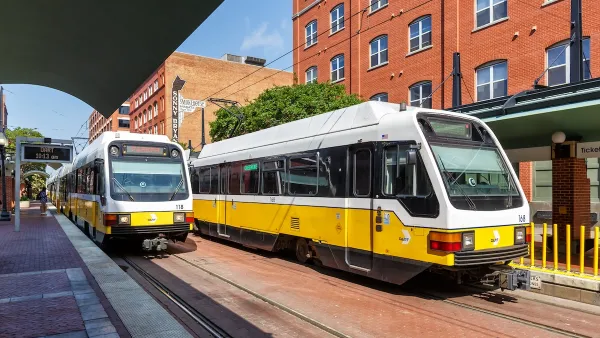
North Texas Transit Leaders Tout Benefits of TOD for Growing Region
At a summit focused on transit-oriented development, policymakers discussed how North Texas’ expanded light rail system can serve as a tool for economic growth.
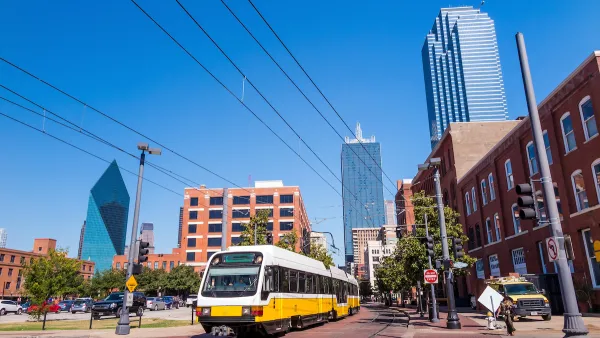
Dallas Nixes Subway Plan
A proposed subway line was removed from DART’s 20-year plan, with the agency citing low ridership projections and local opposition.

Planetizen Federal Action Tracker
A weekly monitor of how Trump’s orders and actions are impacting planners and planning in America.

Amtrak, CN end decades-long dispute with eight-year agreement
The new operating agreement establishes an updated framework for the companies to work together, including processes to resolve disputes.

Judges permit Denver to divert 77,000 acre feet from the Colorado River for reservoir expansion
Overuse and climate change have caused the Colorado River’s water levels to plummet.

NYC DOT wants faster, more permanent street upgrades
The city is examining ways to build more concrete infrastructure without getting entangled in 'decades-long' projects.

'Something we’ve never seen before:' rising utility rates could strain city finances nationwide
Data centers, climate change and other factors have caused utility rates in the United States to increase by 38% since 2020.

Trump to overrule local leaders, lease millions of acres of America’s Pacific Island territories’ seafloors to mining companies
International law says that the Indigenous people of America’s territories have a right to prior and informed consent regarding projects that impact their countries.

FREE Course: Walkable City 1: Why Walkability?
After describing his path towards focusing on walkability as the essence of good planning, Jeff Speck marches through his five principal reasons for making more walkable places.
Reinventing Malls: Planning Alchemy—Turning Gray Fields Into Gold
The course focuses on the opportunities and imperatives that shape reinvention of mall sites.

Harvard University Graduate School of Design
KFH Group Inc.
Greater Baltimore Committee
The Architects Foundation
University of Cincinnati Online
The Pocatello Development Authority
The Urban Renewal Agency of the City of Pocatello