This piece from the Guardian looks at a handful of projects and ideas that are emphasizing the importance of sustainable metropolitan areas in an age of diminishing resources and environmental devastation.


"On average, then, people who live in small towns and rural areas emit 50% more greenhouse gases than city folk. That cities may be part of the solution, however, does not mean that efforts like Bloomberg's PlanNYC are misplaced. Precisely the opposite is true.
By 2050, some 70% of us will live in urban settings, and it will ultimately be well-managed urban environments, with smart, energy-efficient buildings, power systems, transport and planning, that will save us from ourselves. Seeking better ways to do precisely that, a constellation of designers, architects and academics gathered at a conference on "ecological urbanism" at Harvard University's Graduate School of Design earlier this year."
Read the full story: Sustainable cities are the solution
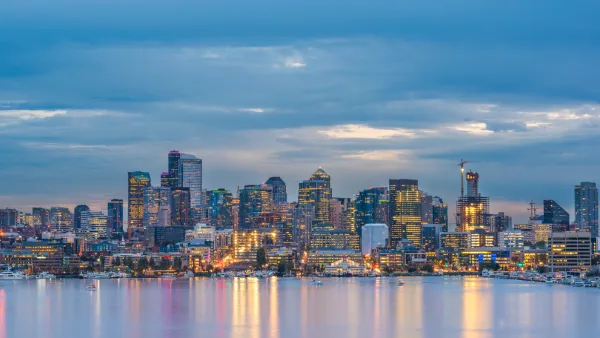
What Are America's Fastest-Growing Cities?
Views about urban growth and decline often rely on statistics for metropolitan regions rather than cities proper. Here, Richard Florida looks at the fastest- and slowest-growing cities in America, separate from their metro areas.
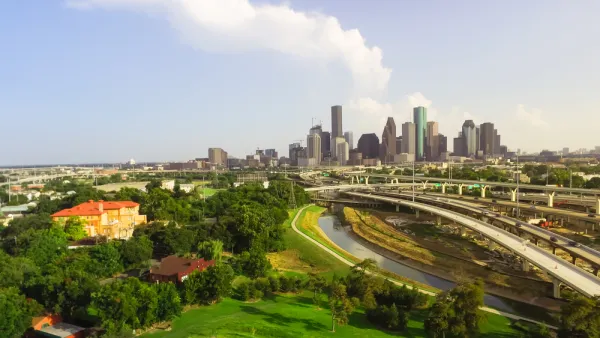
The Boundaries of Houston Don't Match the Perception of Houston
A more-than-6oo-square-mile city can get hard to map in our minds, especially when it blends so seamlessly into surrounding cities.
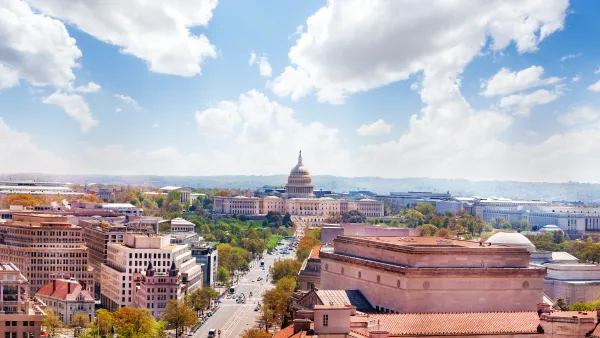
Examining the Income Inequality of Cities and Metro Areas
A rising tide doesn't necessarily lift all boats—even in a time of (mostly) decreasing income inequality at the city level.

Desperate measures: Advocates weigh draining Lake Powell to fill Colorado River
Draining the reservoir could reduce evaporation losses by a couple hundred thousand acre-feet.

Eastern Nebraska is running out of electricity
Data centers and electrification are straining eastern Nebraska’s grid, throttling economic development.

Malls are becoming the midtowns of the future
Mall and office park redevelopments are a generational opportunity to create new nodes of urbanity.

NYC breaks ground on anti-flooding infrastructure project
New York City's new system will reduce stormwater flows to local sewers by 90%.

One Kentucky town’s secret to affordable housing
The Smoketown Community Land Trust has already built seven affordable homes for community members.

Houston gains petal-shaped cooling infrastructure to make streets more ‘delightful’
The city has installed the pavilions along 15 blocks in Houston.

FREE Course: Walkable City 1: Why Walkability?
After describing his path towards focusing on walkability as the essence of good planning, Jeff Speck marches through his five principal reasons for making more walkable places.
Reinventing Malls: Planning Alchemy—Turning Gray Fields Into Gold
The course focuses on the opportunities and imperatives that shape reinvention of mall sites.

City of Rosemead
Rutgers University, Edward J. Bloustein School of Planning and Public Policy
One Hundred Miles
University of Michigan School for Environment and Sustainability (SEAS)
Hunter College, City University of New York (CUNY)
The Architects Foundation
City of Cambridge
Montrose County
The Pocatello Development Authority