Landfills produce a lot of methane gas, one of the main greenhouse gases contributing to global warming. In an effort to both reduce that impact and responsibly reuse the gas, some municipalities are converting it into energy.


"Not long ago, there wasn't much a landfill could do with methane, except burn it. That cuts down the pungent smell and makes nice with neighbors who are unfortunate enough to live near a landfill. Recently, however, localities have come to see methane not just as a stinky nuisance but also as a valuable commodity. Hundreds of landfills around the country have begun transforming methane into electricity and biofuels. The gas can be sent directly to buildings to run heating and cooling systems, can be purified into natural gas, and liquefied or compressed to power garbage trucks and city buses."
Though the costs of capturing and converting methane can be unaffordable for few but the largest municipalities, new federal grants are enabling some smaller cities to get in the game.
Read the full story: Methane from Landfills

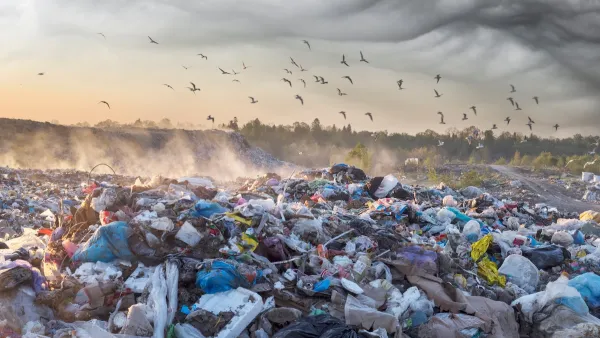
Colorado Landfills Emit as Much Pollution as 1M Cars
Landfills are the third-largest source of methane pollution in Colorado, after agriculture and fossil fuel extraction.
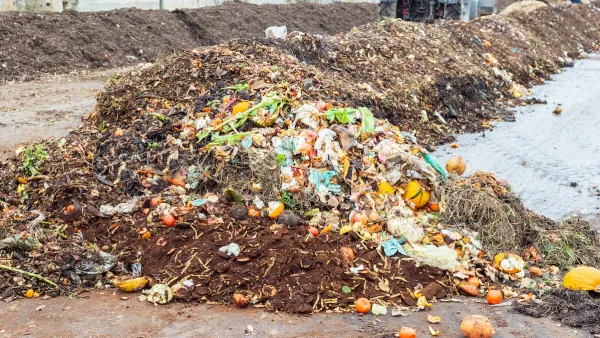
Organic Waste Raising Methane Emissions From Landfills
Landfills are an overlooked but significant source of greenhouse gas emissions.
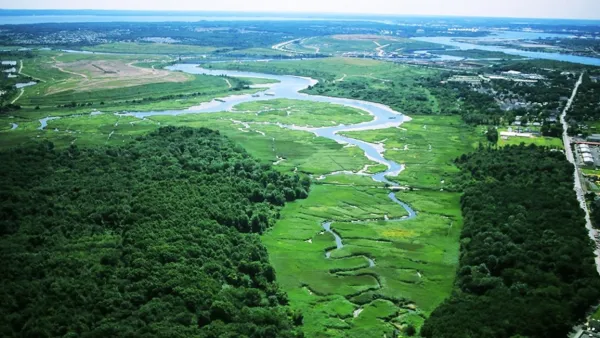
Former Landfill Doubles as Public Park, Energy Producer
Once the world’s largest dump, Freshkills Park now offers new city park space and powers local households with biofuel.

Planetizen Federal Action Tracker
A weekly monitor of how Trump’s orders and actions are impacting planners and planning in America.

Amtrak, CN end decades-long dispute with eight-year agreement
The new operating agreement establishes an updated framework for the companies to work together, including processes to resolve disputes.

Judges permit Denver to divert 77,000 acre feet from the Colorado River for reservoir expansion
Overuse and climate change have caused the Colorado River’s water levels to plummet.

Idaho may see an 18% drop in federal surface transit funding — the largest estimated cut in the US
Transit systems in rural communities are much more reliant on federal funding to provide their services.

How ‘post-disaster gentrification’ alters neighborhoods after natural calamities
After hurricanes, fires or other calamities, the original residents of a community are often replaced by younger, wealthier residents.

Maryland local governments examine if they should have more power to raise property taxes
Maryland’s housing market is out of reach for the majority of moderate-income residents.

FREE Course: Walkable City 1: Why Walkability?
After describing his path towards focusing on walkability as the essence of good planning, Jeff Speck marches through his five principal reasons for making more walkable places.
Reinventing Malls: Planning Alchemy—Turning Gray Fields Into Gold
The course focuses on the opportunities and imperatives that shape reinvention of mall sites.

Harvard University Graduate School of Design
KFH Group Inc.
Greater Baltimore Committee
The Architects Foundation
University of Cincinnati Online
The Pocatello Development Authority
The Urban Renewal Agency of the City of Pocatello