James Surowiecki argues that state governments are sabotaging the economic recovery, and simultaneously sinking the creation of a smart energy grid.


"It's easy enough, of course, to mock state governments nowadays, what with California issuing I.O.U.s to pay its bills and New York's statehouse becoming the site of palace coups and senatorial sit-ins. But the real problem isn't the fecklessness of local politicians. It's the ordinary way in which state governments go about their business."
Among the problems of state involvement in spending, Surowiecki also notes the disproportionate funneling of transportation dollars to rural areas rather than metropolitan ones.
"...whether we end up with true regional, let alone national, rapid-transit networks will depend largely on decisions made at the state, rather than the national, level."
Read the full story: Fifty Ways To Kill Recovery

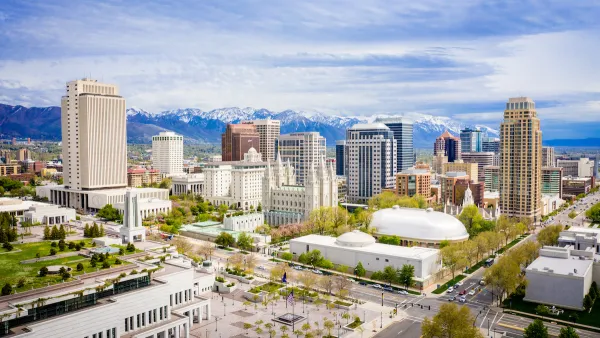
How Salt Lake City Maintained a Vibrant Downtown
Unlike other major cities, the Utah capital’s downtown has seen a steady stream of visitors even as demand for office space diminishes.
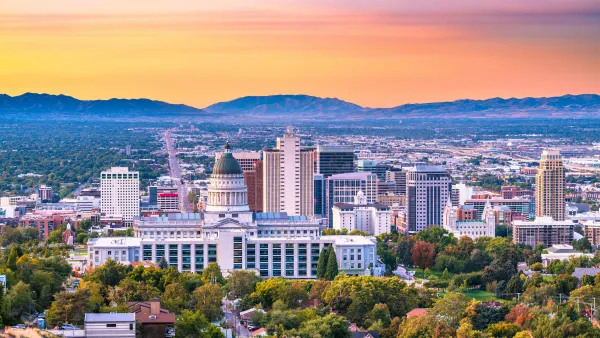
Salt Lake City Bucks Downtown Decline Trend
The city’s central business district is bustling with more activity than before the pandemic.
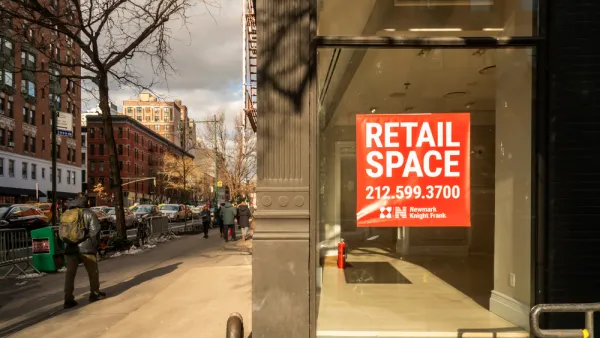
Pandemic-Era Economic Growth in Metropolitan Areas
The world has gone through three turbulent years of Covid-19. The Brookings Institution continues its analysis of inclusive economic growth in 192 metropolitan areas in the U.S. during this period with the publication of Metro Monitor 2023.

Planetizen Federal Action Tracker
A weekly monitor of how Trump’s orders and actions are impacting planners and planning in America.

Amtrak, CN end decades-long dispute with eight-year agreement
The new operating agreement establishes an updated framework for the companies to work together, including processes to resolve disputes.

Judges permit Denver to divert 77,000 acre feet from the Colorado River for reservoir expansion
Overuse and climate change have caused the Colorado River’s water levels to plummet.

NYC DOT wants faster, more permanent street upgrades
The city is examining ways to build more concrete infrastructure without getting entangled in 'decades-long' projects.

'Something we’ve never seen before:' rising utility rates could strain city finances nationwide
Data centers, climate change and other factors have caused utility rates in the United States to increase by 38% since 2020.

Trump to overrule local leaders, lease millions of acres of America’s Pacific Island territories’ seafloors to mining companies
International law says that the Indigenous people of America’s territories have a right to prior and informed consent regarding projects that impact their countries.

FREE Course: Walkable City 1: Why Walkability?
After describing his path towards focusing on walkability as the essence of good planning, Jeff Speck marches through his five principal reasons for making more walkable places.
Reinventing Malls: Planning Alchemy—Turning Gray Fields Into Gold
The course focuses on the opportunities and imperatives that shape reinvention of mall sites.

KFH Group Inc.
Greater Baltimore Committee
Eagle County Government
The Architects Foundation
University of Cincinnati Online
The Pocatello Development Authority
The Urban Renewal Agency of the City of Pocatello