Light rail is seen as a golden opportunity to revive inner cities. Not so fast, argues Alan Hoffman.


Hoffman compares the urban love affair with light rail to the early praise rained on the interstate highway system. Years later, that system would be derided heavily from all around the country.
"It's becoming clear the freeway-based system may not be sustainable. Metro-area auto congestion continues to worsen, urban sprawl continues unabated (while threatening some of our most productive farmland), concerns about greenhouse gas emissions are growing, and there's the specter of steeply rising prices for 'post-peak' oil.
But leaping to light rail could well trigger a new set of unintended consequences. In some locations, it may work well–it is a proven and popular transportation tool. But I'd argue it's as mismatched to today's American urban form as was the freeway-centric vision of the 1950s to the urban form of its day. And that we ignore this mismatch at our peril."
Read the full story: Light Rail Boom Needs A Second Look

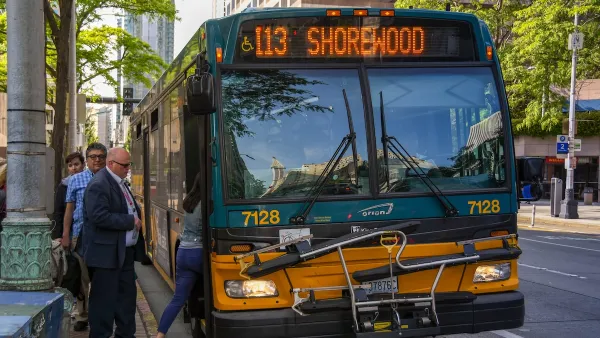
275,000 bus trips are at stake on Seattle's ballot
If passed, the Seattle Transit Measure would trigger a 0.3% sales tax and raise an average of $138 million per year to maintain and expand Seattle’s bus services.
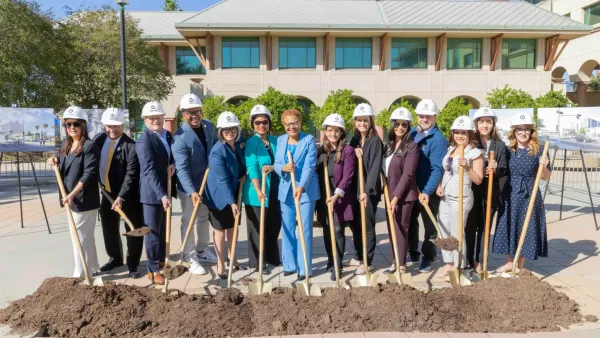
LA begins work on $4 billion light rail through San Fernando Valley
The project will be the areas first light rail service since the termination of the Pacific Electric Railway in the 1950s.
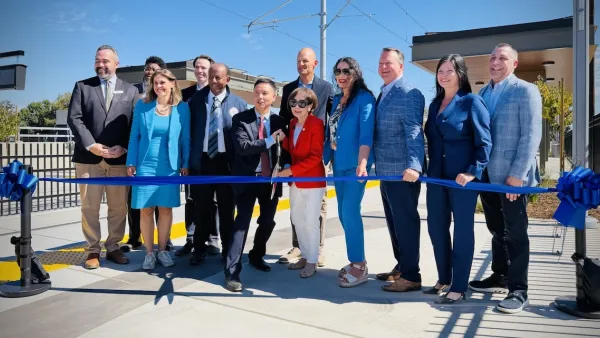
After decades of planning, Sacramento gains new light rail station
Trains will arrive every 15 minutes during peak hours and every 30 minutes during non-peak hours.

Planetizen Federal Action Tracker
A weekly monitor of how Trump’s orders and actions are impacting planners and planning in America.

California plans to bury El Niño’s downpour
If the state plays its cards right, it may be able to store a billion acre-feet of El Niño’s water in aquifers.

Desperate measures: Advocates weigh draining Lake Powell to fill Colorado River
Draining the reservoir could reduce evaporation losses by a couple hundred thousand acre-feet.

In Texas, data centers are swallowing promised parkland
Residents who moved to Taylor, Texas for a rural community now have to contend with three data centers in their backyard.

How a Chicago-sized wind farm beat the odds and powered on
The project spanned five presidential administrations and a standoff with a U.S. military base.

MTA gives itself 30 days to transform pit into basketball court
The site has been under construction since 2022; the city originally estimated it would finish the court in 2024.

FREE Course: Walkable City 1: Why Walkability?
After describing his path towards focusing on walkability as the essence of good planning, Jeff Speck marches through his five principal reasons for making more walkable places.
Reinventing Malls: Planning Alchemy—Turning Gray Fields Into Gold
The course focuses on the opportunities and imperatives that shape reinvention of mall sites.

City of Rosemead
Rutgers University, Edward J. Bloustein School of Planning and Public Policy
One Hundred Miles
Hunter College, City University of New York (CUNY)
The Architects Foundation
University of Cincinnati Online
City of Cambridge
Montrose County
The Pocatello Development Authority