British Prime Minister Gordon Brown's grand plans for 10 carbon-neutral 'eco-towns' haven't lived up to their fanfare, according to some. Now as things move forward, the goals have been watered down a bit.


Much of the reason for the plan falling short is reportedly NIMBYism from residents near proposed sites. Only two of the ten projects appear to be moving ahead.
"For better or for worse, this grand plan is not going to happen. What is going to happen is that, early next month, the government will announce, with great fanfare, the location of Britain's first ‘eco-towns'. One that will definitely make the cut is Rackheath, a 3,500-home scheme on a former Ministry of Defence site in Norfolk. Another that is strongly tipped to come on stream is St Austell, a 5,000-home scheme on the site of a former china clay pit in Cornwall. Both proposals are local authority-led and are in existing development plans.
But these are not the brave new ‘Brown's towns' that were envisaged."
Read the full story: Whatever happened to eco-towns?
New Eco-Town Plans Meet NIMBY Resistance
The UK government recently announced the sites of four new planned "eco-towns". But local opposition to the projects remains high.
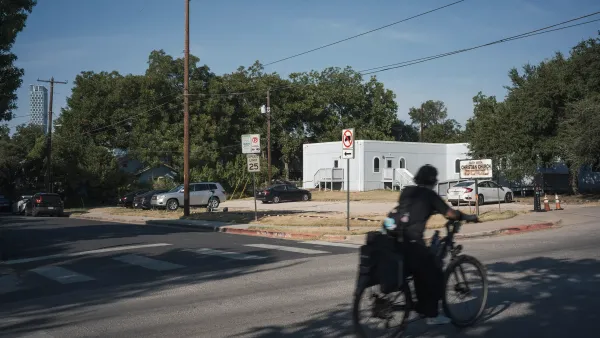
The new Texas law declawing NIMBYs
State lawmakers gutted an old Jim Crow-era state law that required a city council supermajority to approve a new housing development if neighbors petitioned the proposal.
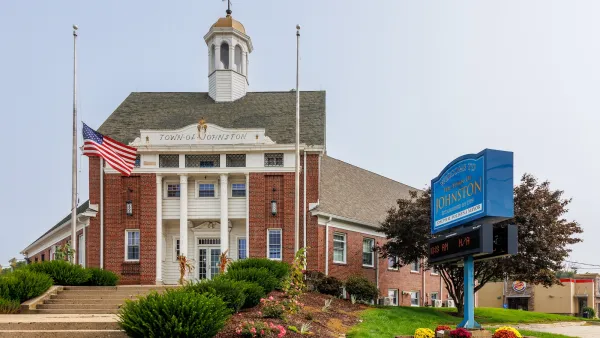
Judge says Rhode Island town can't seize private lot to block affordable housing
The town of Johnston moved to seize a lot for municipal buildings after its owners submitted a plan for a 254-unit housing development.

Planetizen Federal Action Tracker
A weekly monitor of how Trump’s orders and actions are impacting planners and planning in America.

California plans to bury El Niño’s downpour
If the state plays its cards right, it may be able to store a billion acre-feet of El Niño’s water in aquifers.

Desperate measures: Advocates weigh draining Lake Powell to fill Colorado River
Draining the reservoir could reduce evaporation losses by a couple hundred thousand acre-feet.

US buildings threatened, destroyed by fires set to triple by 2060
Researchers found a high fire risk for socioeconomically vulnerable neighborhoods in the American West.

LA residents may be allowed to paint their own crosswalks
Councilwoman Katy Yaroslavsky put out a motion instructing the Los Angeles Department of Public Transportation to study the feasibility of allowing volunteers to paint crosswalks.

Dallas moves to overhaul its zoning code
The city's zoning reform will allow more multi-family and mixed-use developments.

FREE Course: Walkable City 1: Why Walkability?
After describing his path towards focusing on walkability as the essence of good planning, Jeff Speck marches through his five principal reasons for making more walkable places.
Reinventing Malls: Planning Alchemy—Turning Gray Fields Into Gold
The course focuses on the opportunities and imperatives that shape reinvention of mall sites.

City of Rosemead
Rutgers University, Edward J. Bloustein School of Planning and Public Policy
One Hundred Miles
Hunter College, City University of New York (CUNY)
The Architects Foundation
University of Cincinnati Online
City of Cambridge
Montrose County
The Pocatello Development Authority