Gary Mason describes how Vancouver Mayor Gregor Robertson's policy of rapid expansion of homeless shelters -- including two in residential areas -- has "completely changed" those neighborhoods.


Vancouver Mayor Gregor Robertson announced last year that his city would eradicate homelessness by 2015, and he began this program by opening 5 homeless shelters, two of which were in residential neighborhoods containing a "YWCA daycare, a Montessori school and a low-income seniors home. And condominium towers." As Mason writes,
"The 'low-barrier' shelters are intended for the hardest-to-home. Those who use them are allowed to bring their shopping carts and pets in with them. Drug users aren't turned away the way they are in other shelters. While no one argues the need for these kinds of accommodations as temporary measures, the problem is the type of individuals they attract if open for long. Drug addicts attract drug suppliers. Drug suppliers attract young boys to run their drugs. Consequently, there are emerging gangs of young kids – drug mules – congregating in the area and intimidating residents...residents have had enough."
Read the full story: Vancouver Mayor's quick fix for homeless a long-term nuisance
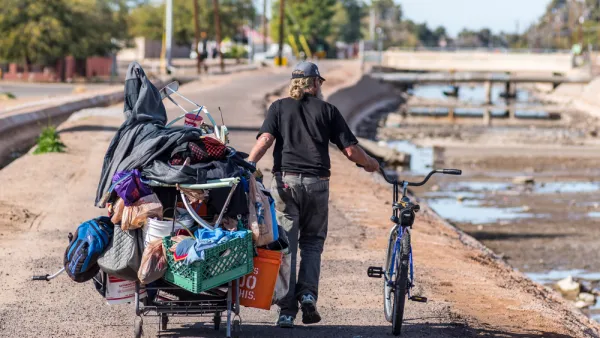
Phoenix Takes a New Approach on Homelessness
Phoenix is centering housing—affordable housing, permanent supportive housing, and eviction protections—in a new planning framework designed to reduce the number of homeless people living on the streets of the city.
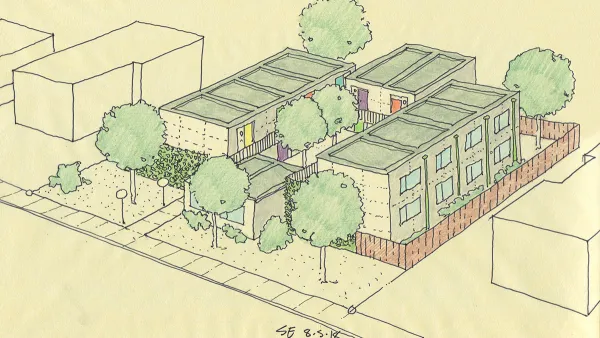
Modular Housing for the Homeless
The Seattle region will try to save costs and speed construction on three new pilot projects by using modular construction to house homeless.
Friday Funny: I'll Do Anything to Solve Homelessness, But I Won't Do That
A satirical post for McSweeney's about the typical approach to the country's growing number of homeless brought to mind a famous song by Meat Loaf.

Planetizen Federal Action Tracker
A weekly monitor of how Trump’s orders and actions are impacting planners and planning in America.

Eastern Nebraska is running out of electricity
Data centers and electrification are straining eastern Nebraska’s grid, throttling economic development.

Move over, LA: St. Louis gears up for Olympics, invests millions in downtown redevelopment
The Missouri city will host the 2028 Olympic soccer group stage and knockout matches.

Dallas releases zoning code overhaul to officials
The drafted overhaul is over 400 pages long.

NYC renovations for dangerous, ‘mercilessly crammed’ street delayed until 2027
Construction was supposed to begin this fall.

San Diego’s Midway Rising project gets greenlight from city council
The project looks to become the largest affordable housing development in California's history.

FREE Course: Walkable City 1: Why Walkability?
After describing his path towards focusing on walkability as the essence of good planning, Jeff Speck marches through his five principal reasons for making more walkable places.
Reinventing Malls: Planning Alchemy—Turning Gray Fields Into Gold
The course focuses on the opportunities and imperatives that shape reinvention of mall sites.

City of Rosemead
Rutgers University, Edward J. Bloustein School of Planning and Public Policy
One Hundred Miles
University of Michigan School for Environment and Sustainability (SEAS)
Hunter College, City University of New York (CUNY)
The Architects Foundation
City of Cambridge
The Pocatello Development Authority
The Urban Renewal Agency of the City of Pocatello