The rowhouse, a style of housing that began in 17th century Europe, is gaining in popularity in the U.S.


"First-time buyers David and Jennifer Waxberg considered a single-family house. After shopping different new-home developments and various housing styles, though, they bought a rowhouse at The Plaza on New York in Aurora for three reasons, says David.
"One, it's a new house with an attached garage, but at a better price than most single-family houses. Two, it's low-maintenance and I am not handy. Three, no yardwork!" says David of the 1,900-square-foot, three-bedroom rowhouse they will move into later this month. A condominium was out of the question, says David, because as renters they are tired of sharing walls and ceilings with neighbors and "hearing their babies cry and doors slam," he says.
Despite the real estate tsunami, rowhouse sales are staying afloat. Wiseman-Hughes, the Waxbergs' builder, has sold 89 of its 154 Plaza rowhouses."
Read the full story: Meet the modern rowhouse

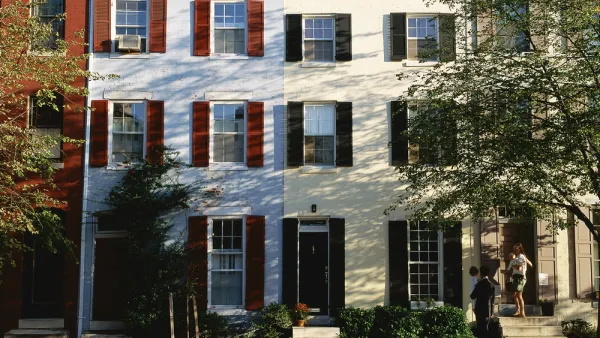
Is it a Rowhouse, or a Rowhome?
Philadelphia has long been acknowledged as the capital of rowhouses in the United States. It’s becoming more common for those rowhouses to be referred to as rowhomes.
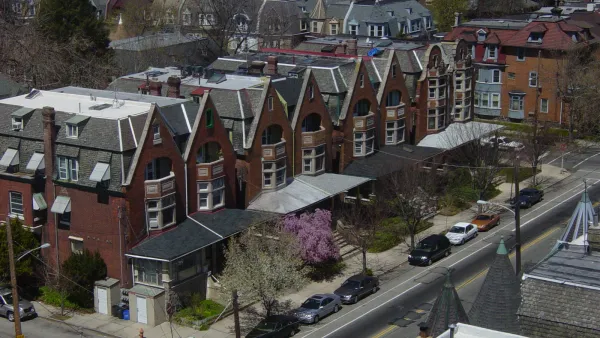
Philly City Council to Consider Bill Protecting Neighbors from Construction Damage
The proposal would hold builders accountable for damage incurred to adjacent homes as historic rowhouse properties see increased redevelopment.

'Making Room Housing Program' Would Allow New Density in Vancouver
Duplexes, rowhouses, and small apartment buildings will be on the zoning menu for "housing choice neighborhoods" around Vancouver, thanks to the city's new "Making Room Housing Program."

Planetizen Federal Action Tracker
A weekly monitor of how Trump’s orders and actions are impacting planners and planning in America.

Amtrak, CN end decades-long dispute with eight-year agreement
The new operating agreement establishes an updated framework for the companies to work together, including processes to resolve disputes.

Northwest rail fans eager for Sept. 30 debut of Amtrak’s Airo fleet
Get ready for that new train smell and more seats. But they won’t go faster or run more frequently on the Cascades route in Washington and Oregon.

Brightline Florida files for bankruptcy
The transit company is over $5 billion in debt.

St. Louis Metro to test if single-car trains can reduce operating costs, maintain rider satisfaction
The pilot program will run from October to spring 2027, and begin with one single-car train operating on Metrolink’s Red and Blue lines.

Pennsylvania is building data centers in abandoned mines
Housing data centers in mines provides an alternative to destroying local forests and may spare residents from data centers’ noise and air pollution.

FREE Course: Walkable City 1: Why Walkability?
After describing his path towards focusing on walkability as the essence of good planning, Jeff Speck marches through his five principal reasons for making more walkable places.
Reinventing Malls: Planning Alchemy—Turning Gray Fields Into Gold
The course focuses on the opportunities and imperatives that shape reinvention of mall sites.

City of Thousand Oaks
City of Wisconsin Rapids
Harvard University Graduate School of Design
The Architects Foundation
University of Cincinnati Online
The Pocatello Development Authority
The Urban Renewal Agency of the City of Pocatello