The Pittsburgh City Council has put a cap on the number of alcohol-serving establishments on the city's South Side, but property owners are crying foul.


"The ordinance creates a special class of businesses -- the alcohol-serving restaurant -- that should only be carved out by the state, said Charles Caputo. Municipalities "can't make a distinction between a restaurant that sells liquor, and a restaurant that doesn't," he said.
BaBa D's challenge to council's decision has been consolidated by Common Pleas Judge Joseph James with another court case, filed in December, by businessman James M. Quinn.
Mr. Quinn wanted to turn two buildings at the corner of Carson and 11th Street into a bar, but city administrators would not take his permit applications because they arrived two weeks after the ordinance was introduced. New zoning rules take effect temporarily as soon as they are introduced. The ordinance "is nothing more than an effort to control liquor," which is the state's job, said attorney John E. Quinn, who represents his brother in the case.
Restaurateurs argue that the entertainment scene makes South Side attractive to the young people the city wants to retain, and has helped build the tax base. "If the South Side doesn't have these businesses here, South Side isn't worth a penny," said Mr. Aboud."
Read the full story: Bar battle on South Side

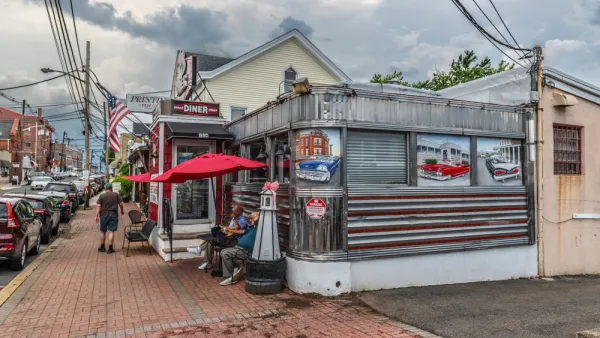
Economic Development Strategy: More Liquor Licenses
The state of New Jersey makes it difficult, and expensive, to obtain liquor licenses. Some say that policy makes economic development much harder than it could be.
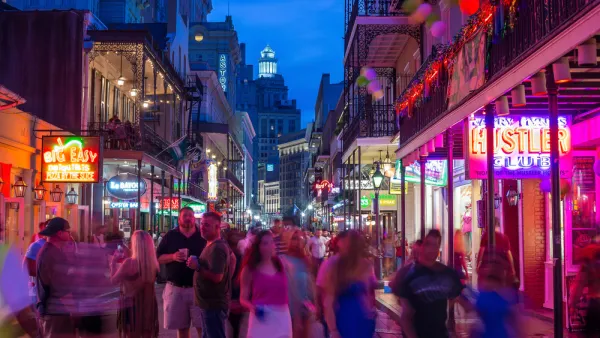
Massive Surveillance Expansion Would Focus on Nightlife in New Orleans
The city of New Orleans wants to watch you party.
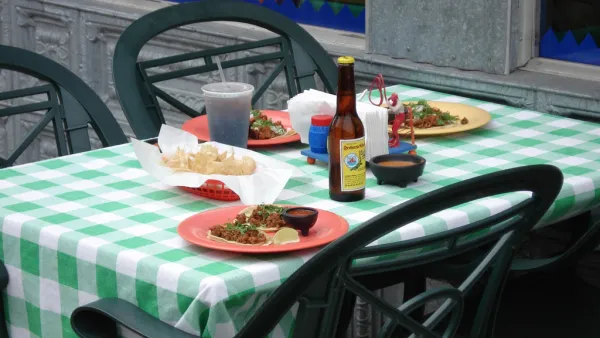
Trendy Chicago Taco Bell to Serve Alcoholic Drinks
Would you like a cerveza with that? A hip neighborhood in Chicago will play host to the first alcohol-serving Taco Bell. Isolated incident, or the future of fast food?

Planetizen Federal Action Tracker
A weekly monitor of how Trump’s orders and actions are impacting planners and planning in America.

The state-sanctioned urbicide of Austin
People don’t kill cities. Freeways do.

US to reduce Colorado River water deliveries to Mexico
A new Colorado Treaty amendment reduces Mexico’s Colorado River water allocation by 250,000 acre feet.

Nation's most wind-powered state turns to coal as data centers increase energy demand
For the first time in decades, Iowa has increased its generation of coal power.

NYC cools commuters with city's first rain garden above a bus stop
New York City officials say the plants in the rain garden can absorb 16 gallons of rainwater during heavy storms.

Brightline West’s future may rely on $6 billion federal loan
The company has until Nov. 2 to make a $400 million equity investment into its proposed high-speed rail line.

FREE Course: Walkable City 1: Why Walkability?
After describing his path towards focusing on walkability as the essence of good planning, Jeff Speck marches through his five principal reasons for making more walkable places.
Reinventing Malls: Planning Alchemy—Turning Gray Fields Into Gold
The course focuses on the opportunities and imperatives that shape reinvention of mall sites.

Eagle County Government
Harvard University Graduate School of Design
Nashville Planning Department
The Architects Foundation
University of Cincinnati Online
The Pocatello Development Authority
The Urban Renewal Agency of the City of Pocatello
Journal of the American Planning Association