In terms of global urban livability, American cities are not so hot. The highest ranking city, Honolulu, comes in at 29 in the results of the Worldwide Quality of Living Survey.


"The city with the highest quality of urban living in the world, according to the survey, is Vienna, followed by Zurich and Geneva. Auckland and Vancouver come joint fourth. All of these cities have a reputation – perhaps undeserved – for crashing dullness. Cities with romantic, glitzy reputations, from New York (49th) to Rome (55th), fare badly."
"The Worldwide Quality of Living Survey is, arguably, more suburban than urban. The league table of 215 cities reflects the criteria set by Mercer, an American management consultancy which specialises in advising companies on the relocation of executives. Political stability, security, air pollution, schools, supermarkets, environment and transport rank highly. Cutting-edge culture, architecture and excitement count for relatively little."
"Unsurprisingly, the city that comes bottom of the table is Baghdad with a score of 14.4 (encouragingly up from 13.5 last year). The top city, Vienna, scores 108.6, overtaking Zurich, which has led the table for eight years. No American city comes in the top 25. The highest is Honolulu in Hawaii, scarcely a city at all, which ranks 29th."
"Of the top 10 most liveable cities in the Mercer table, seven are European; three are German (Dusseldorf, Munich, Frankfurt); three are Swiss (Zurich, Geneva, Berne) and one is Austrian (Vienna). Auckland and Vancouver tie for fourth place. Sydney comes 10th."
Read the full story: Clean, safe and a little bit dull... the world's most liveable cities

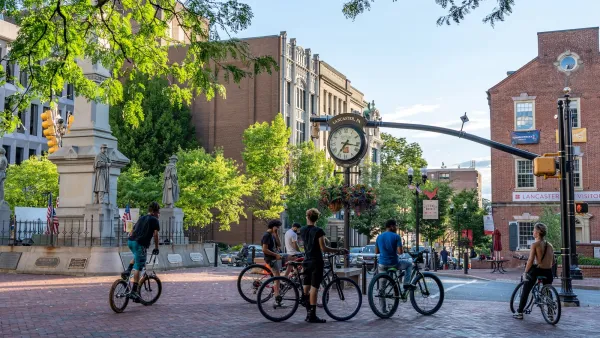
The Nation’s Best Small Cities Ranked by Livability, Affordability
A new list looks at a range of factors from housing costs to entertainment to commute times to rank the most attractive small cities in the U.S.
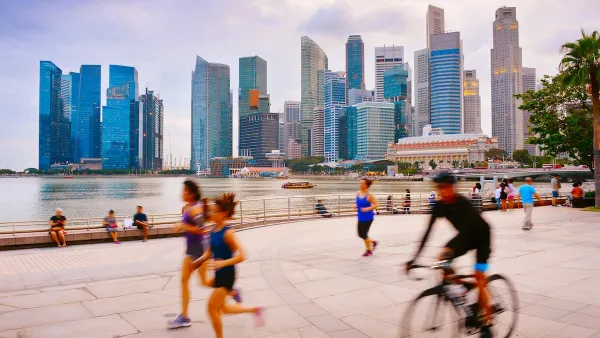
Singapore: A Model for Longevity and Quality of Life
Singapore's remarkable rise in life expectancy, driven by government policies on health, green spaces, and social cohesion, has earned it the distinction of being named the world's sixth “Blue Zone.”
Insights From the Latest Livability Index
The latest edition of the AARP Livability Index reveals the U.S. regions with more of the kinds of neighborhoods that offer quality of life benefits for residents of all ages.

Planetizen Federal Action Tracker
A weekly monitor of how Trump’s orders and actions are impacting planners and planning in America.

The state-sanctioned urbicide of Austin
People don’t kill cities. Freeways do.

US to reduce Colorado River water deliveries to Mexico
A new Colorado Treaty amendment reduces Mexico’s Colorado River water allocation by 250,000 acre feet.

Nation's most wind-powered state turns to coal as data centers increase energy demand
For the first time in decades, Iowa has increased its generation of coal power.

NYC cools commuters with city's first rain garden above a bus stop
New York City officials say the plants in the rain garden can absorb 16 gallons of rainwater during heavy storms.

Brightline West’s future may rely on $6 billion federal loan
The company has until Nov. 2 to make a $400 million equity investment into its proposed high-speed rail line.

FREE Course: Walkable City 1: Why Walkability?
After describing his path towards focusing on walkability as the essence of good planning, Jeff Speck marches through his five principal reasons for making more walkable places.
Reinventing Malls: Planning Alchemy—Turning Gray Fields Into Gold
The course focuses on the opportunities and imperatives that shape reinvention of mall sites.

Eagle County Government
Harvard University Graduate School of Design
Nashville Planning Department
The Architects Foundation
University of Cincinnati Online
The Pocatello Development Authority
The Urban Renewal Agency of the City of Pocatello
Journal of the American Planning Association