With the unfettered ability to zone, plan and fund construction projects, the government of Shanghai is turning the city into what looks like "one immense architectural competition."


"Anyone accustomed to the mixture of incremental improvement but generalized decay of Canadian cities, or the pleasing but rather stagnant cities of Europe, will be blown away by Shanghai.
There's so much money that has rushed into, and through, the city that is transforming itself daily. Sure, there is a worldwide economic slowdown, and critics apparently delight in underscoring how it has hit China. Some hit: a growth rate of 'only' 8 per cent.
The government in Shanghai has powers to rezone land, displace people and pursue projects quickly that don't exist in more democratic societies. In Shanghai, they just go ahead and build the astonishing magnetic train line that takes eight minutes to whisk people to the international airport.
Need rapid transit? Build two sensational, clean subway lines charging passengers about 60 cents, and plan a bunch more. Need a link to the domestic airport? Start building another magnetic train. It's what you can do with money, ambition and power. Plan not for tomorrow, but for a decade from now and beyond."
FULL STORY: From stagnation to swaggering skyscrapers, Shanghai is making up for lost time

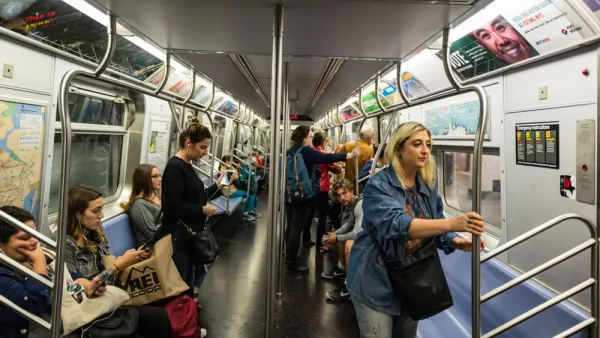
Coronavirus Effects on the Global Transportation System
As the coronavirus continues to move across the globe, its effects on shared transportation modes and freight shipping are becoming more apparent.

Buildings Full of Empty Apartments Pose Problems in China
Failed investments and buildings with no tenants sit on the outskirts of Beijing and Shanghai.
Friday Eye Candy: 195 Gigapixels of Urban Glory
An incredibly detailed bird's eye view of Shanghai.

The state-sanctioned urbicide of Austin
People don’t kill cities. Freeways do.

US to reduce Colorado River water deliveries to Mexico
A new Colorado Treaty amendment reduces Mexico’s Colorado River water allocation by 250,000 acre feet.

New Jersey’s second-largest city bans standalone data centers
Jersey City will continue to allow co-location facilities, such as those meant for research institutions that store their own data.

Amtrak not solely to blame for New Jersey commuter rail's unreliability, report finds
A new study from the Garden State Initiative found that NJ Transit’s budget grew 20% across a 4 year period, but reliability declined significantly over the same period.

EPA erases limits on planet-warming pollution from power plants
Under Monday’s plan, power plants would still have some limits on how much mercury, arsenic and other contaminants they can emit.

Phoenix announces new on-demand transit service, more frequent RAPID buses
Both new services will launch in October, and are part of Phoenix's Project Effective Access Solutions for Easing Congestion.

FREE Course: Walkable City 1: Why Walkability?
After describing his path towards focusing on walkability as the essence of good planning, Jeff Speck marches through his five principal reasons for making more walkable places.
Reinventing Malls: Planning Alchemy—Turning Gray Fields Into Gold
The course focuses on the opportunities and imperatives that shape reinvention of mall sites.

Eagle County Government
Harvard University Graduate School of Design
Nashville Planning Department
The Architects Foundation
University of Cincinnati Online
The Pocatello Development Authority
The Urban Renewal Agency of the City of Pocatello
Journal of the American Planning Association