In midsize cities across the United States, consumer borrowing has actually increased, which often leads to higher employment levels and wages than average.


"It is one of the few times in recent economic history when so many midsize cities are outperforming their larger counterparts, says Ross DeVol, director of regional economics at the Milken Institute, a Santa Monica, Calif.-based think tank. The new lending patterns, he says, reflect more disciplined economic-development strategies in those cities, more diverse employment and lower costs. Many of the higher-lending areas appeared on the institute's list of 'best-performing' cities for 2008, measured by job, wage and salary increases. Provo, Huntsville and McAllen were all in the top 10.
'The medium-size metros that have done the blocking and tackling are better positioned during the downturn,' he says."
"Some of the better-performing cities didn't experience speculative real-estate bubbles, leaving them with more solid household-credit conditions, which are conducive to lending. Others are benefiting from major government spending, such as massive infrastructure projects and military bases. Many have unemployment rates below the national average and rank among the nation's best job creators."
Read the full story: Many Smaller Cities Dodge Crunch in Consumer Lending

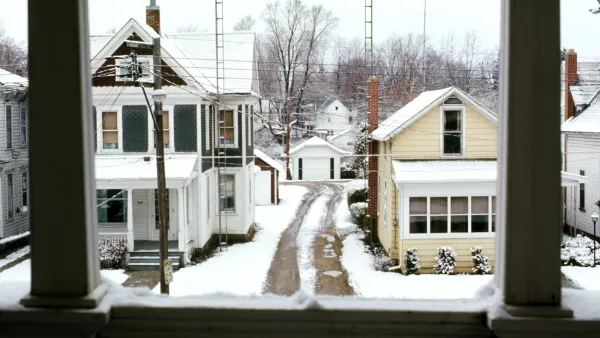
A New Standard for Equity Investments
Fifth Third Bank is investing $2.8 billion in its Accelerating Racial Equality, Equity and Inclusion initiative.
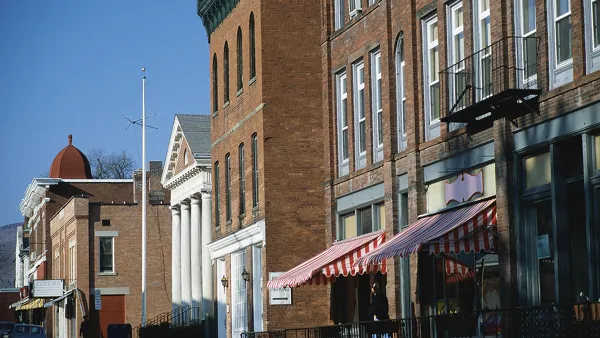
Feds Propose New Lending Standards for Condo Developments
The Federal Housing Administration has proposed a rule that could remove one of the barriers to mixed-use developments. Questions still remain about whether the new rule goes far enough.
Subprime Lending and the Great Recession Still Impacting Black Americans
Nathalie Baptiste examines the case of Prince George’s County in Maryland near Washington D.C. as a study in how the housing and real estate markets has unjustly attacked the wealth of Black Americans.

Planetizen Federal Action Tracker
A weekly monitor of how Trump’s orders and actions are impacting planners and planning in America.

Chicago breaks ground on $3 billion megadevelopment
The new neighborhood, titled Foundry Park, will one day host 3,700 residences.
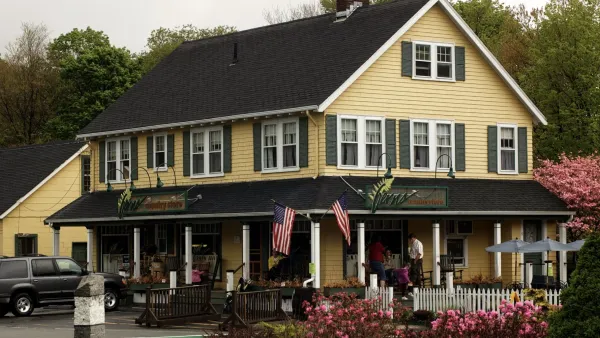
This MA town is drowning in its own sewage — and residents like it that way
Susan Murcott, a waste water expert, said if Carlisle didn't address their leaking sewage, the problem could turn “deadly.”

Feds to more closely scrutinize proposed Amtrak facility’s environmental impact
The Federal Railroad Administration had initially said the facility qualified for a less extensive environmental review.

Boston is hard to build housing in: its chief of planning wants to keep it that way
Chief of Planning Kairos Shen said she would not make changes to Boston’s affordability requirements for new housing, which critics say have slowed down development.

California plans to bury El Niño’s downpour
If the state plays its cards right, it may be able to store a billion acre-feet of El Niño’s water in aquifers.

FREE Course: Walkable City 1: Why Walkability?
After describing his path towards focusing on walkability as the essence of good planning, Jeff Speck marches through his five principal reasons for making more walkable places.
Reinventing Malls: Planning Alchemy—Turning Gray Fields Into Gold
The course focuses on the opportunities and imperatives that shape reinvention of mall sites.

City of Rosemead
Rutgers University, Edward J. Bloustein School of Planning and Public Policy
One Hundred Miles
Hunter College, City University of New York (CUNY)
The Architects Foundation
University of Cincinnati Online
Montrose County
The Pocatello Development Authority
The Urban Renewal Agency of the City of Pocatello